
 Habitat
  Depth
Depth  Group
Group  Role
Role WHAT DOES IT LOOK LIKE?
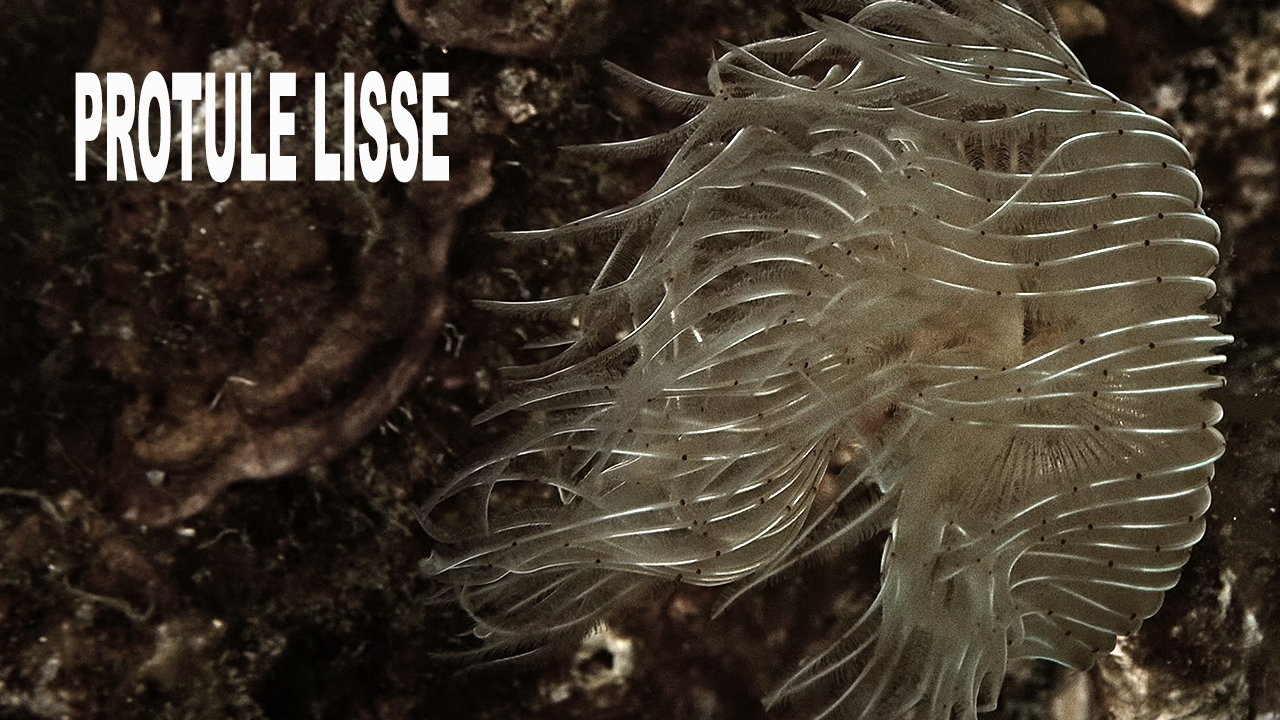
This species lives in a calcareous tube that it makes itself and which can reach several centimetres. A double-fan-shaped crown, often white, emerges from its end and consists of many thin filaments. These structures provide both breathing and food capture. Unlike some related worms, it has no small lid to close its tube.WHERE DOES IT LIVE?
It lives attached to hard supports such as rocks, coralligenous seabeds or other submerged structures. It occurs from shallow water to deeper areas, sometimes beyond one hundred metres.WHAT DOES IT EAT?
It feeds by filtering water: its tentacles capture very small organic particles and plankton, which it then directs towards its mouth.GO FURTHER WITH AMIGANSEAU
Unlock the full profile
Deepen your knowledge with the exclusive chapters and interactive resources included in an AMIGANSEAU licence.
- HOW DOES IT REPRODUCE?
- OUR OBSERVATIONS
- UNDERSTAND THE SPECIES
Also included in the full profile
- Advanced navigation between description, ecological context, observations and behaviour
- Interactive food chain to explore the species’ feeding relationships
- Infographic and illustrated summary profile