


 Habitat
 Depth
 Group
 Role
 Average size
WHAT DOES IT LOOK LIKE?
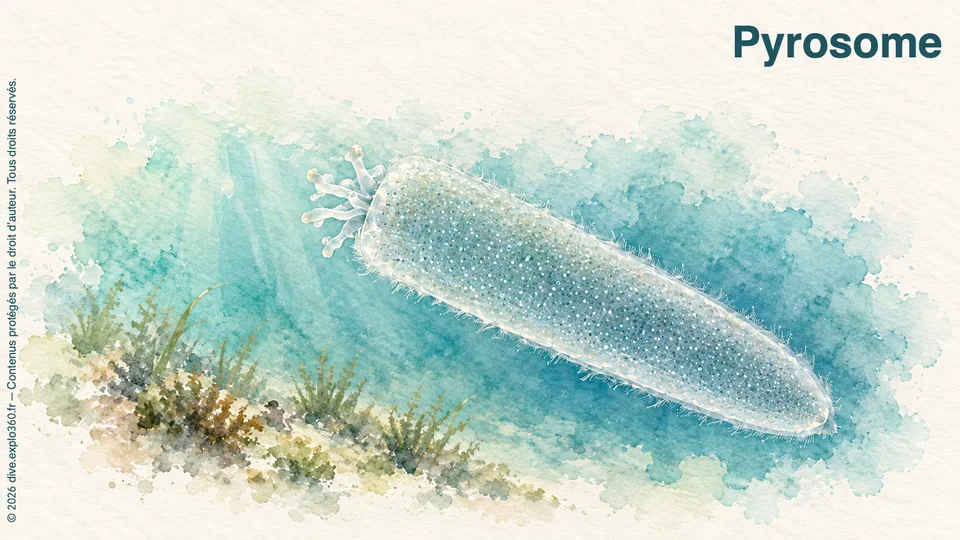
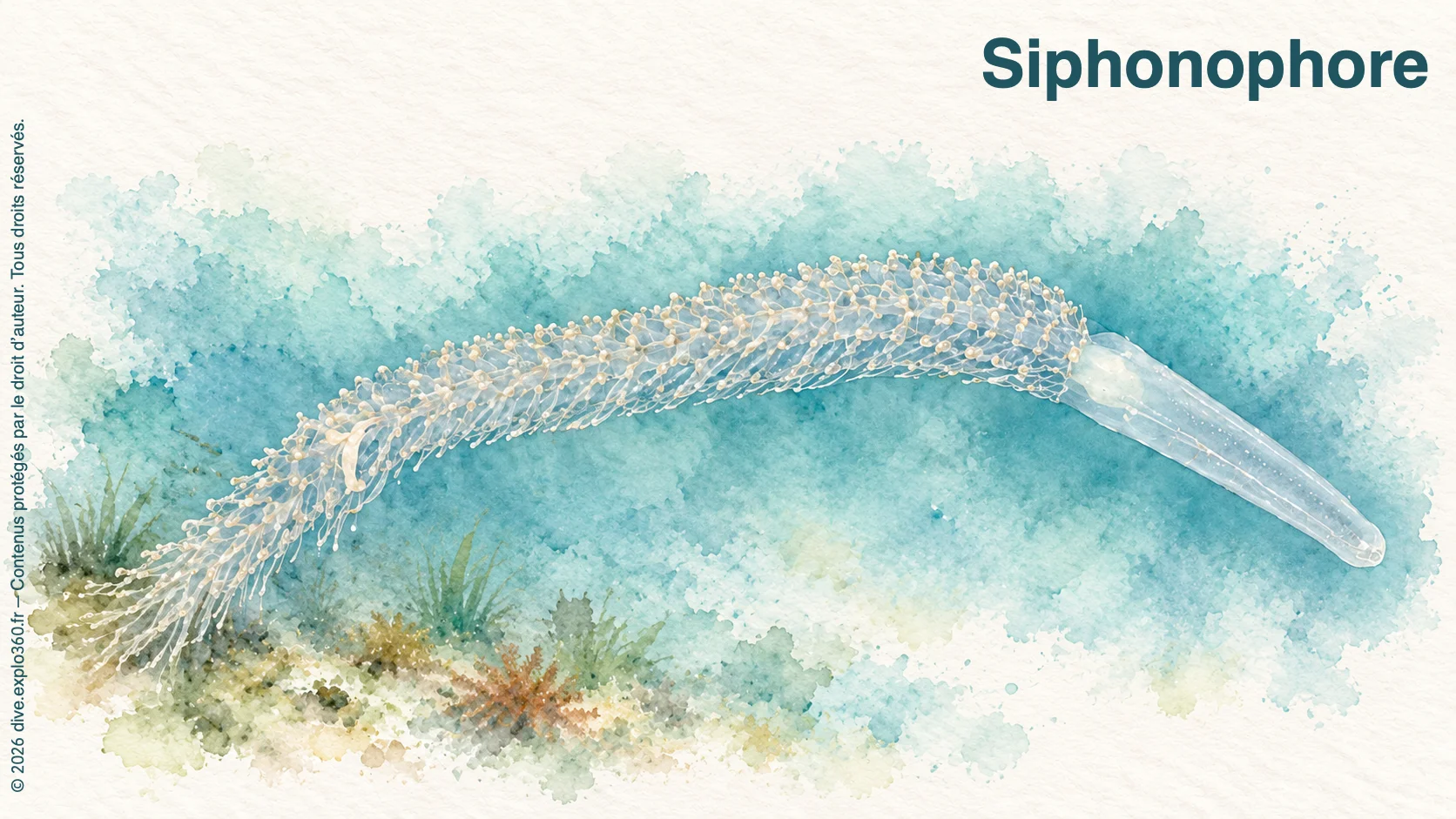
A single opening at the end of the sleeve defines the shape of the pyrosome (Pyrosoma atlanticum). This hollow, translucent tube consists of zooids, small animals joined within a shared covering.
The wall is not entirely smooth: little projections called papillae give it a fuzzy appearance. Its variable colour may be milky, yellow, pink, blue or mauve.
WHERE DOES IT LIVE?
It is an open-water organism living far from the seabed. It moves through the water column and makes vertical movements, often rising towards the surface at night.
WHAT DOES IT EAT?
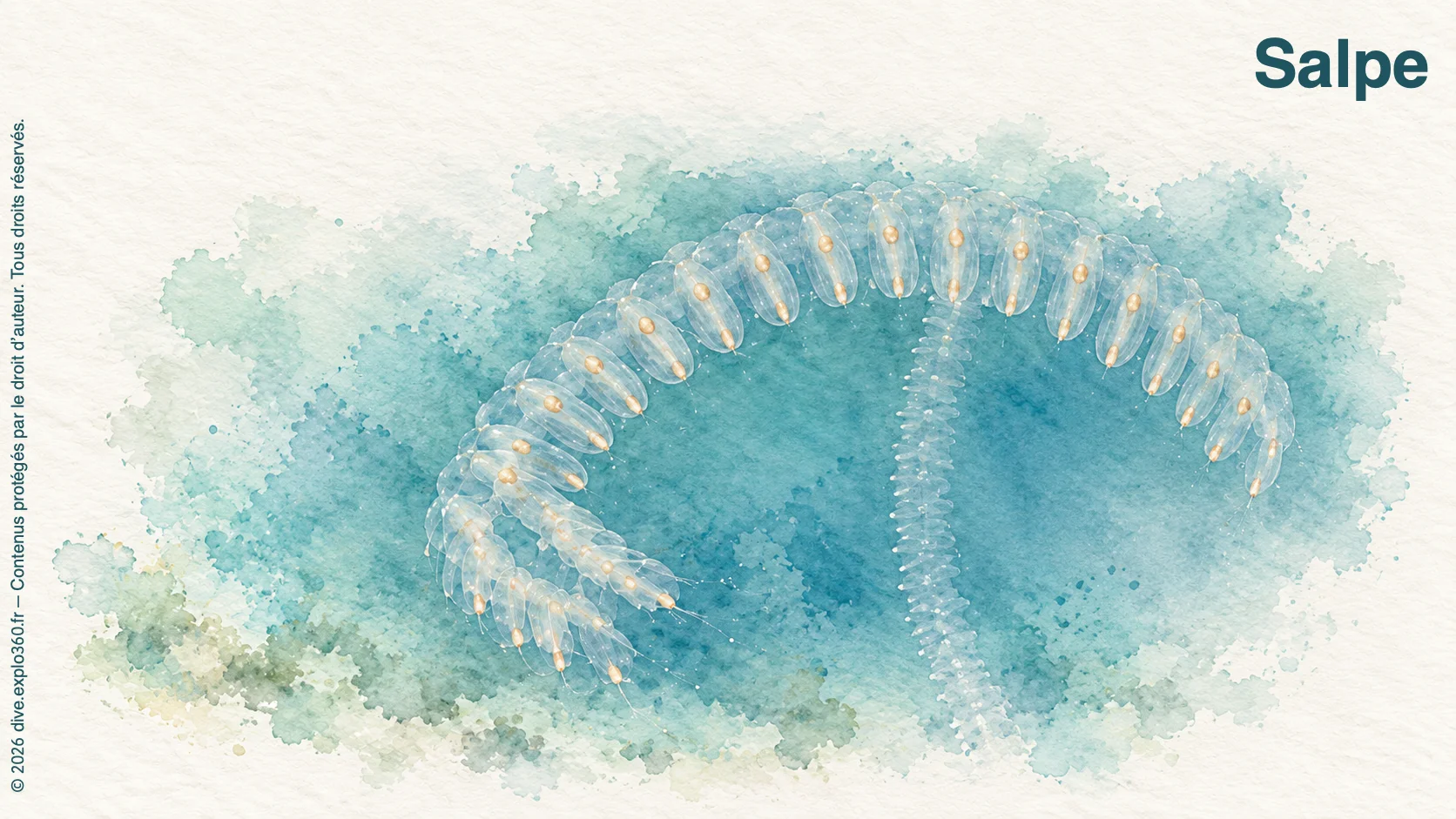
The pyrosome collects food through numerous tiny filters in the colony wall. Each zooid maintains a water current using cilia and retains particles on a mucus mesh. Food-laden mucus is then conveyed towards the digestive tract. Microalgae are important, and studies also demonstrate retention of other microorganisms. Filtered water enters the central cavity and exits through the shared opening. This flow collects food while also helping propel the colony, without the pumping contractions used by salps.
GO FURTHER WITH AMIGANSEAU
Unlock the full profile
Deepen your knowledge with the exclusive chapters and interactive resources included in an AMIGANSEAU licence.
Subscribing to Dive.Explo360 means supporting a different way to discover marine life.
Our independent platform is entirely self-funded and relies solely on subscriptions. Every licence helps us continue our work, create new content, and share what we know about the marine world with as many people as possible.
Starting at €80 per year, your support makes all the difference.
 Understand the species