Habitat
 Depth
 Group
 Role
 Average size
WHAT DOES IT LOOK LIKE?
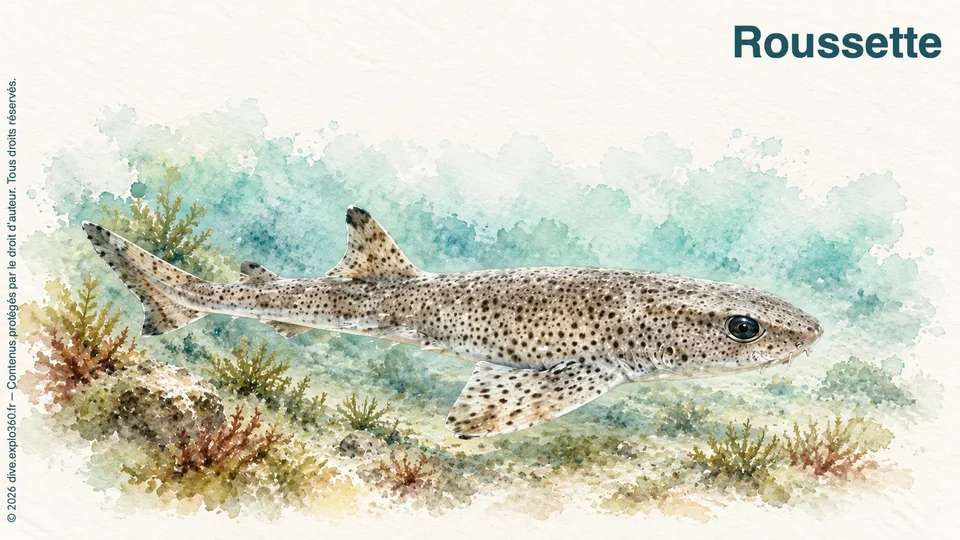
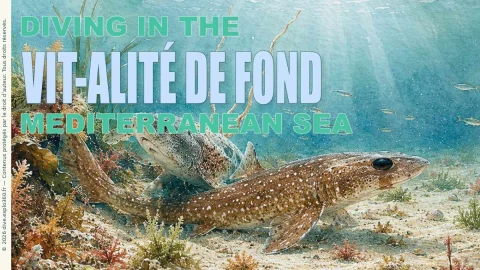
Close-set little spots mark the beige to reddish brown back of the small-spotted catshark (Scyliorhinus canicula). The contrast continues with the pale belly of this elongated, slender shark.
The head is rounded at the front, with the mouth underneath. The nasal flaps, the small folds over the nostrils beneath the snout, meet in the middle.
WHERE DOES IT LIVE?
It lives on soft seabeds such as sand, mud or gravel, from the coast down to several hundred metres deep. During the day, it often rests on the bottom, sometimes motionless.
WHAT DOES IT EAT?
The small-spotted catshark’s nocturnal meals combine several kinds of seabed animals. Crabs, shrimps and Norway lobsters are among the crustaceans; molluscs include gastropods, bivalves and young cuttlefish. Polychaete worms and small fish are eaten too. The range includes shell-protected animals and mobile soft-bodied prey. Night movements offer access to foraging activity, while a fish resting by day may simply be inactive. The known menu is more detailed than the account of every detection and capture sequence.
GO FURTHER WITH AMIGANSEAU
Unlock the full profile
Deepen your knowledge with the exclusive chapters and interactive resources included in an AMIGANSEAU licence.
Subscribing to Dive.Explo360 means supporting a different way to discover marine life.
Our independent platform is entirely self-funded and relies solely on subscriptions. Every licence helps us continue our work, create new content, and share what we know about the marine world with as many people as possible.
Starting at €80 per year, your support makes all the difference.
 Understand the species