


 Habitat
 Depth
 Group
 Role
 Average size
WHAT DOES IT LOOK LIKE?
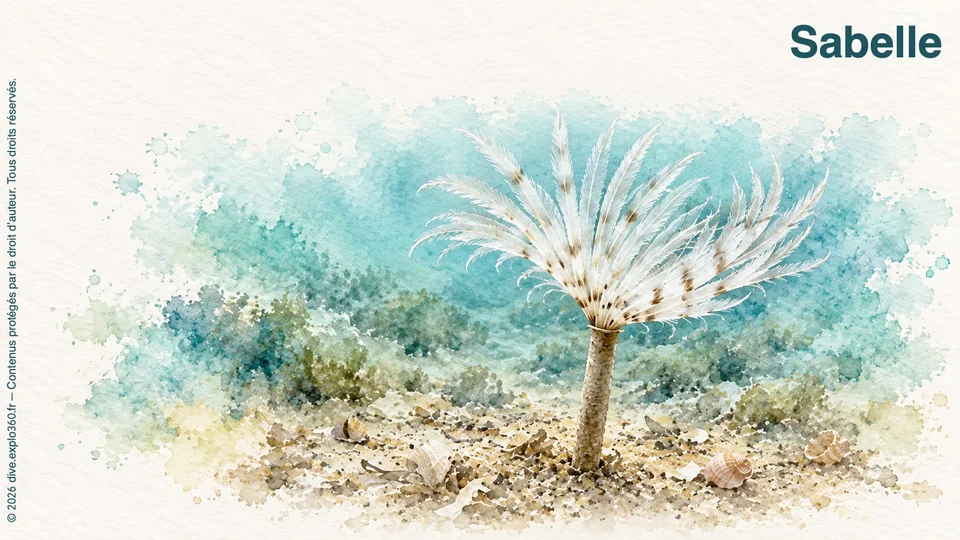
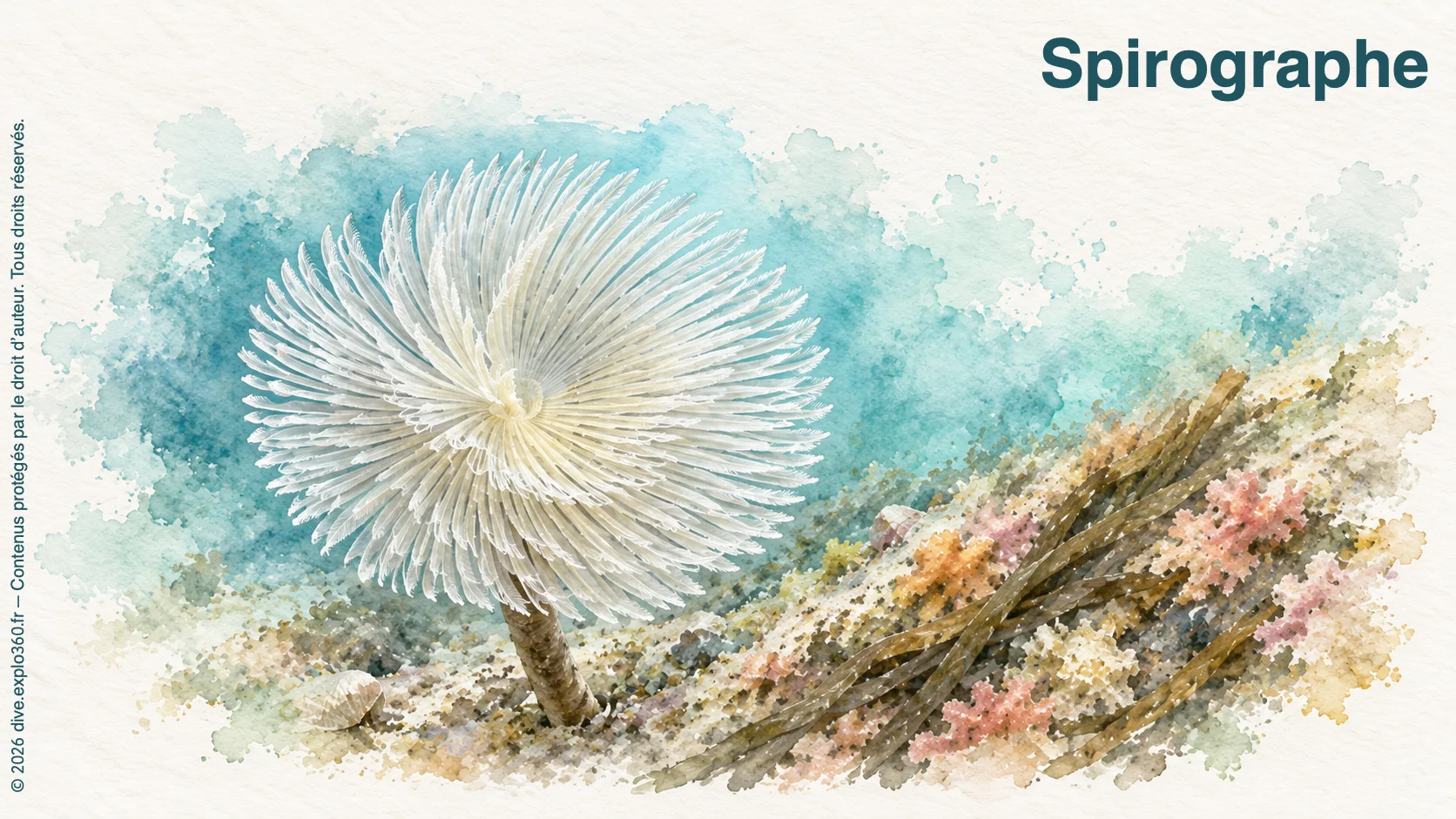
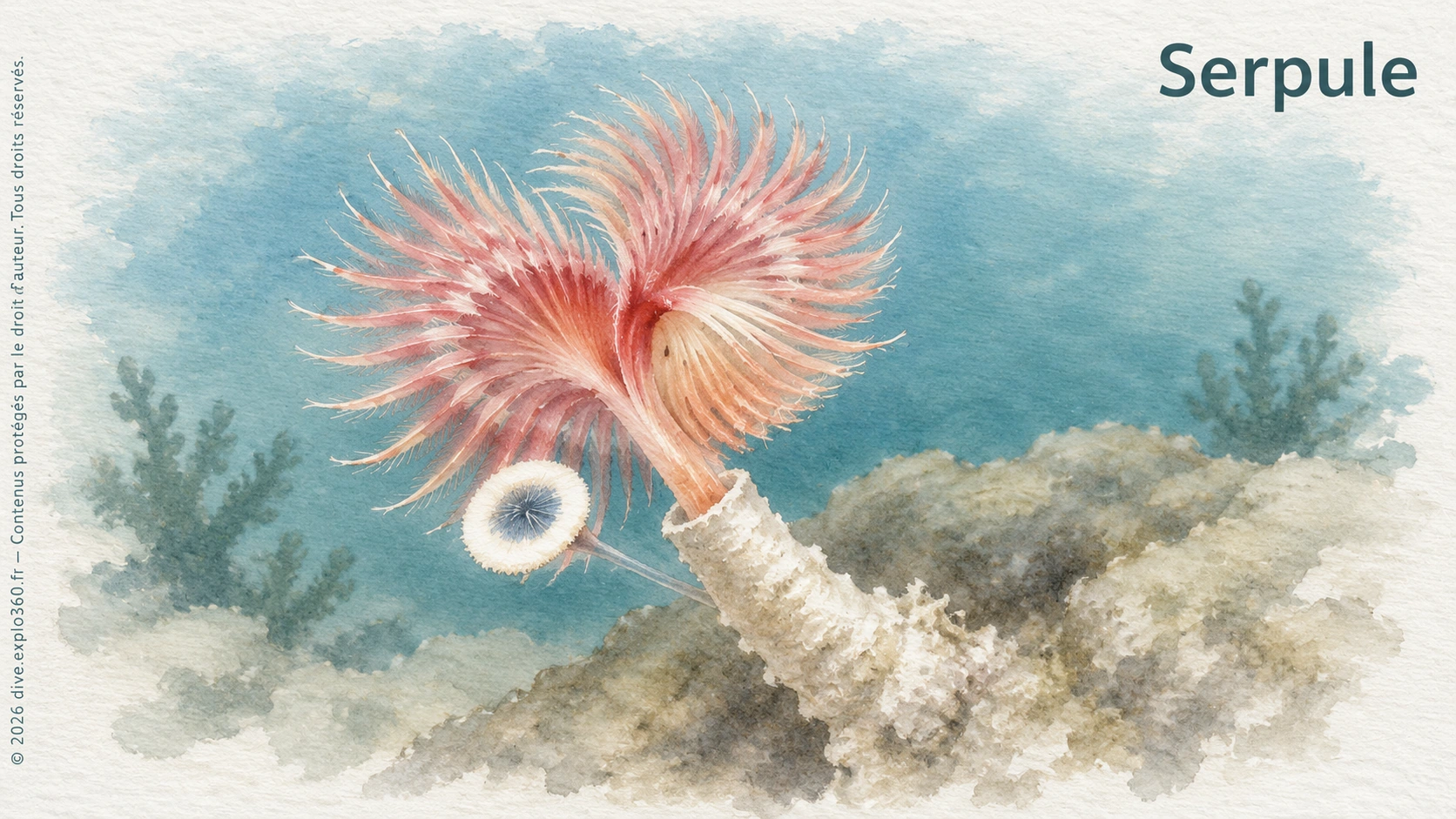
The peacock worm (Sabella pavonina) spreads its crown in two halves, forming a funnel of feathery filaments. They do not coil into a spiral, a visible difference from the Mediterranean fan worm.
Brown, reddish or violet patterns shade these filaments. At their base lies a flexible tube coated with small particles, hiding most of the body.
WHERE DOES IT LIVE?
It lives on soft seabeds such as sand or mud, but can also attach to hard supports. It occurs in areas where a gentle current brings suspended particles.
WHAT DOES IT EAT?
The peacock worm’s crown does more than receive the surrounding flow: its cilia move water and collect suspended particles. These travel along filament grooves and are sorted at the bases. Small particles are ingested; larger ones may be used for tube building or rejected. A grain crossing the crown therefore need not become food. The visible activity is mainly expansion of the collecting apparatus, while transport and selection operate on a much finer scale.
GO FURTHER WITH AMIGANSEAU
Unlock the full profile
Deepen your knowledge with the exclusive chapters and interactive resources included in an AMIGANSEAU licence.
Subscribing to Dive.Explo360 means supporting a different way to discover marine life.
Our independent platform is entirely self-funded and relies solely on subscriptions. Every licence helps us continue our work, create new content, and share what we know about the marine world with as many people as possible.
Starting at €80 per year, your support makes all the difference.

 Understand the species