


 Habitat
 Depth
 Group
 Role
 Average size
WHAT DOES IT LOOK LIKE?
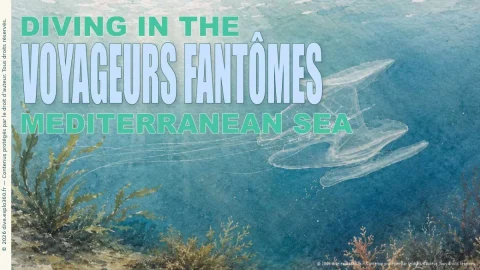
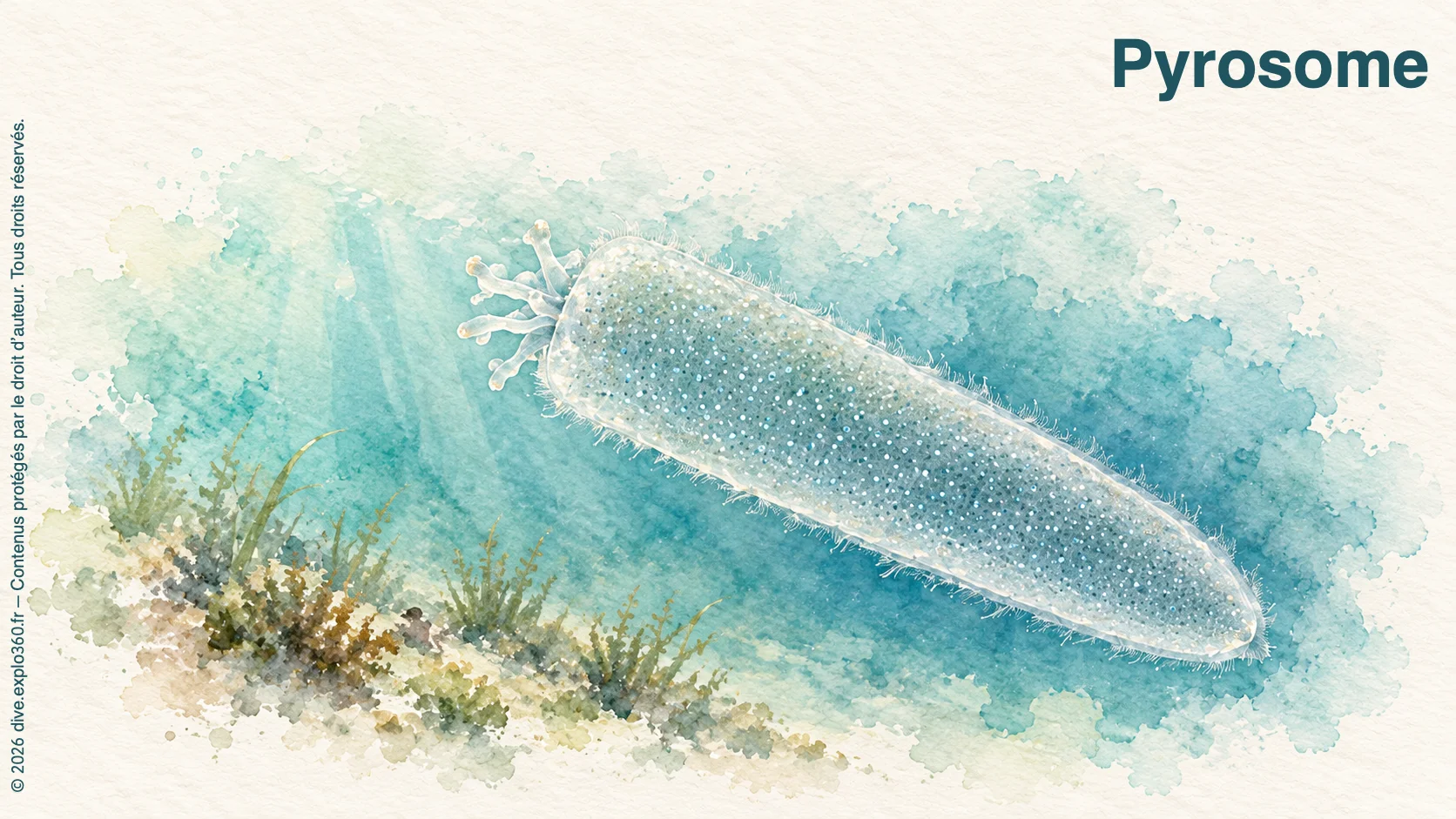
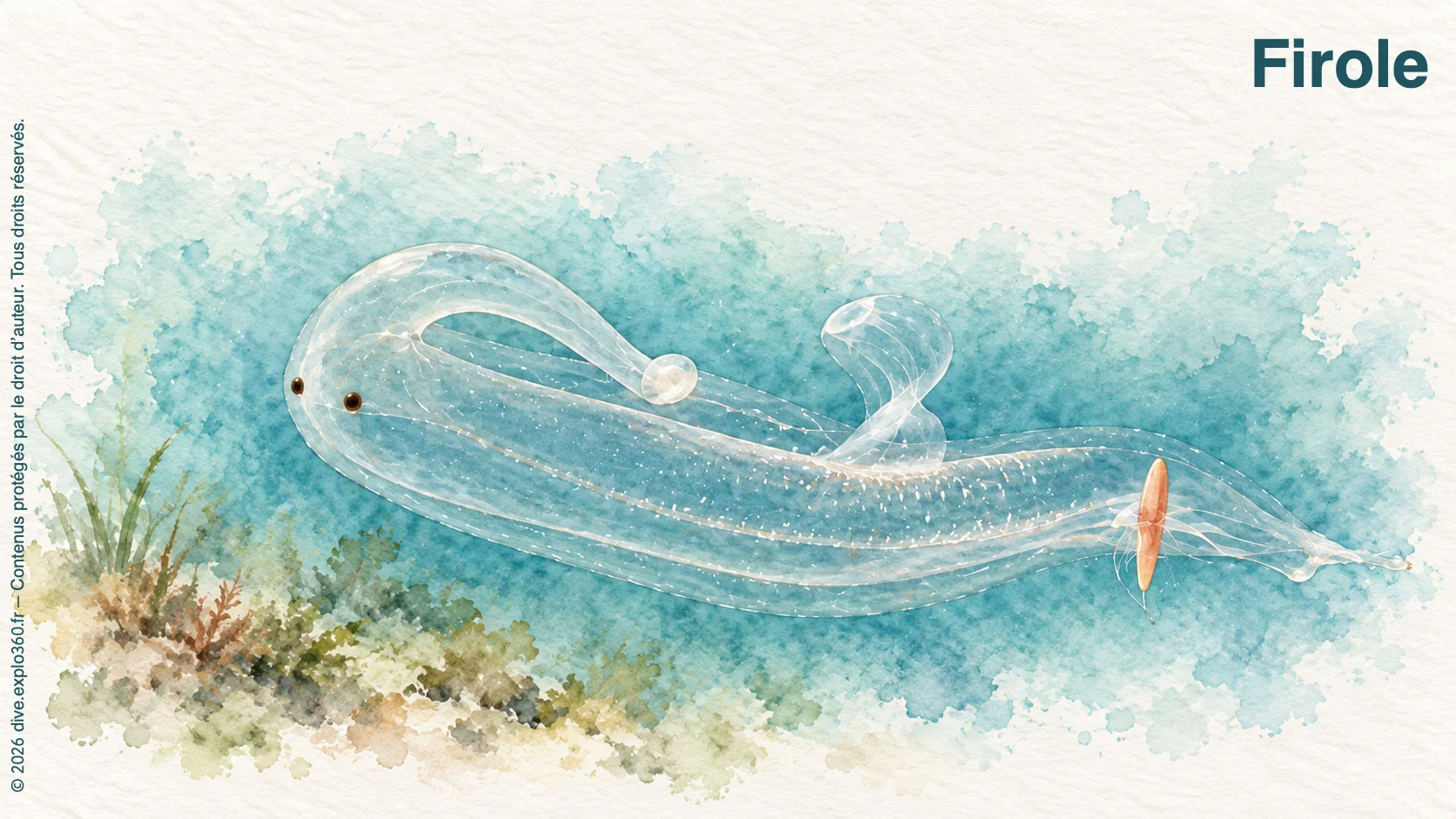
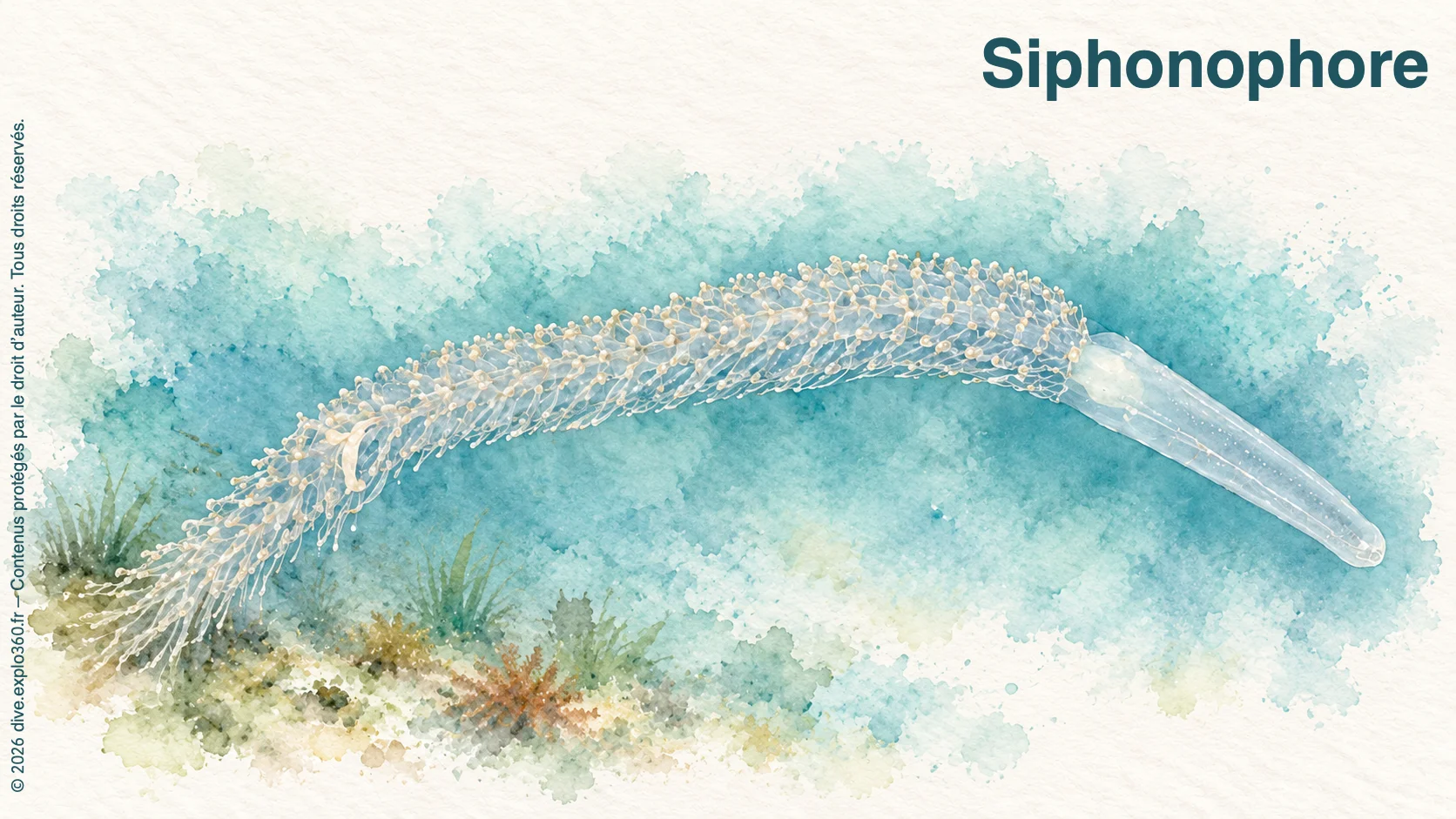
The common salp (Salpa fusiformis) takes two shapes: a solitary little barrel and the tapered spindle of individuals joined in double chains. In the latter form, a pointed projection extends from each end.
The smooth wall is transparent. Towards the rear it reveals a small, more opaque and often yellow-orange ball contrasting with the rest of the body.
WHERE DOES IT LIVE?
A pelagic species, it lives in open water, sometimes near the surface but also at different depths. It may move vertically, often rising towards surface layers at night.
WHAT DOES IT EAT?
Fusiform salp contractions move water through the body. A mucus mesh produced in the pharynx retains tiny particles, notably phytoplankton cells. The net moves progressively towards the digestive tract and is swallowed with its captured food while a new filter forms. Exiting water also contributes to movement, allowing food collection during travel. Both solitary individuals and those joined in chains use this mechanism, each retaining its own filtering apparatus.
GO FURTHER WITH AMIGANSEAU
Unlock the full profile
Deepen your knowledge with the exclusive chapters and interactive resources included in an AMIGANSEAU licence.
- HOW DOES IT REPRODUCE?
- OUR OBSERVATIONS
- ARTICLE
Also included in the full profile
- Advanced navigation between description, ecological context, observations and behaviour
- Interactive food chain to explore the species’ feeding relationships
- Infographic and illustrated summary profile


 Understand the species