


 Habitat
 Depth
 Group
 Role
 Average size
 Good to know
WHAT DOES IT LOOK LIKE?
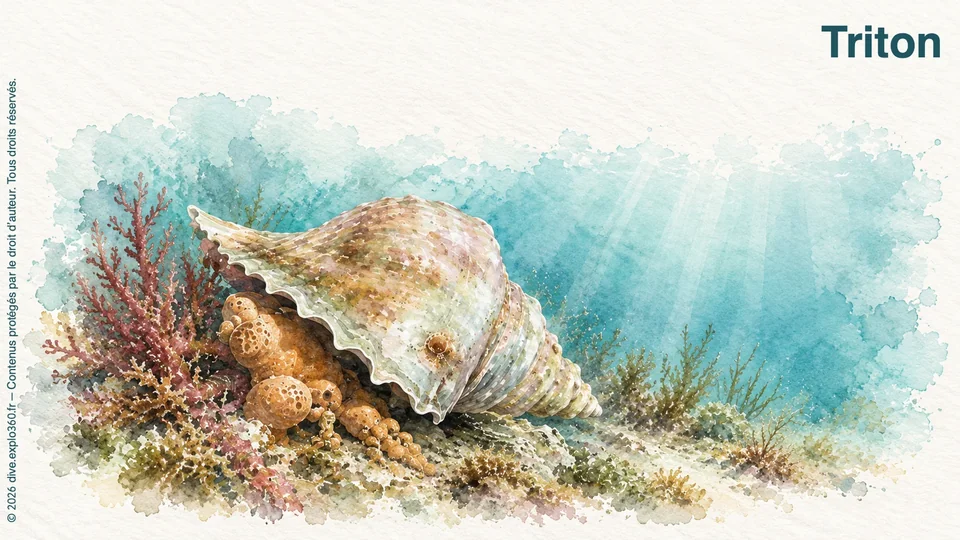
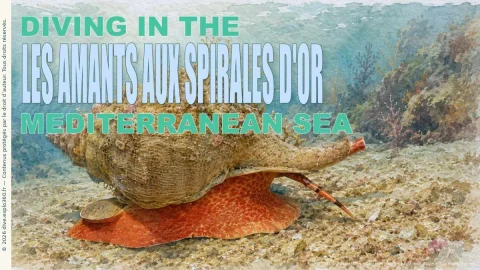
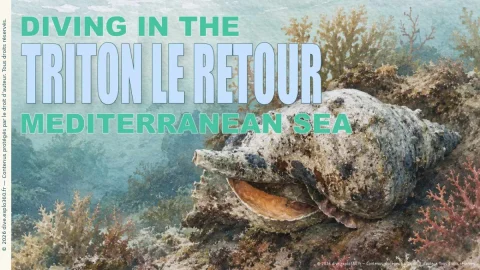
Two rows of knobs on the last whorl add detail to the knobbed triton (Charonia lampas). Its thick spiral shell may reach 40 cm and can be largely obscured by organisms growing on its surface.
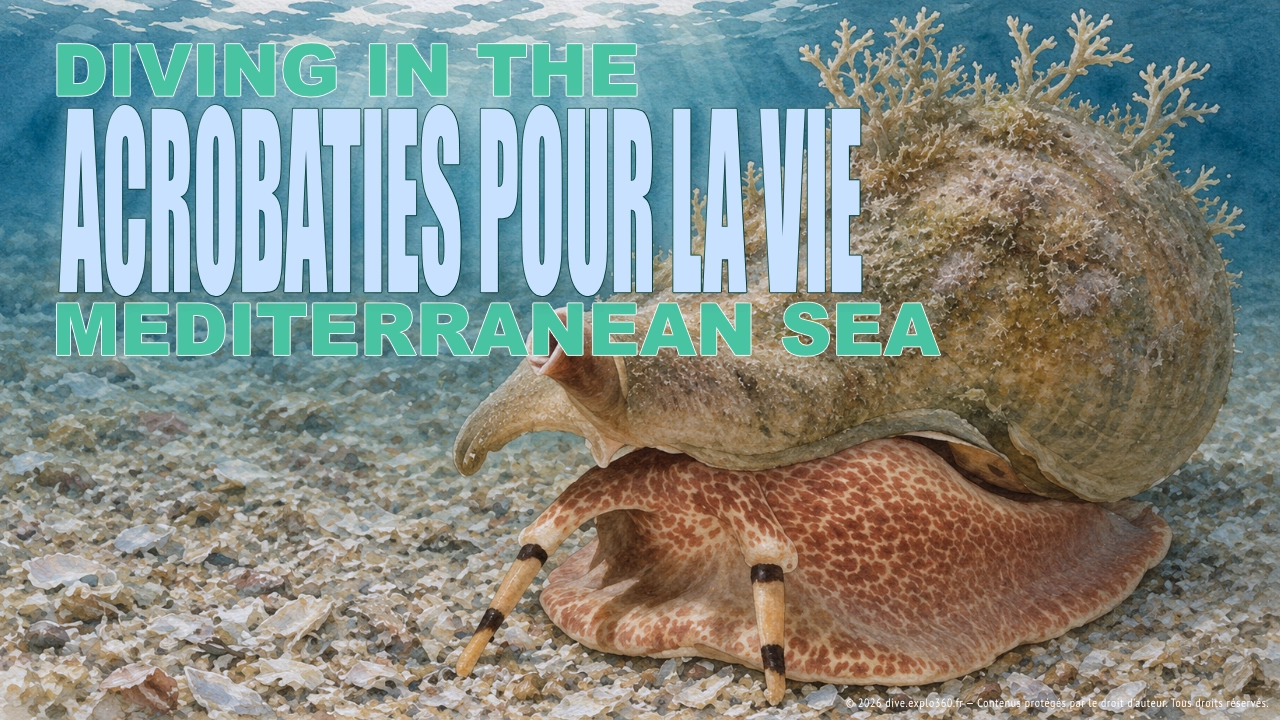
The animal reveals an orange-red foot, its fleshy lower part, and two orange tentacles with black rings. Eyes sit at their bases. The operculum is the horny lid fitted to the opening.
WHERE DOES IT LIVE?
It frequents rocky seabeds, coralligenous areas and soft bottoms near hard structures. It is found from a few metres down to great depths, where it moves slowly along the bottom.
WHAT DOES IT EAT?
The triton’s trumpet feeds against a sea star or sea urchin. Its proboscis applies secretions and draws in softened tissues. Echinoderms are the best-described resource for this predator. The sequence differs from microalgal grazing: the snail remains against another animal while processing and consuming it. Seeing its proboscis against the prey can help identify feeding even though the chemical action of its secretions is not directly visible.
GO FURTHER WITH AMIGANSEAU
Unlock the full profile
Deepen your knowledge with the exclusive chapters and interactive resources included in an AMIGANSEAU licence.
Subscribing to Dive.Explo360 means supporting a different way to discover marine life.
Our independent platform is entirely self-funded and relies solely on subscriptions. Every licence helps us continue our work, create new content, and share what we know about the marine world with as many people as possible.
Starting at €80 per year, your support makes all the difference.
 Understand the species