Partners and Dive.Explo360 explorers

Contact us

Verification code

Cylindrical sea pen

Distribution : Mediterranean and eastern Atlantic. The peduncle anchors in soft sediment.

John Edward Gray believed he had rediscovered, in the British Museum collections, a sea pen described by John Ellis in the eighteenth century. His reasoning did not rest solely on the animal’s appearance. An old label bore handwriting he attributed to his uncle, who had died in 1806, and which he recognised on other historical specimens. The identification remained tentative, but it linked an object preserved in London with several generations of collectors. The history of this specimen lies as much in its label as in the animal it accompanied.

Images being acquired · Your video or photos here

Habitat of Cylindrical sea pen Habitat
Sand, Mud
Depth range of Cylindrical sea pen Depth
15-188 m
Biological group of Cylindrical sea pen Group
Ecological role of Cylindrical sea pen Role
Filter feeder

Size

Colony reaching about 50 cm

WHAT DOES IT LOOK LIKE?

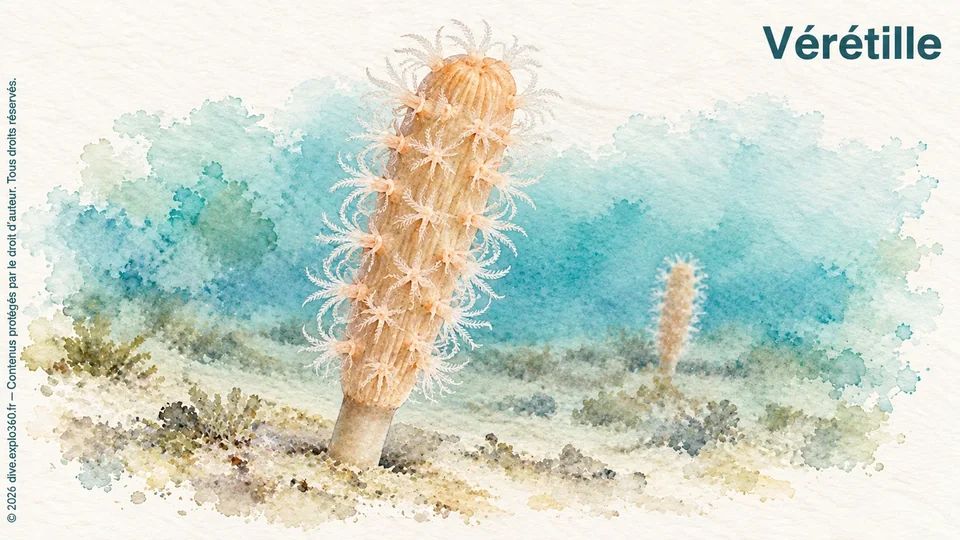
Little whitish polyps surround the entire column of the cylindrical sea pen (Veretillum cynomorium). Their eight tentacles carry fine branches along the sides. The fleshy beige to orange colony remains cylindrical and unbranched, up to about 50 cm when extended. The peduncle, the bare lower part, continues this column.

WHERE DOES IT LIVE?

It anchors in sandy or muddy bottoms in the Mediterranean and eastern Atlantic, between 15 and 188 m. Contracted or partly buried colonies are harder to spot. The seabed and water movements also influence where they occur.

WHAT DOES IT EAT?

Around the round sea pen’s trunk, feeding polyps open their tentacle crowns into the water. They retain suspended organic particles, providing food through collection distributed over the column.

GO FURTHER WITH AMIGANSEAU

Explore the full species guide

Discover full species guides, in-depth content and interactive tools available with your licence.

Your subscription helps preserve our independence.

Dive.Explo360 is an independent, self-funded nonprofit. Every licence helps us create new content, improve our teaching tools and keep some of our resources free and ad-free.

Licences from €80 per year

Choose a licence that suits your needs for personal, educational or professional use.

Open-access resources remain available without a subscription.
Cylindrical sea pen

Understand the species

What is this species’ ecological role?

AMIGANSEAU Explorer Premium

Access enriched species profiles with advanced content (audio, infographics and detailed articles).

Explore all species easily through a single interface.

Enjoy a smooth, fast learning experience suited to every level.

🔒 The full profile is available with a paid subscription only.

Discover licences

POURSUIVRE L’EXPLORATION

Explore further

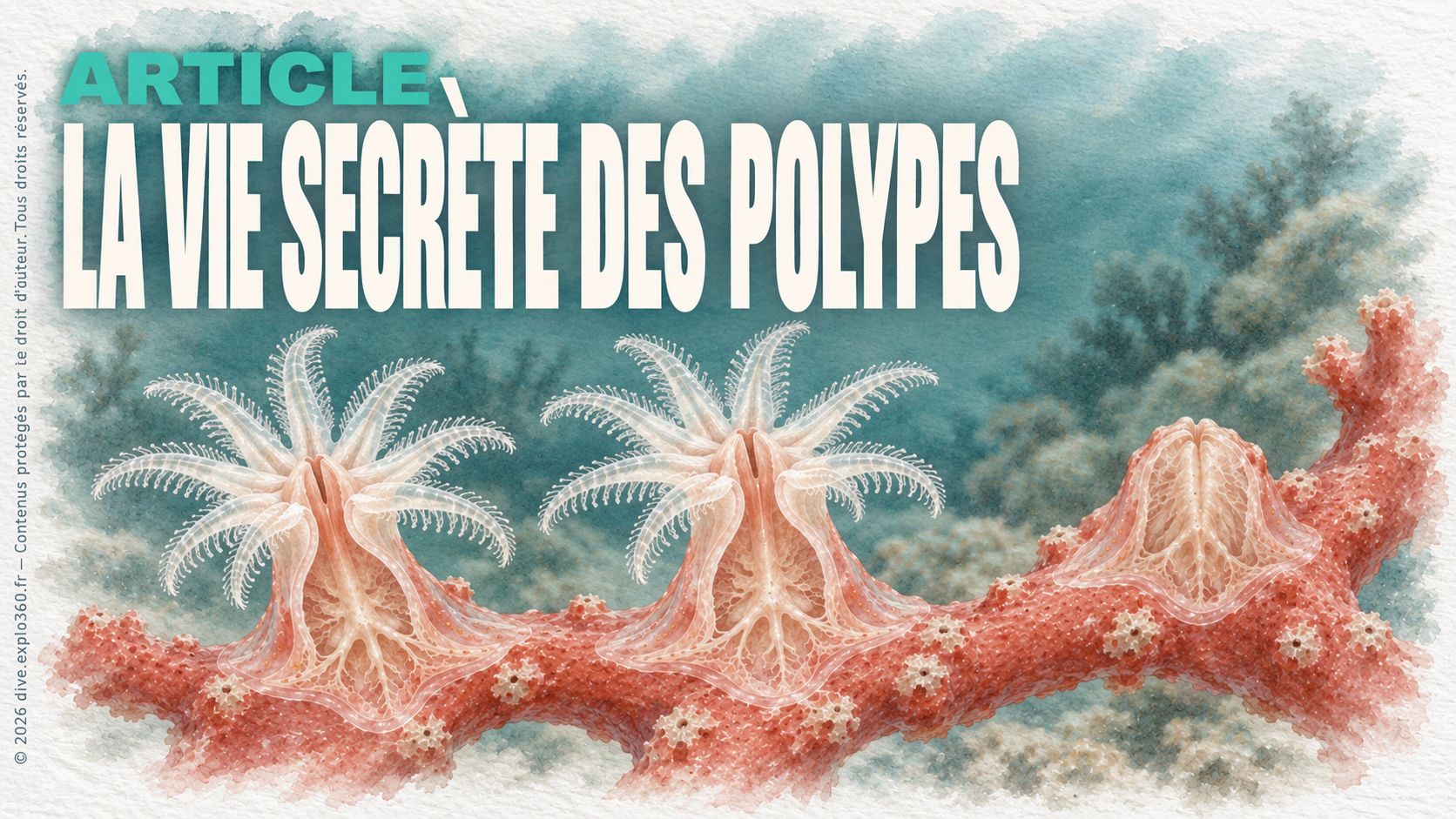
ArticleThe Hidden Life of Polyps: How Does a Colony Work?Read the article →ArticleTHE SECRETS OF SANDRead the article →JourneysJourney into maerl and sandDiscover → →