
 Habitat
  Depth
Depth  Group
Group  Role
Role WHAT DOES IT LOOK LIKE?
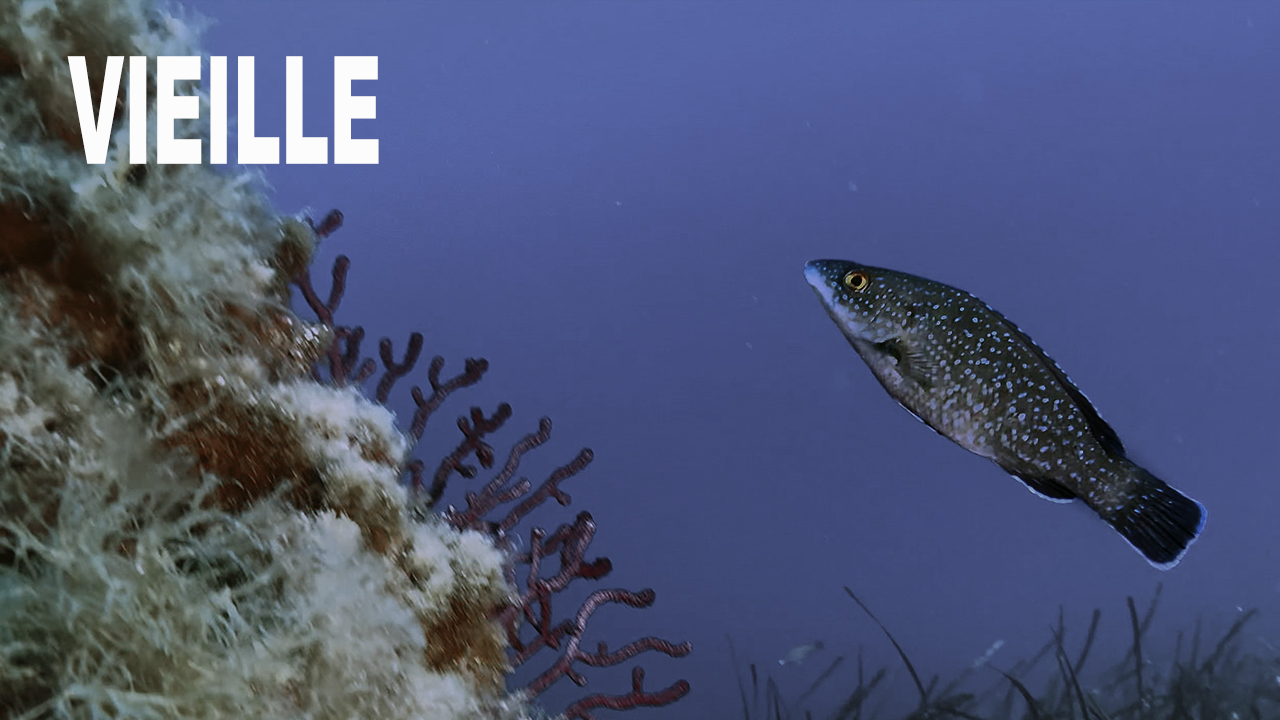
The Peacock wrasse has an elongated, slightly compressed body. Its head ends in a pointed snout with thick lips. Its colouring is highly variable with age, sex and the breeding season: it generally displays brownish, greenish or reddish tones decorated with pale bluish lines and spots. This colouring allows it to blend effectively into seagrass beds and rocky seabeds.WHERE DOES IT LIVE?
It mainly frequents Neptune grass beds, rocky seabeds and areas rich in algae. It stays close to the bottom, exploring cracks, rocks and vegetation in search of food.WHAT DOES IT EAT?
It mainly feeds on small benthic invertebrates such as crustaceans, molluscs, worms and sea urchins. Its dentition allows it to catch and crush prey living on the bottom or in seagrass beds.GO FURTHER WITH AMIGANSEAU
Unlock the full profile
Deepen your knowledge with the exclusive chapters and interactive resources included in an AMIGANSEAU licence.
- HOW DOES IT REPRODUCE?
- OUR OBSERVATIONS
- UNDERSTAND THE SPECIES
Also included in the full profile
- Advanced navigation between description, ecological context, observations and behaviour
- Interactive food chain to explore the species’ feeding relationships
- Infographic and illustrated summary profile