A stomach that reaches out
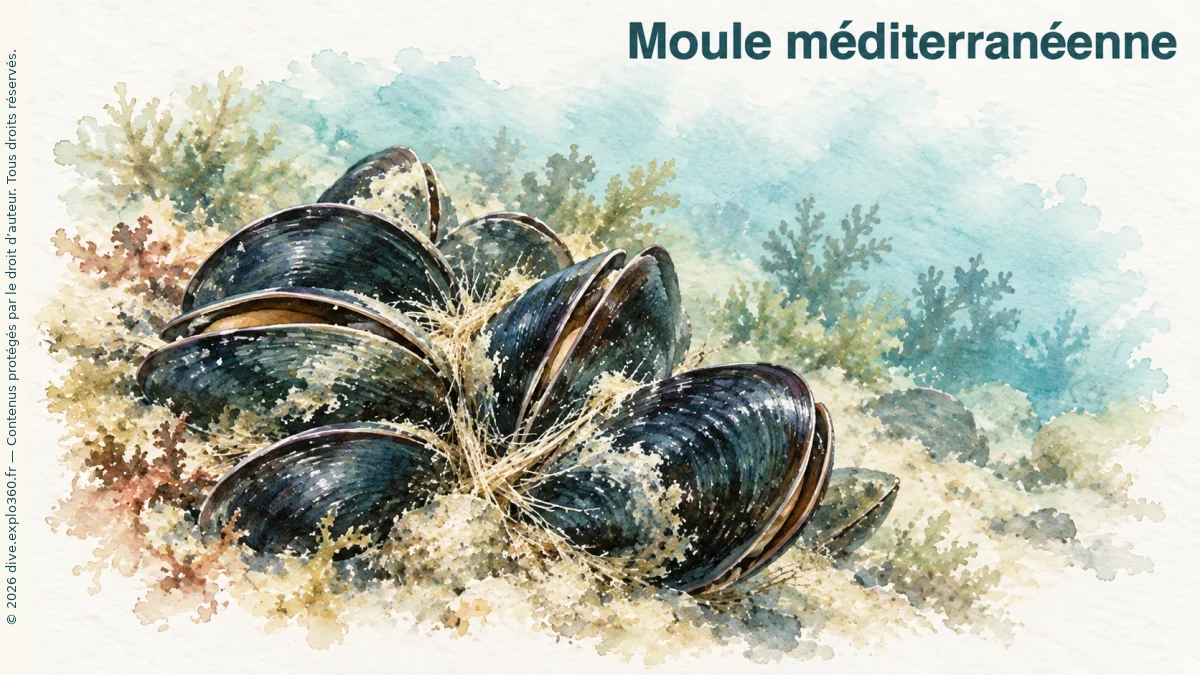
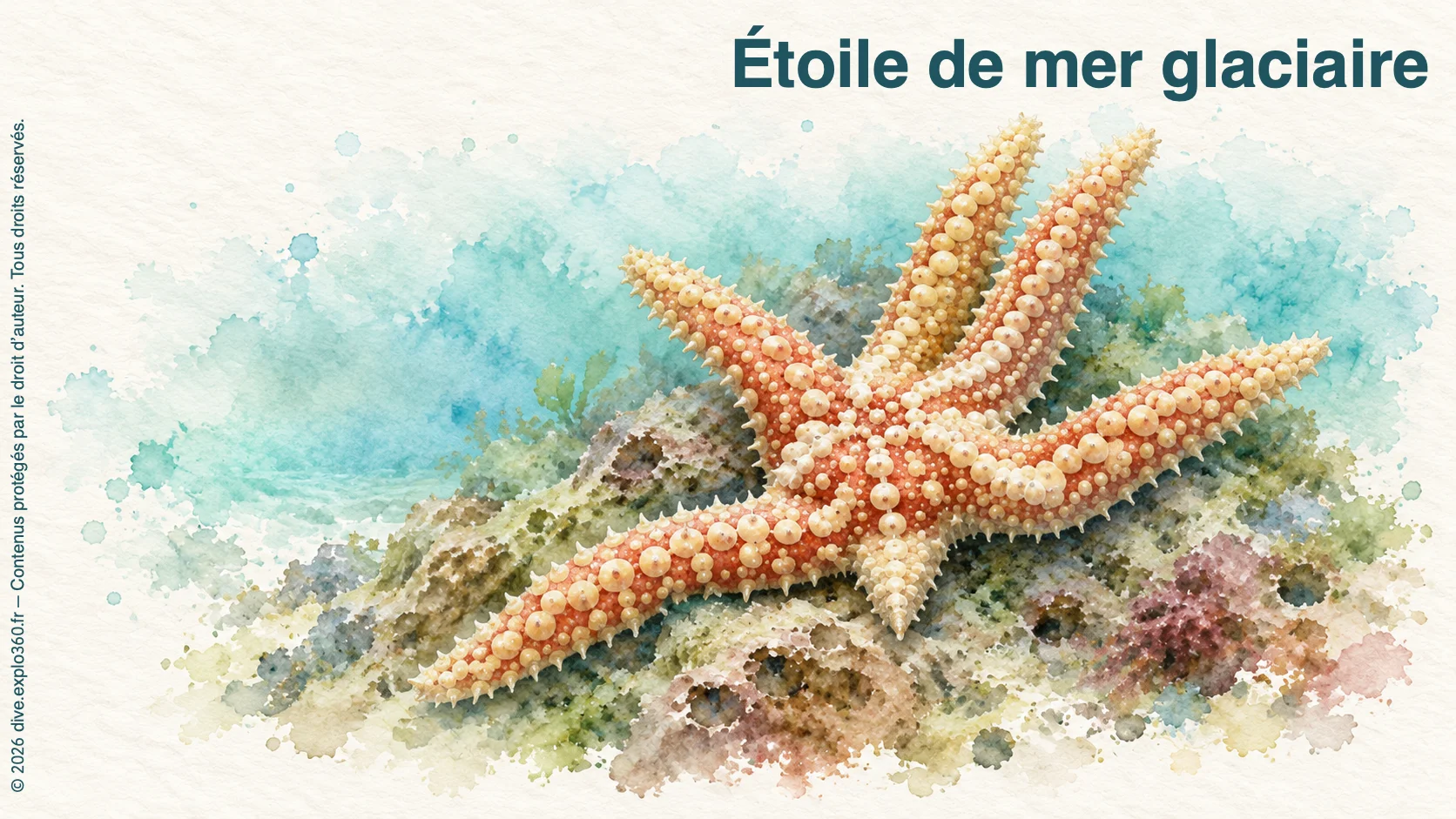
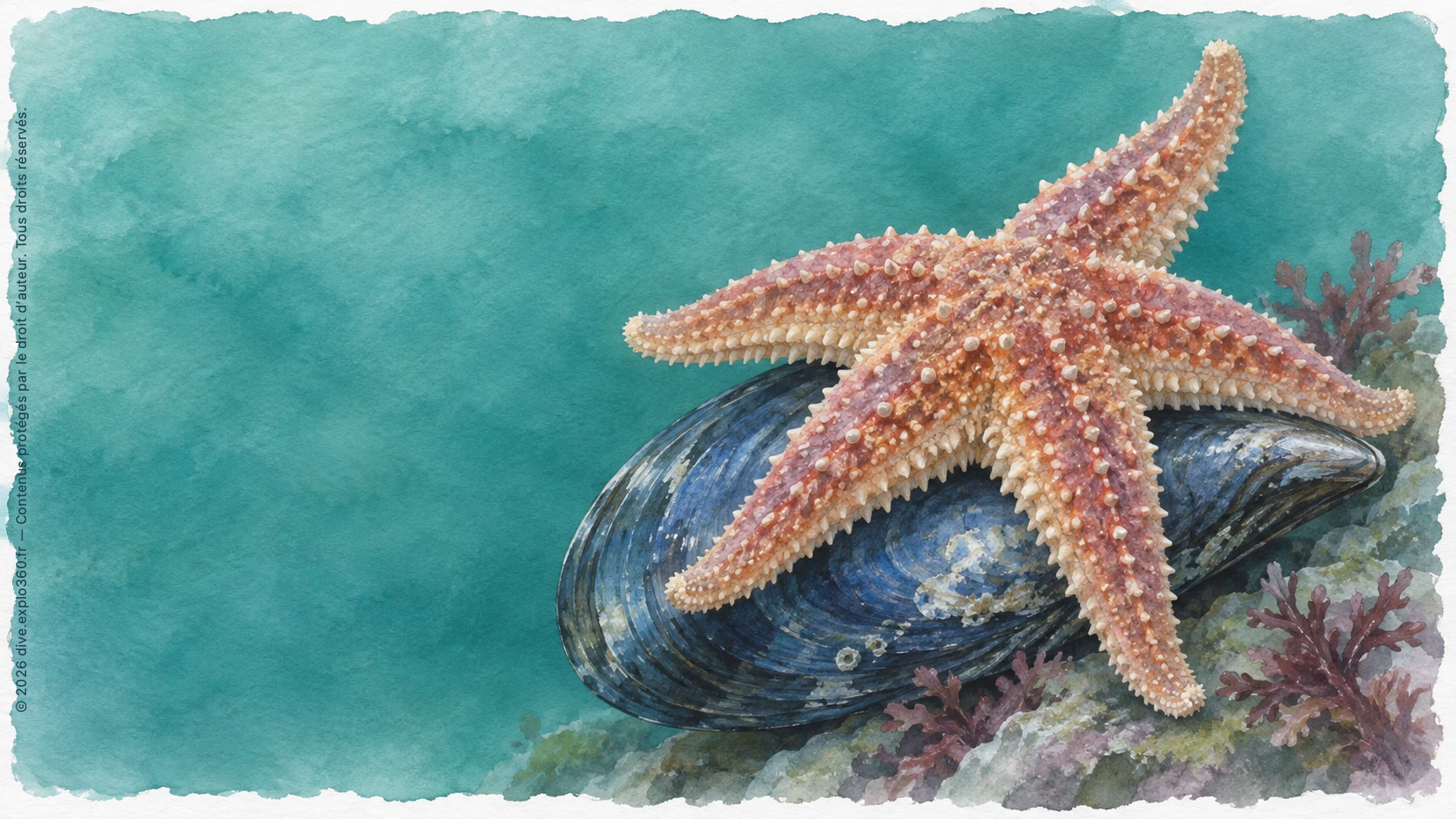
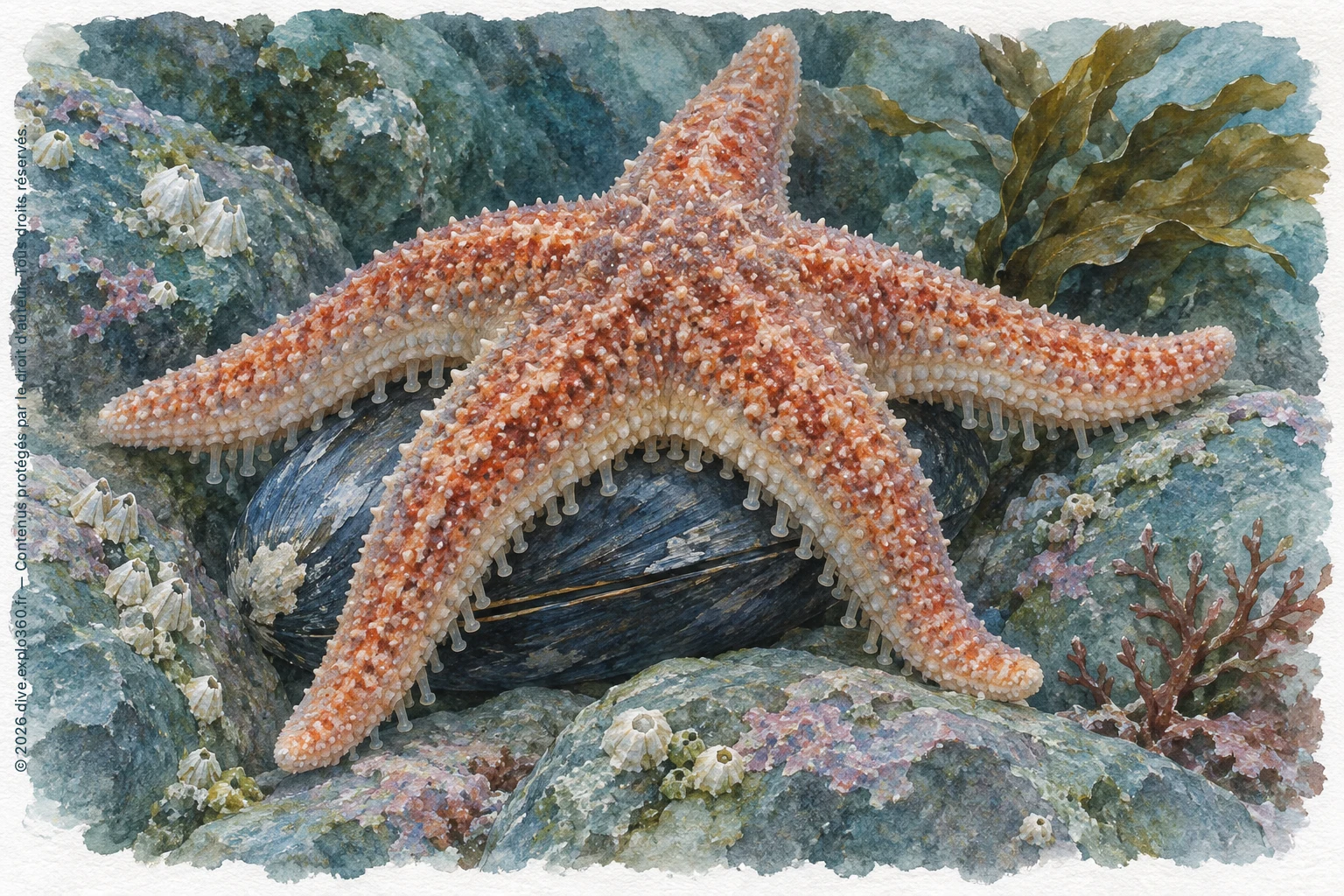
The sea star holds on with tiny tube feet under its arms. If the two halves of the shell part a little, it can push its stomach out through its mouth to reach the soft flesh.
Two openings, one current
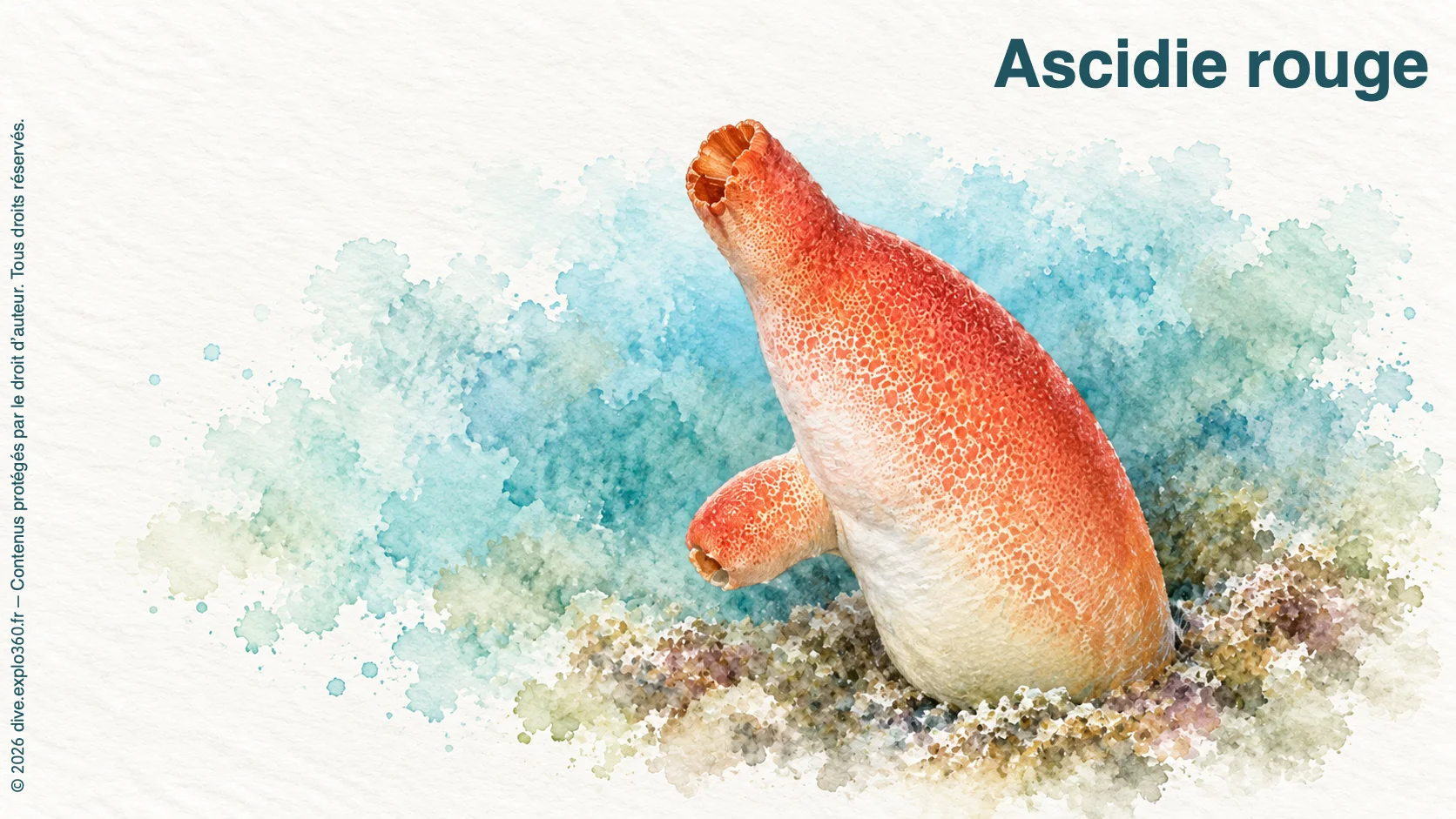
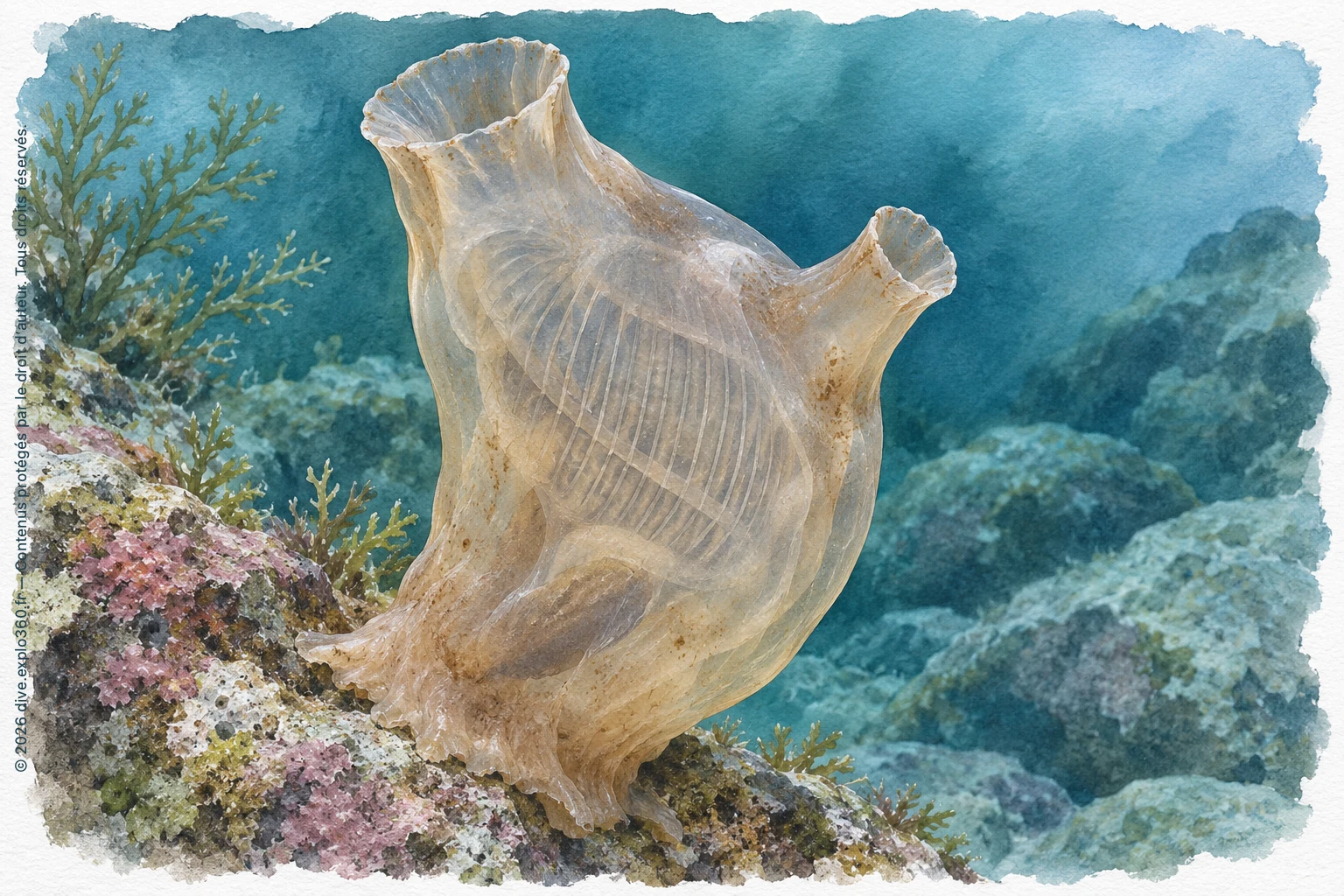
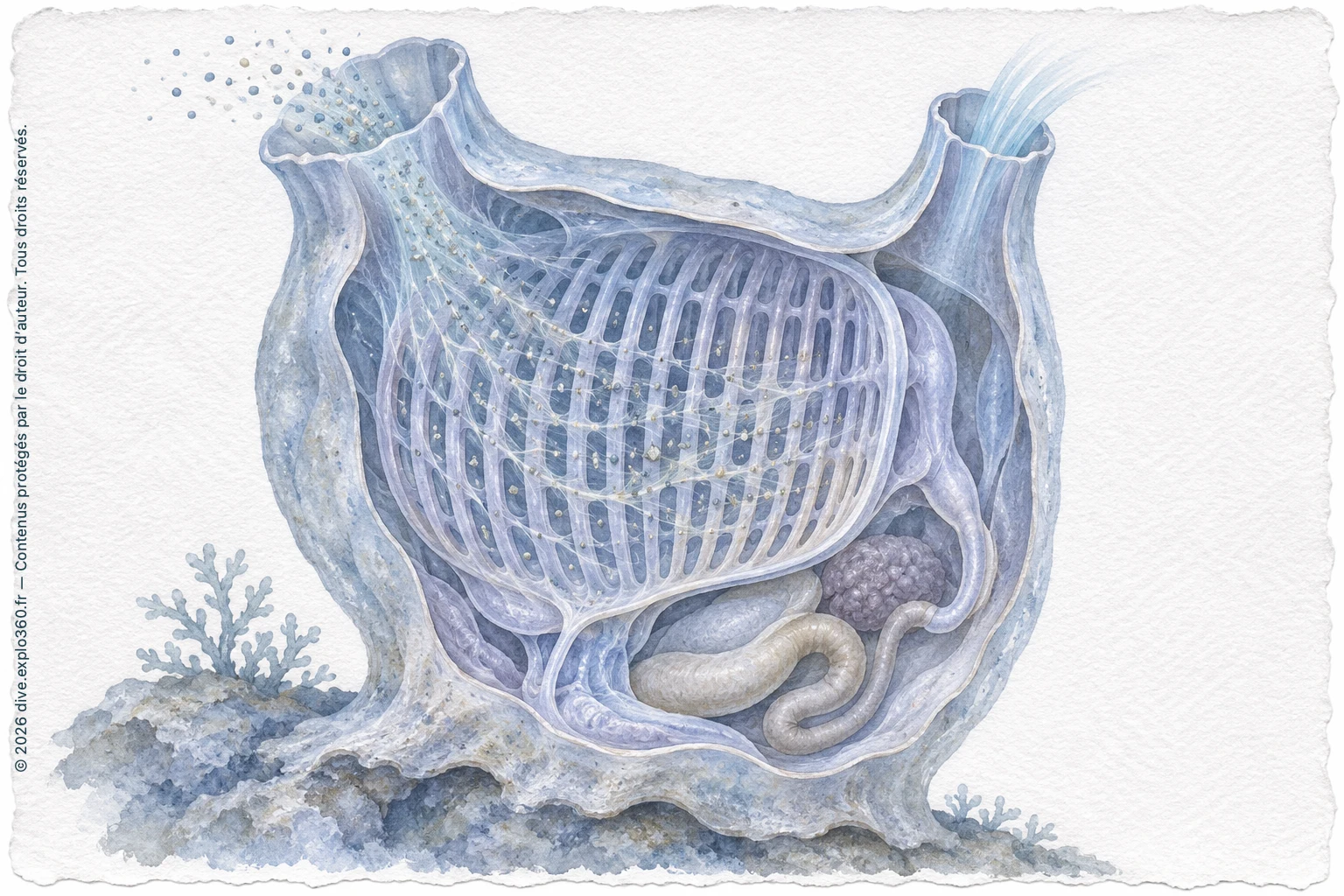
A sea squirt lives attached to a rock. Look at its two openings. Water enters through one and leaves through the other, bringing tiny pieces of food.
A net made of mucus
Inside the sea squirt is a fine net made of mucus, a sticky substance the animal makes. Tiny bits of food get caught in it. The sea squirt swallows the net and the food together.
GO FURTHER WITH AMIGANSEAU
Continue reading
Discover full species guides, in-depth content and interactive tools available with your licence.
Dive.Explo360 is an independent, self-funded nonprofit. Every licence helps us create new content, improve our teaching tools and keep some of our resources free and ad-free.
Choose a licence that suits your needs for personal, educational or professional use.
Open-access resources remain available without a subscription.
Explore the same world