A landscape built by life
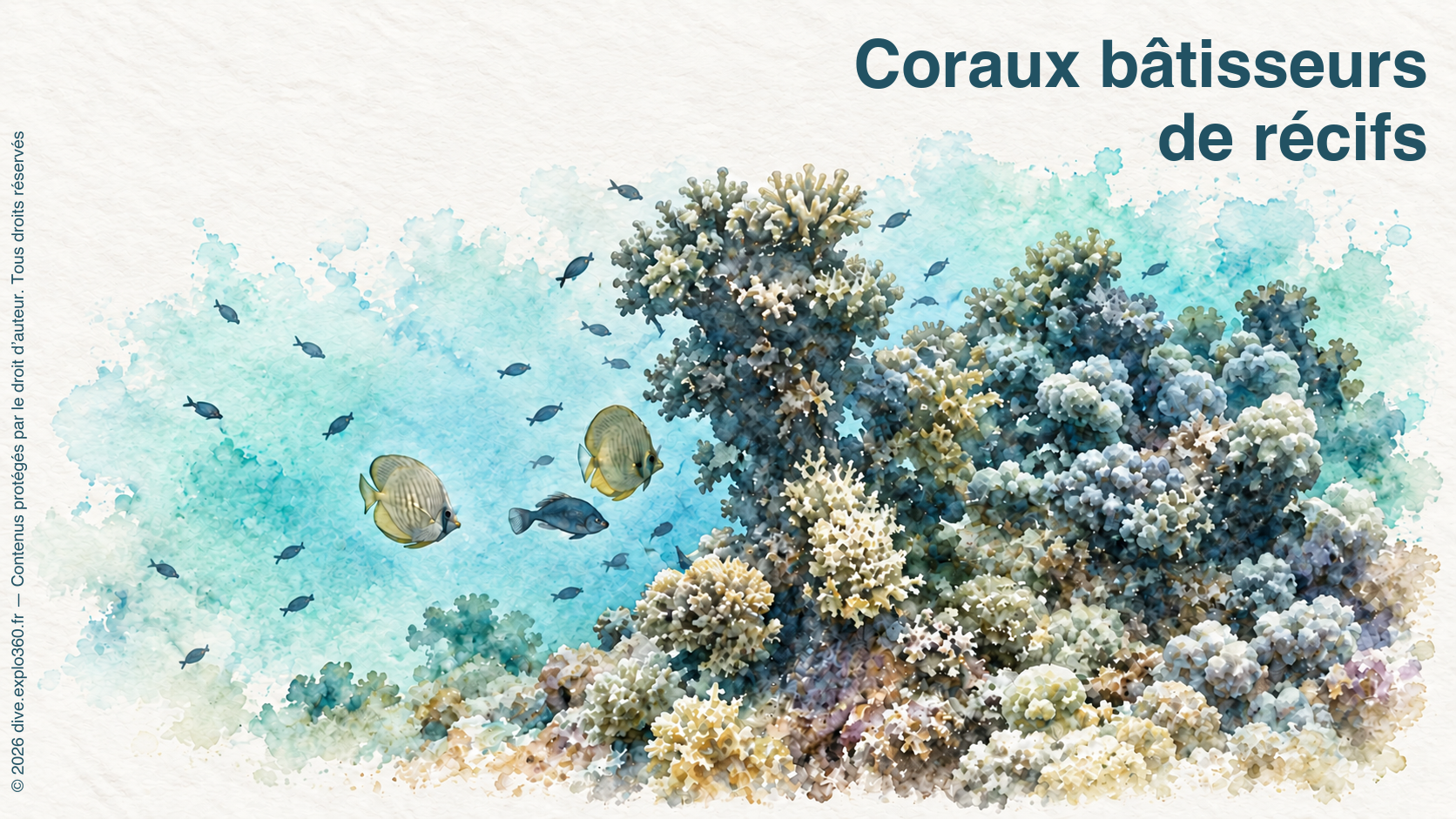
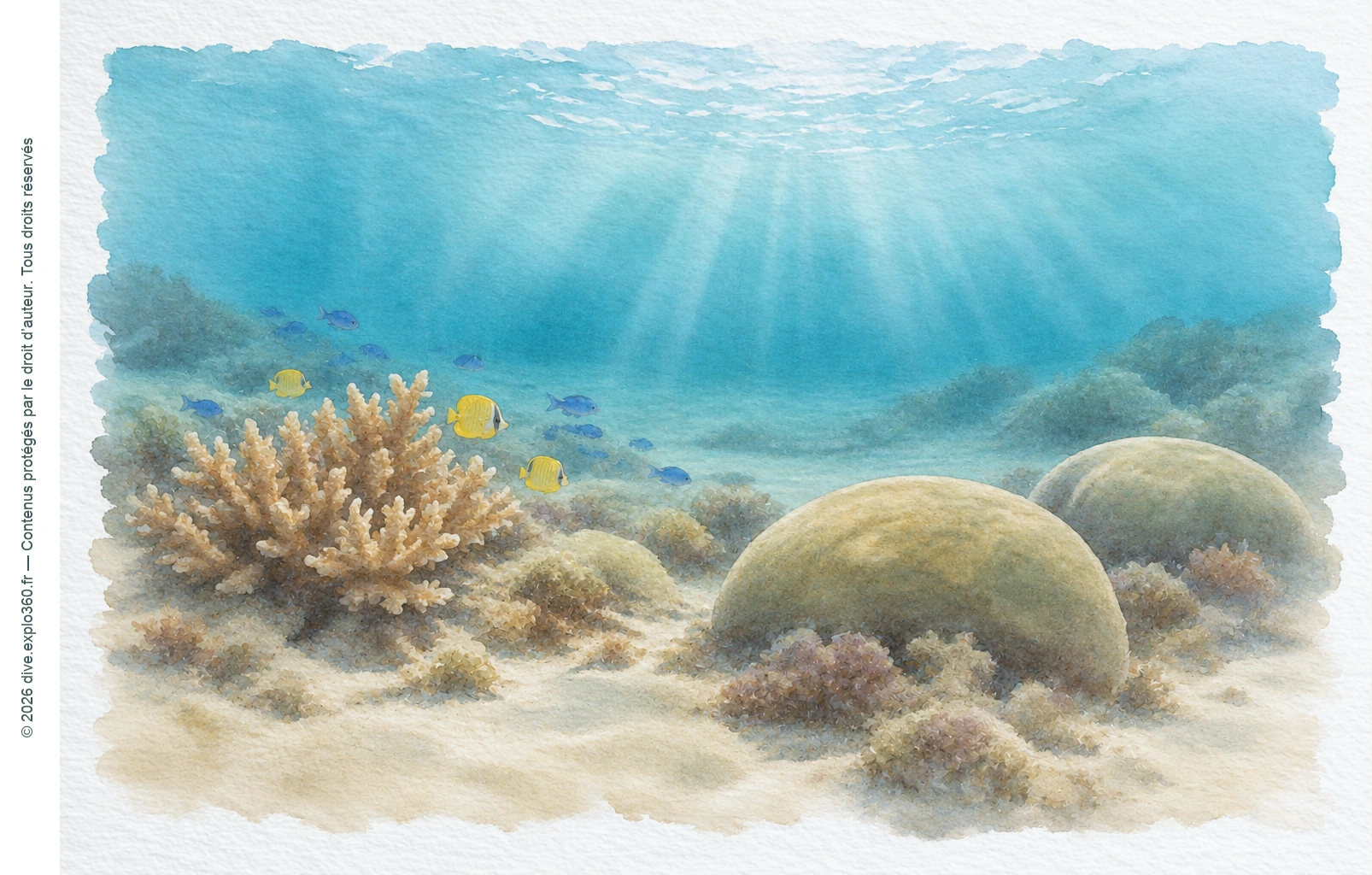
Stony corals lay down hard skeletons as they grow. The skeletons accumulate, and some algae help bind them together. The resulting reef includes living colonies, old skeletons and the spaces between them.
The secret of the tiny builders
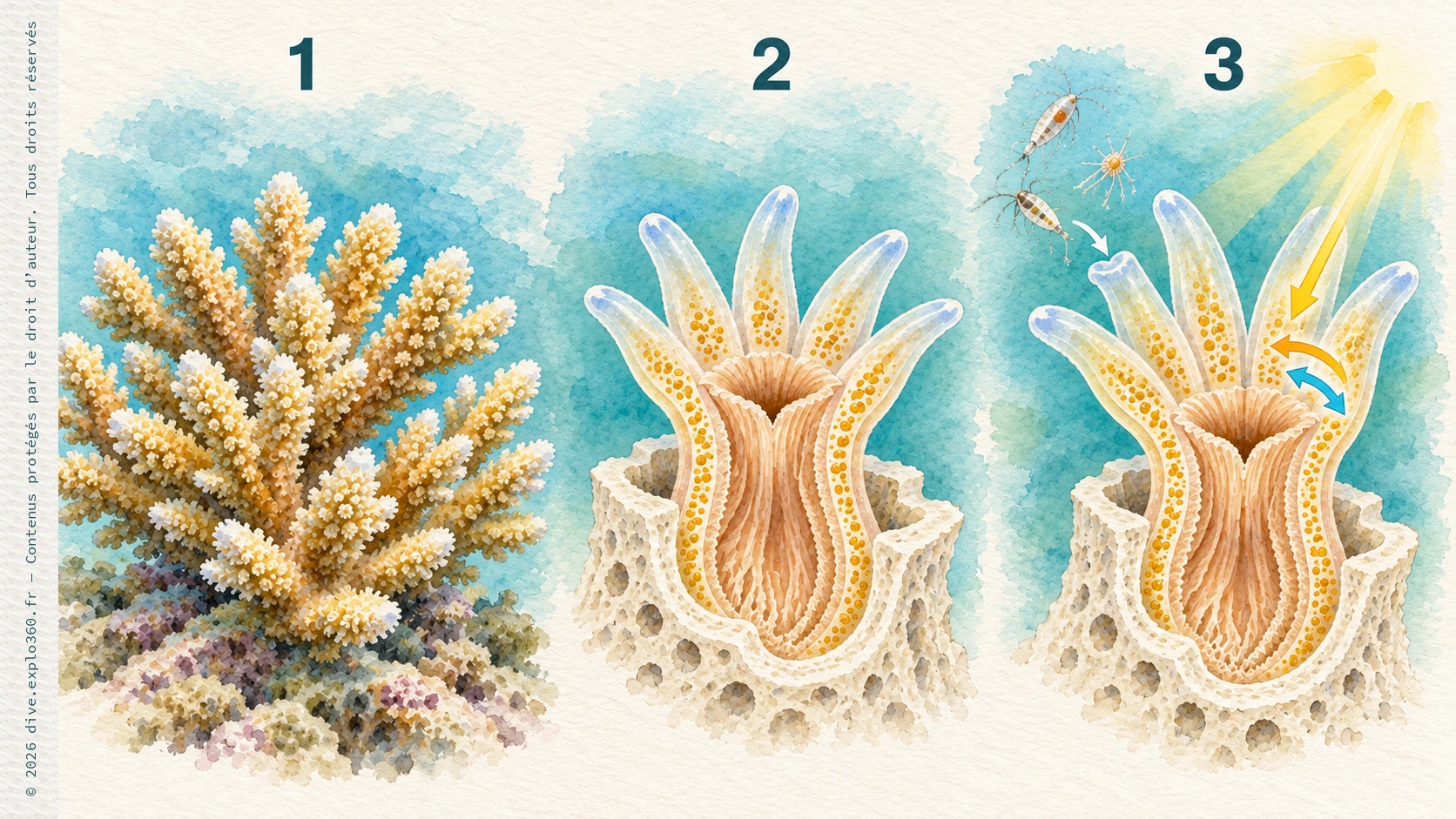
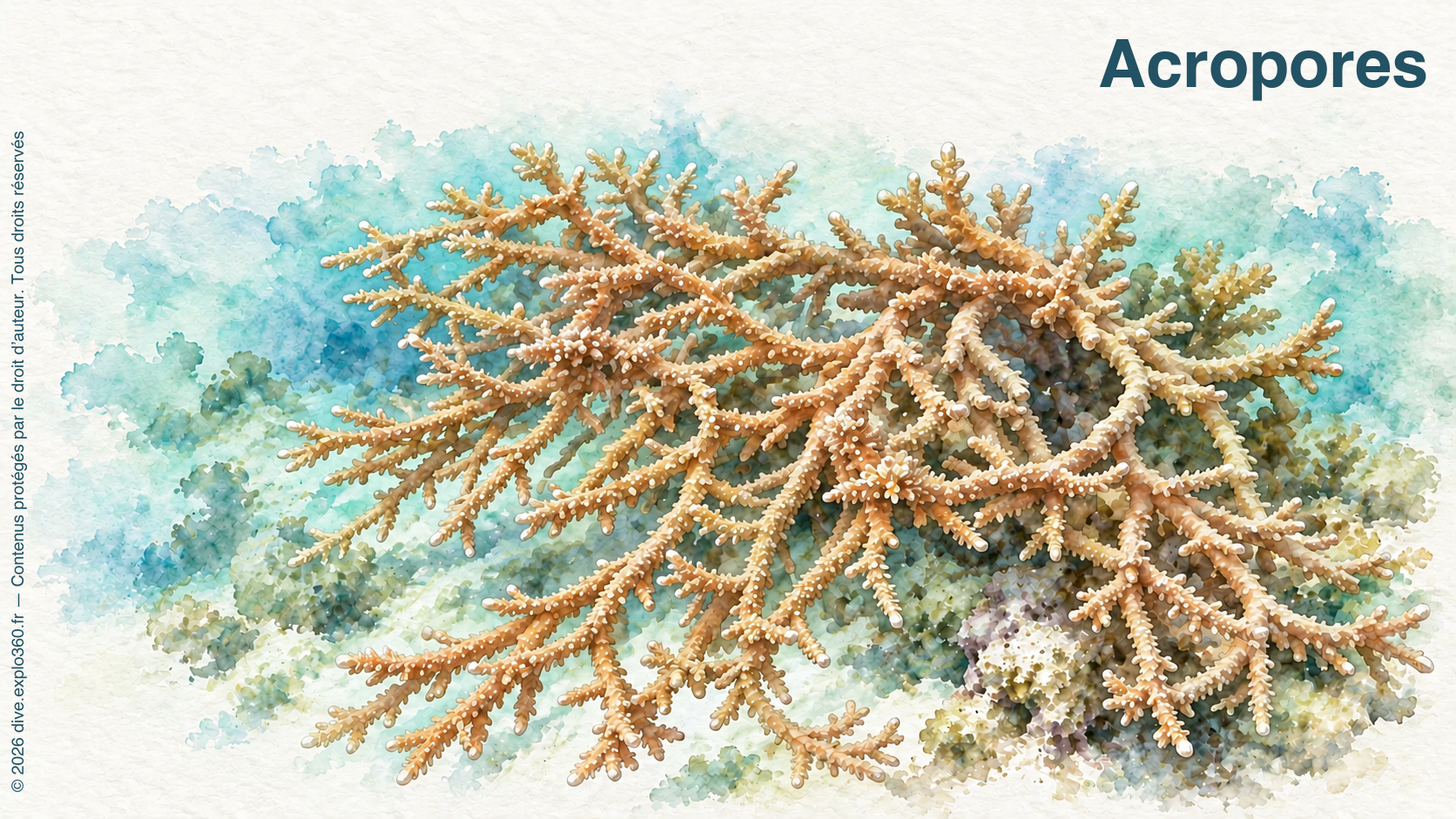
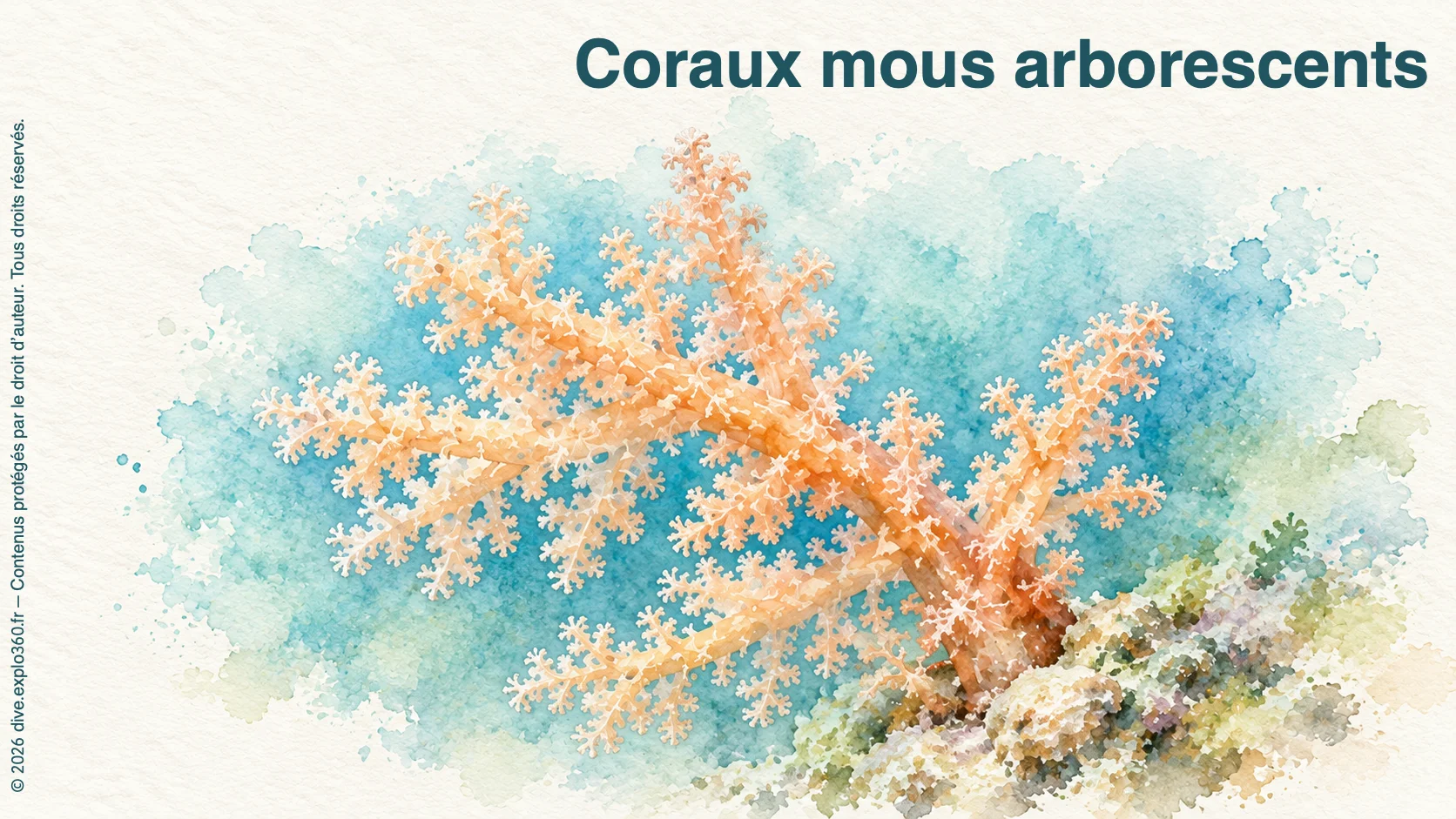
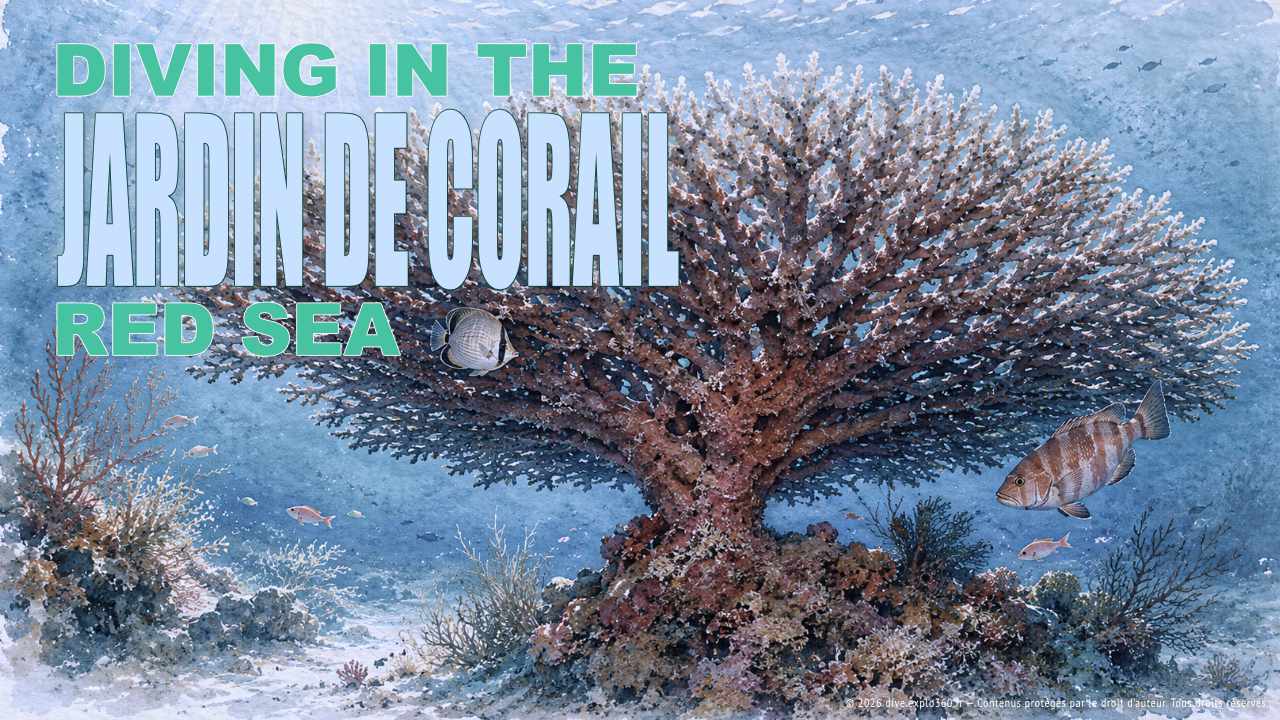
A coral polyp catches small prey with tentacles around its mouth. In stony corals, polyps build a skeleton of calcium carbonate. As more polyps grow, the colony can spread into a plate, form a mound or grow branches.
A partnership with light
In many tropical corals, microscopic algae live inside the polyps. They use sunlight to make sugars and other compounds, some of which the coral uses. The coral provides shelter, carbon dioxide and nutrients. This close partnership is called symbiosis.
Three destinations, one way of looking
In the videos from the Red Sea, the Maldives and Raja Ampat, look for the places animals use to feed or take cover. Similar shapes can occur in different coral species, and the inhabitants vary from one location to another.
Shelters at every scale
A crack may shelter a shrimp or young fish. Larger animals can find room under ledges, while others spend much of their time in the water above the reef or on nearby sand.
GO FURTHER WITH AMIGANSEAU
Continue reading
Discover full species guides, in-depth content and interactive tools available with your licence.
Dive.Explo360 is an independent, self-funded nonprofit. Every licence helps us create new content, improve our teaching tools and keep some of our resources free and ad-free.
Choose a licence that suits your needs for personal, educational or professional use.
Open-access resources remain available without a subscription.
Explore the same world