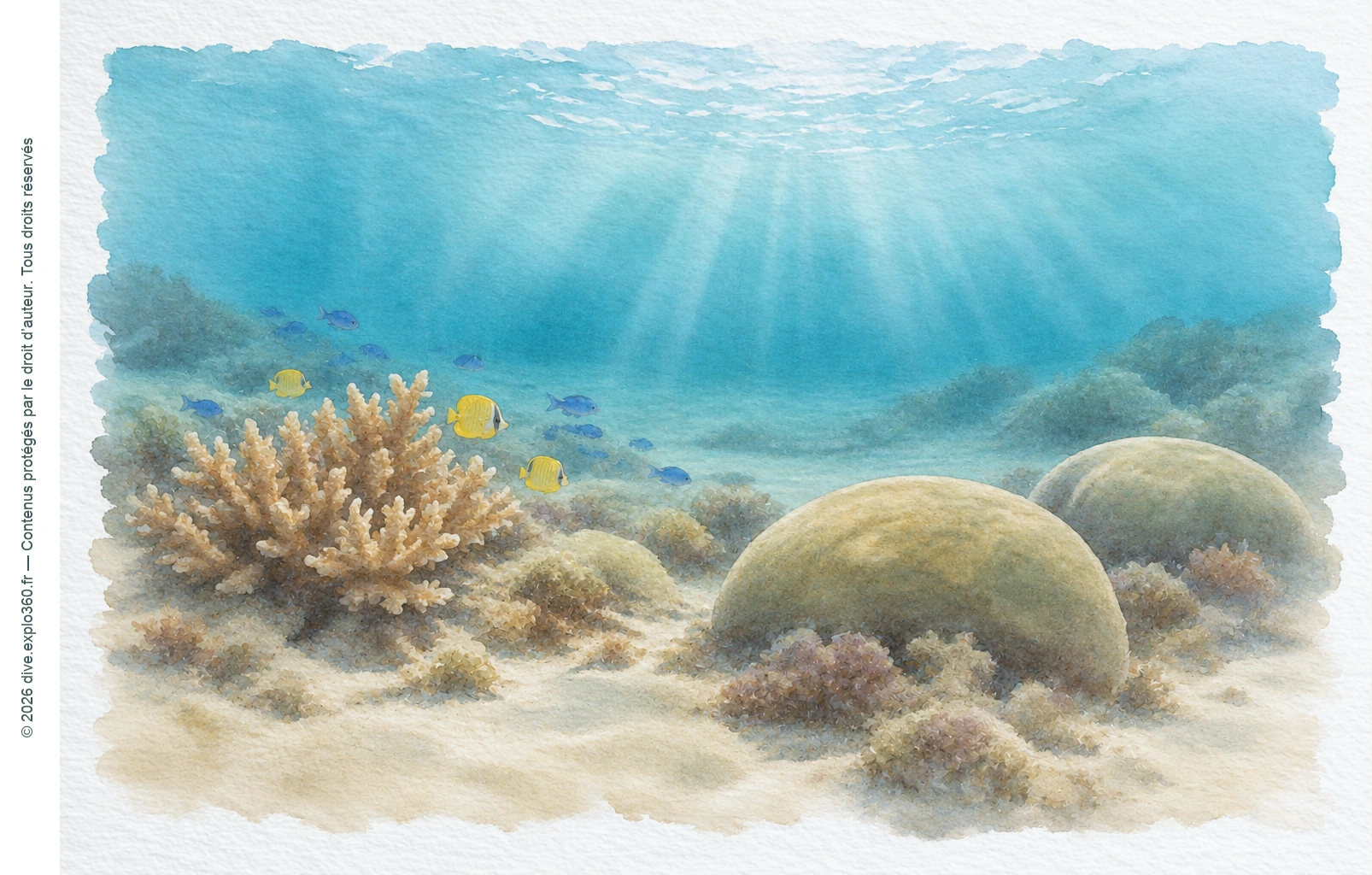
A landscape built by life
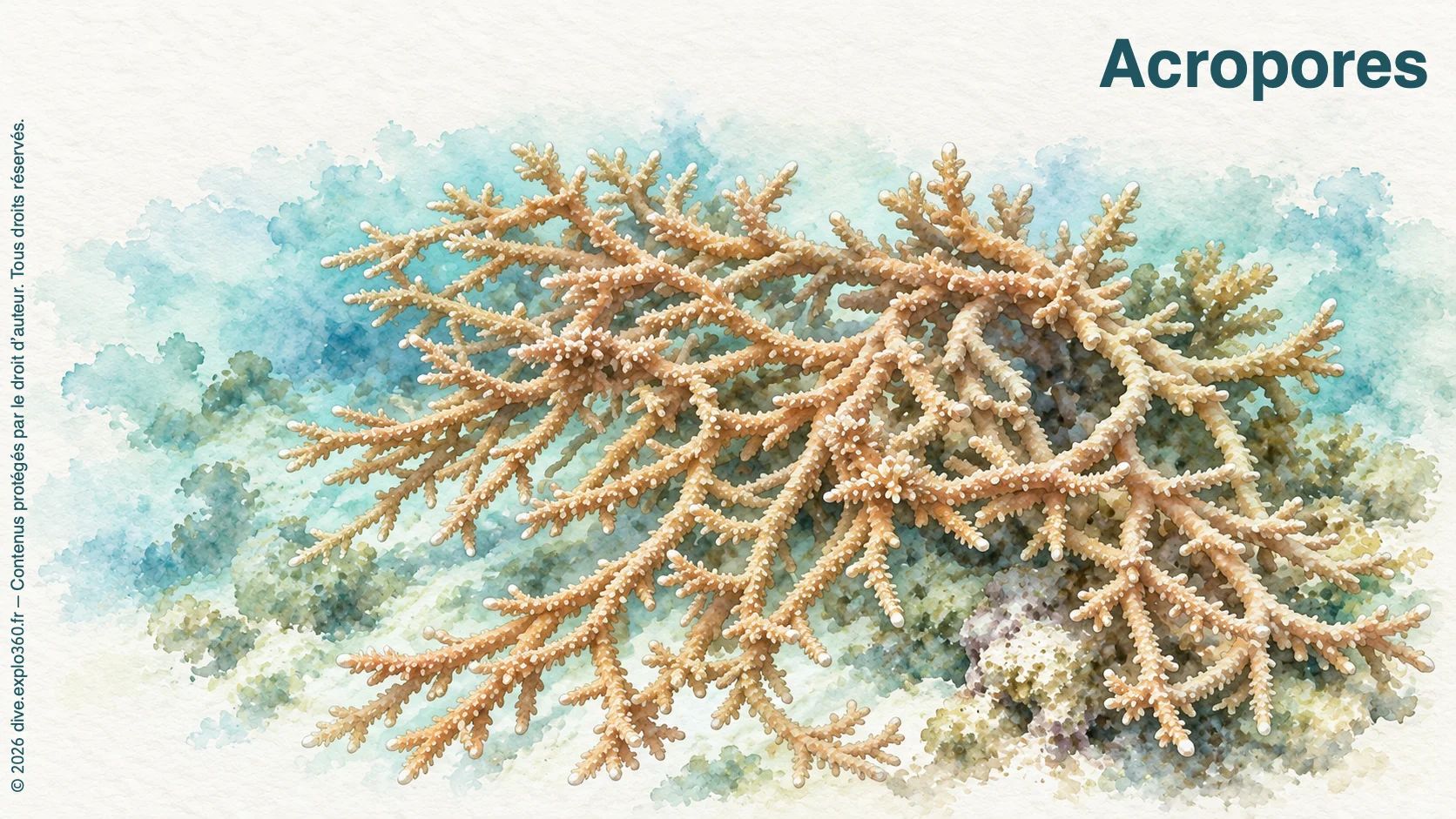
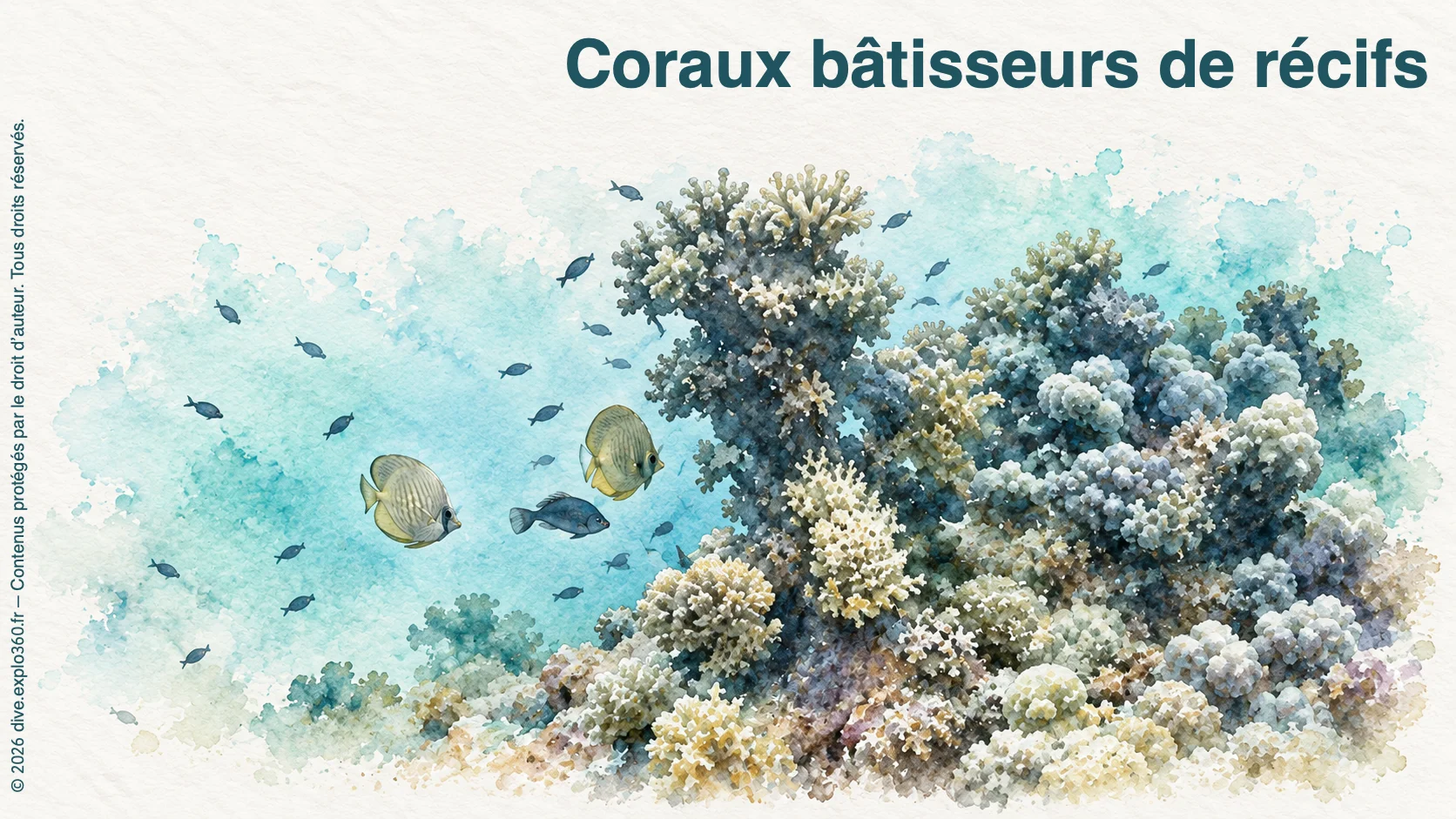
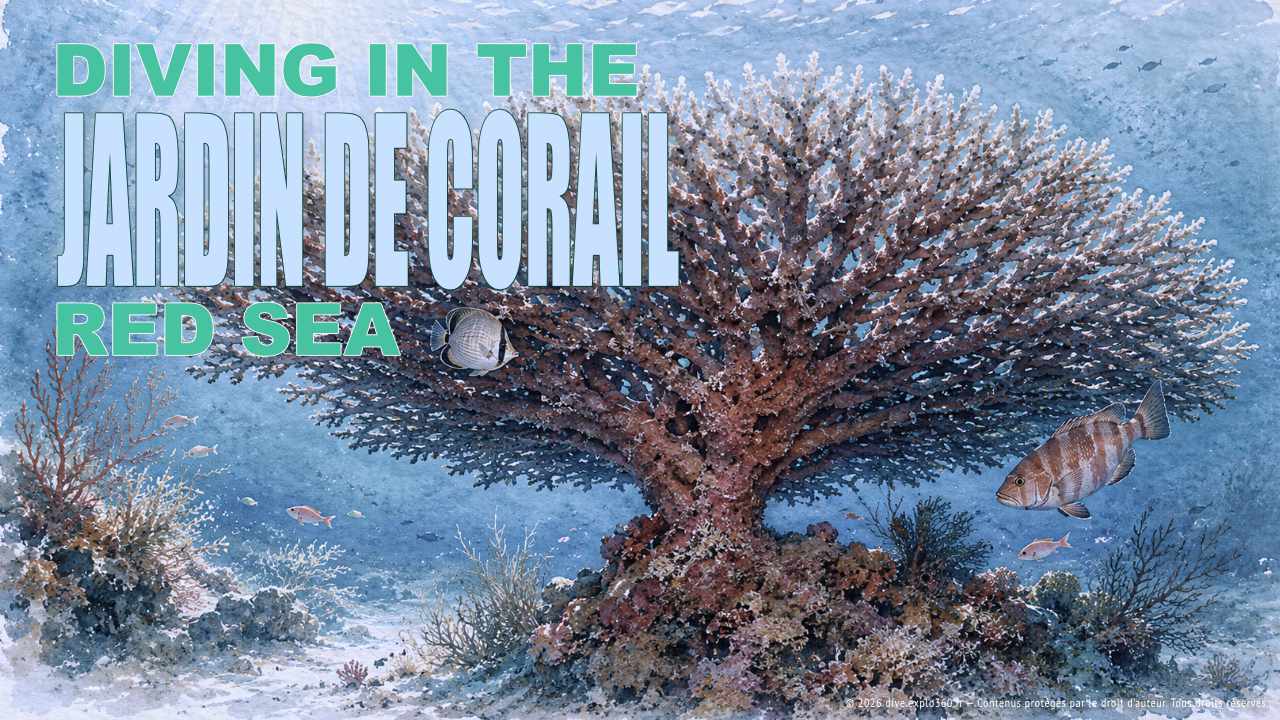
Tropical reefs develop through the accumulation of calcium carbonate produced by living organisms. Stony corals are among their main builders. Growth, erosion and consolidation shape the structure over time, making a reef much more than a single colony.
The secret of the tiny builders
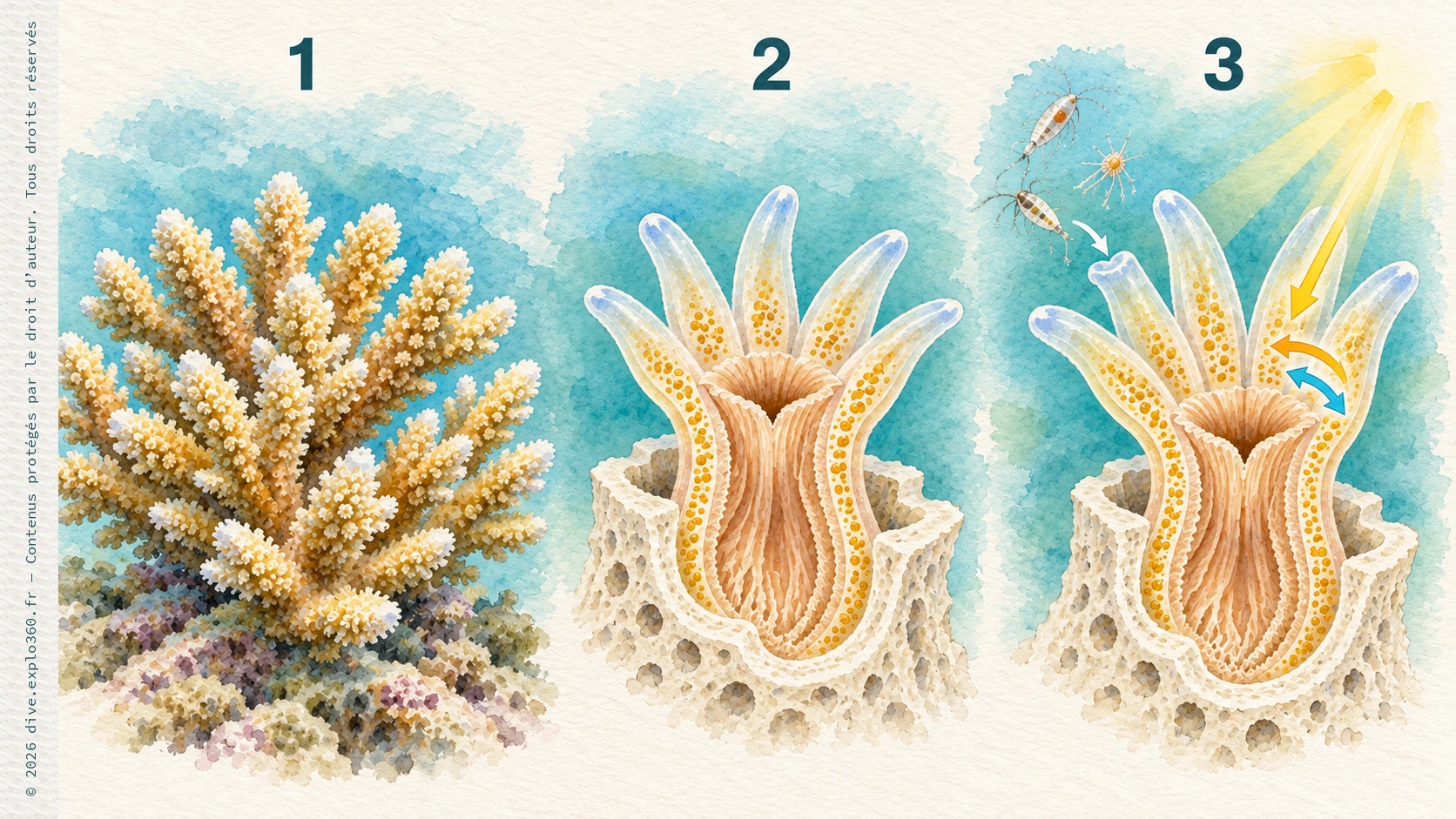
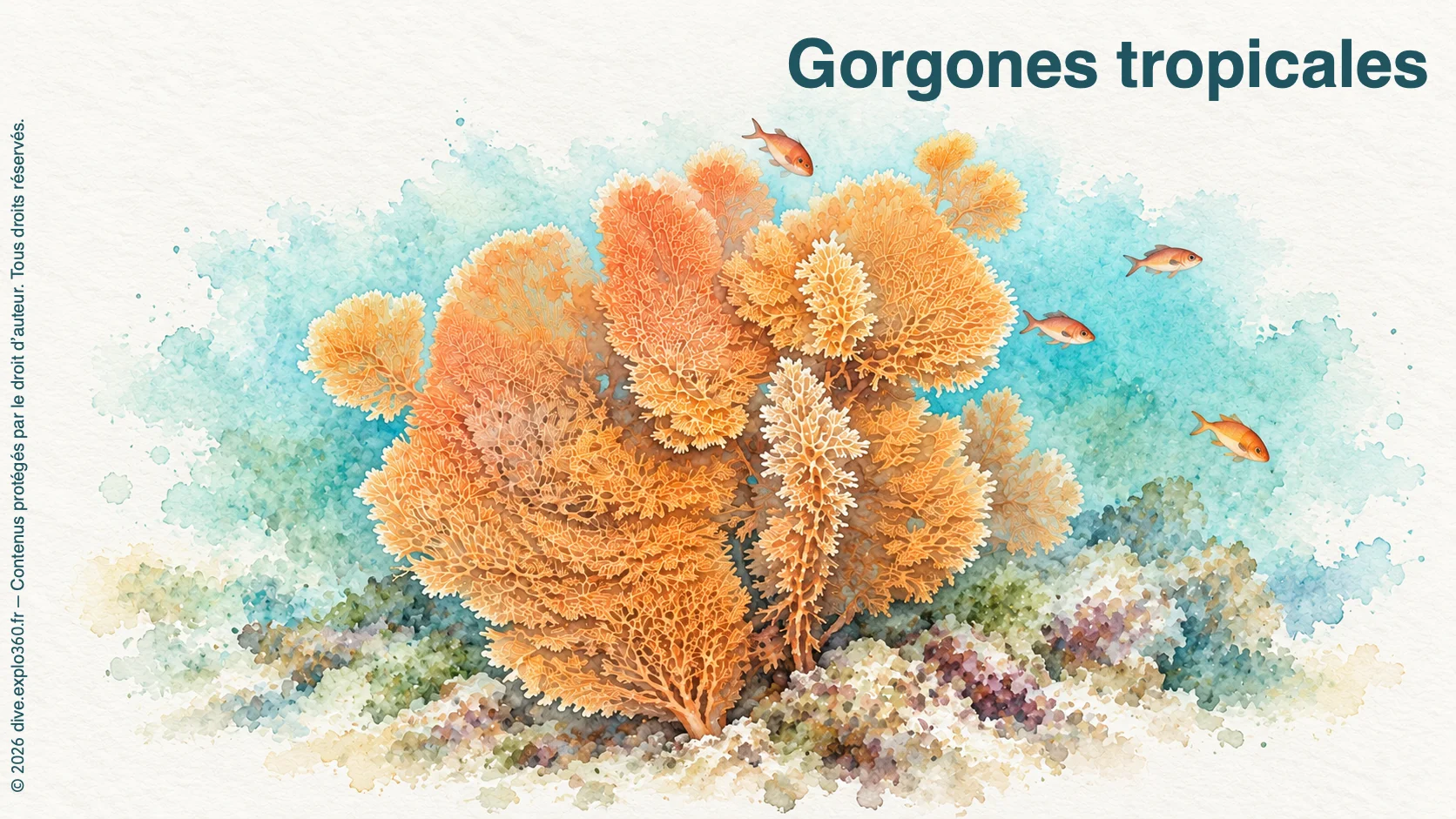
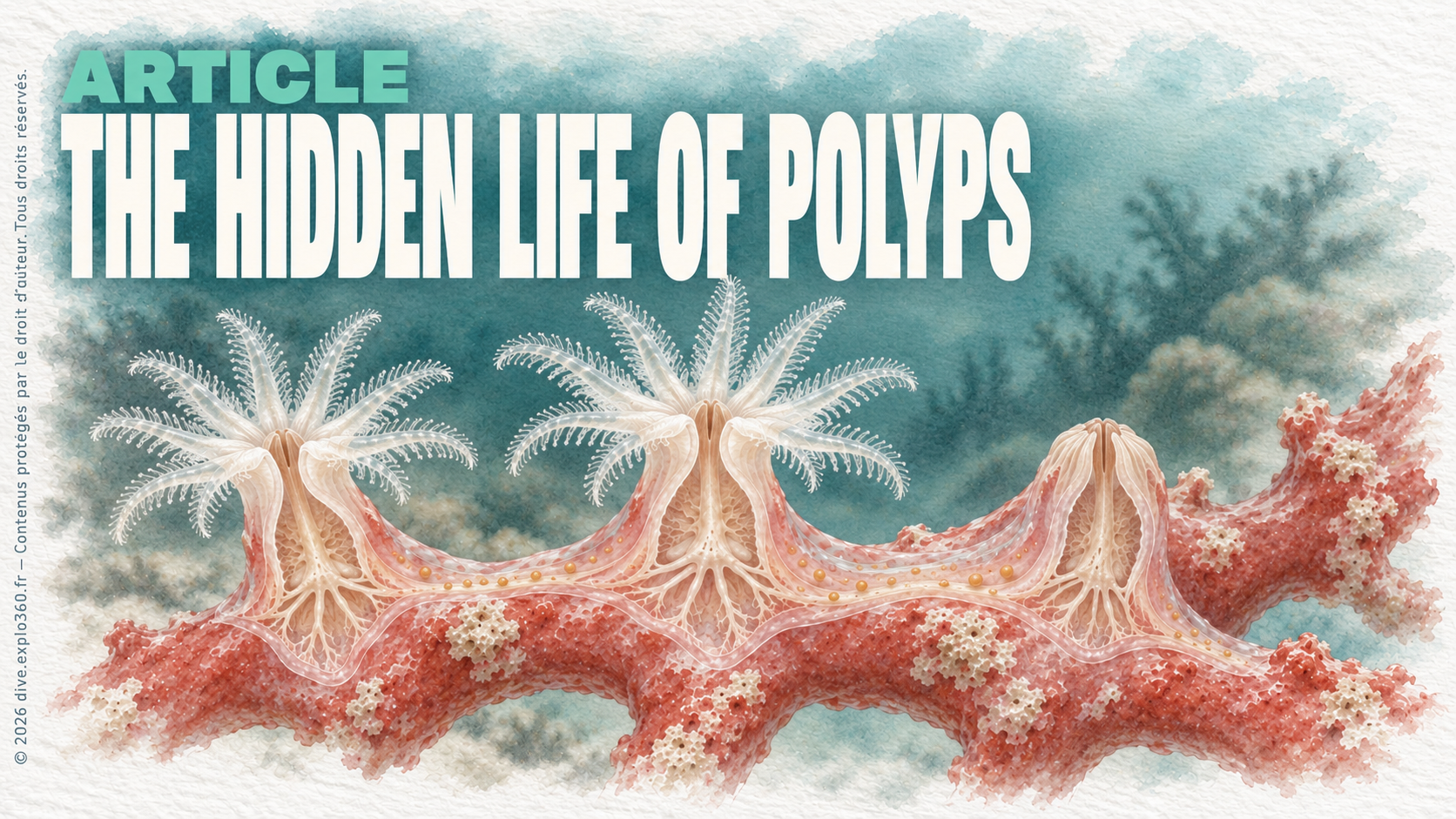
The polyp is the coral’s animal unit: tentacles surround its mouth and help catch prey. Stony corals produce a calcium carbonate skeleton. New polyps can enlarge the colony. Soft corals and sea fans have a different structure and do not build the same limestone framework.
A partnership with light
Symbiosis links many tropical corals with microscopic algae in their tissues. Algal photosynthesis supplies an important share of their energy. Exchanges also use resources from the coral’s metabolism. Capturing prey complements this supply: the coral remains an animal.
Three destinations, one way of looking
The coral reefs of the Red Sea, the Maldives and Raja Ampat differ in their species composition, structure and environmental conditions. Comparing them allows us to study mechanisms shared by reef ecosystems, including the building of limestone structures, feeding relationships and the ways organisms use habitats. Underwater videos allow us to observe these features in their natural setting, but they show only part of a reef at a particular moment. They are therefore insufficient either to produce a complete species inventory or to assess the reef’s health.
Shelters at every scale
The variety of coral shapes and reef structures creates a mosaic of microhabitats with different characteristics. Cracks, cavities, overhangs and branches provide refuges whose use depends, among other things, on their size, light levels and exposure to currents. These habitats are also connected to neighbouring seagrass meadows and sandy seabeds. Some species move between these environments to feed or find shelter, sometimes following a daily cycle. Others change habitats as they grow, particularly between the juvenile and adult stages. Reef functioning therefore depends on connections between its different habitats and the surrounding environments.