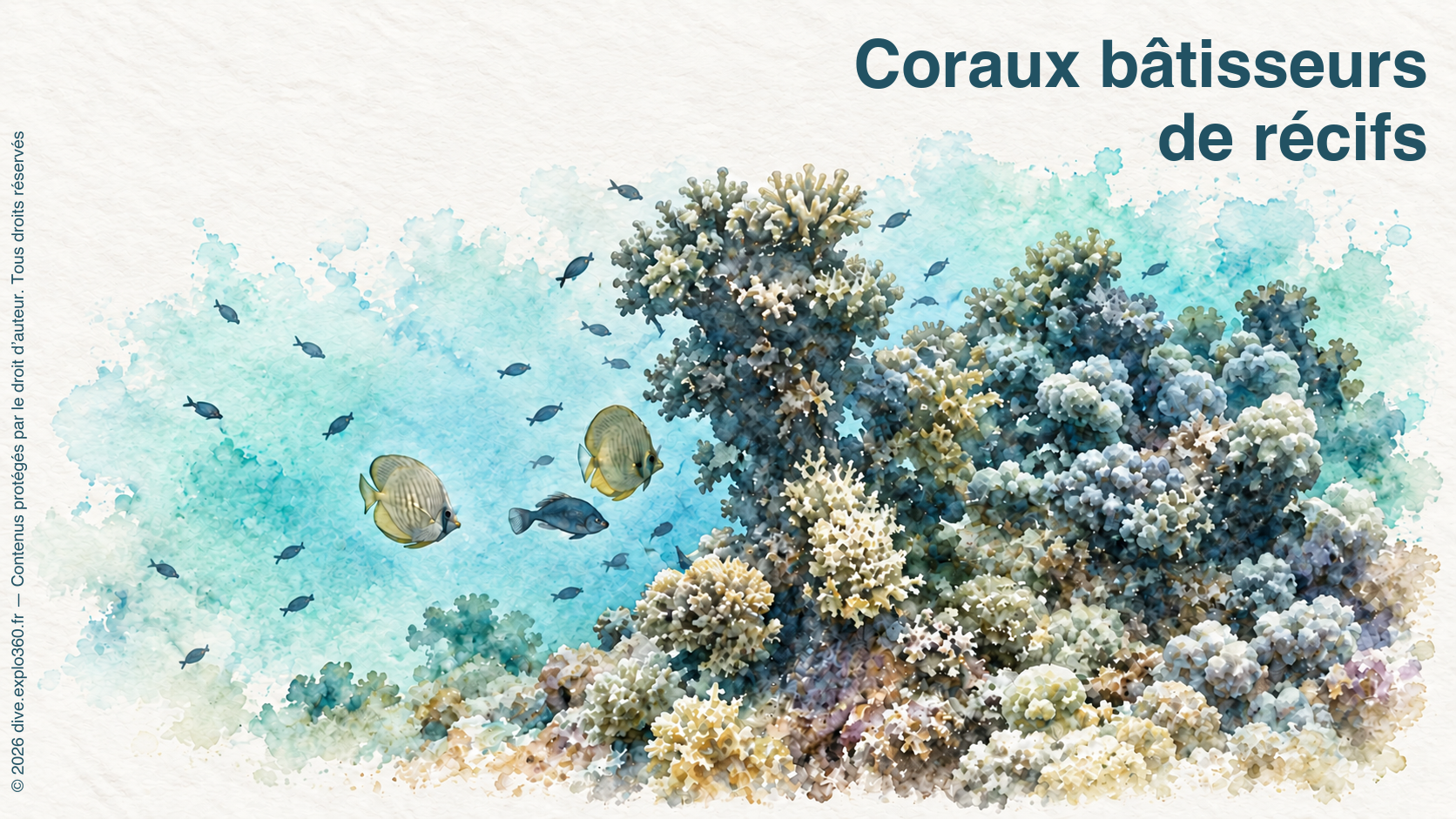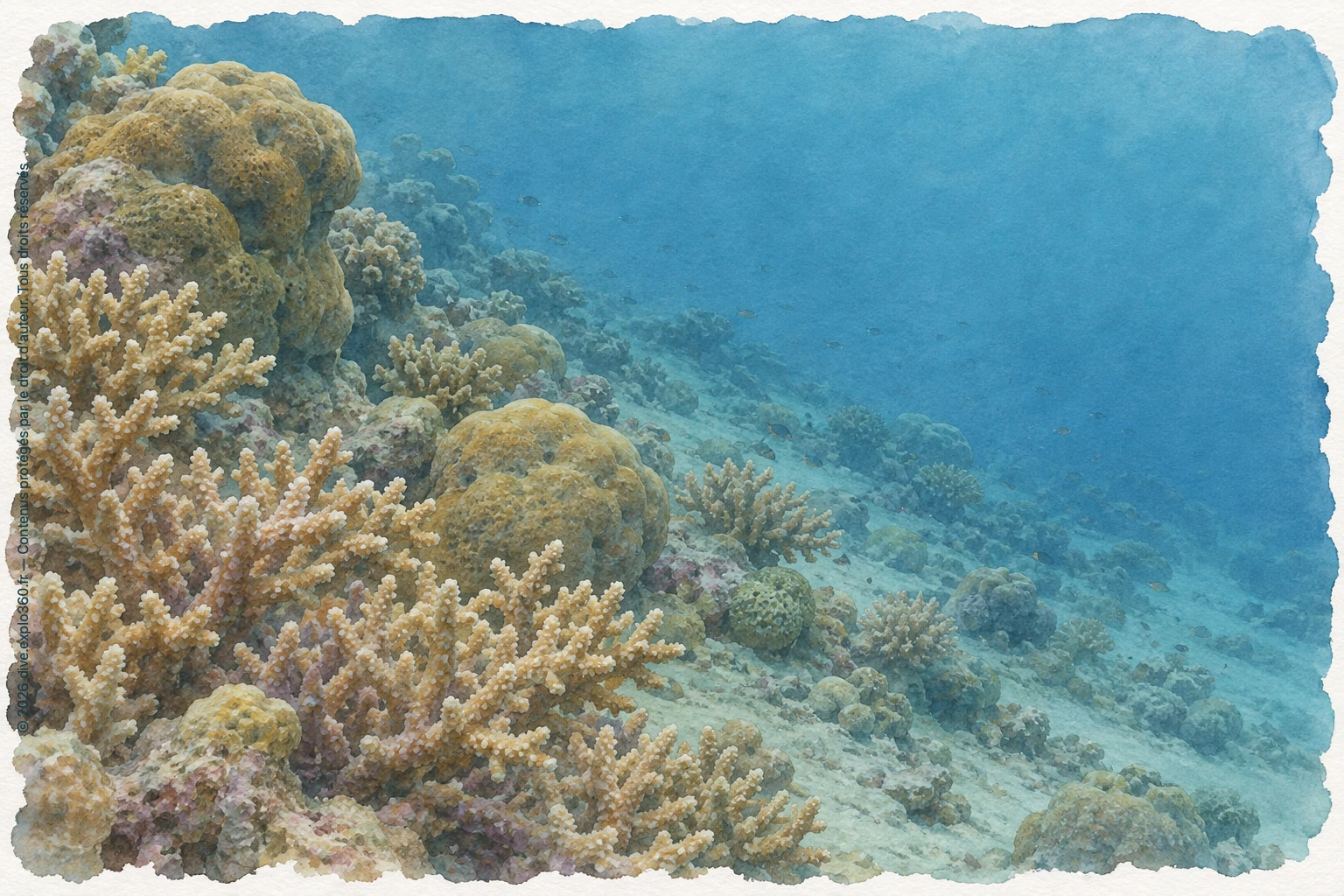
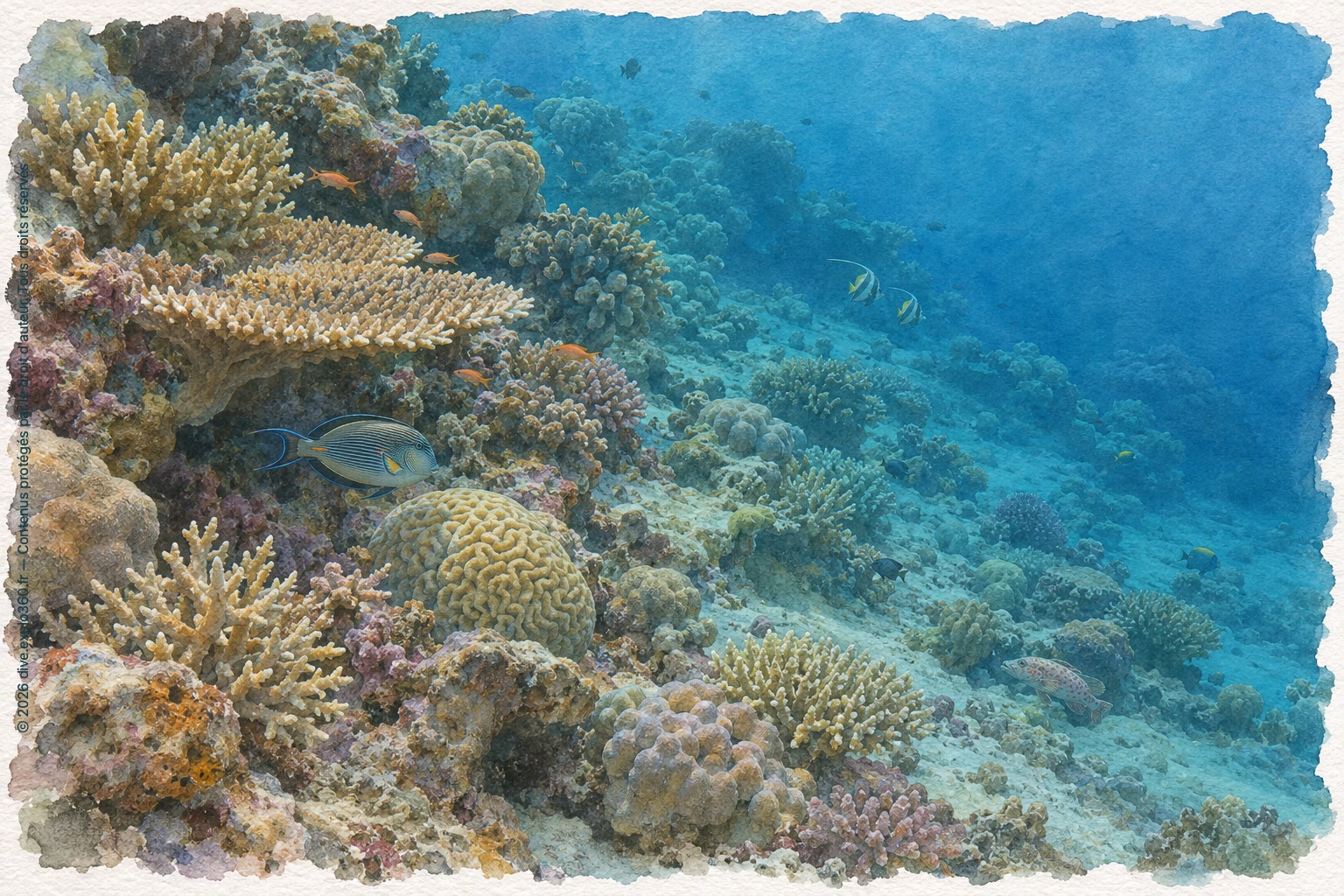
A warm sea with temperatures that vary by region
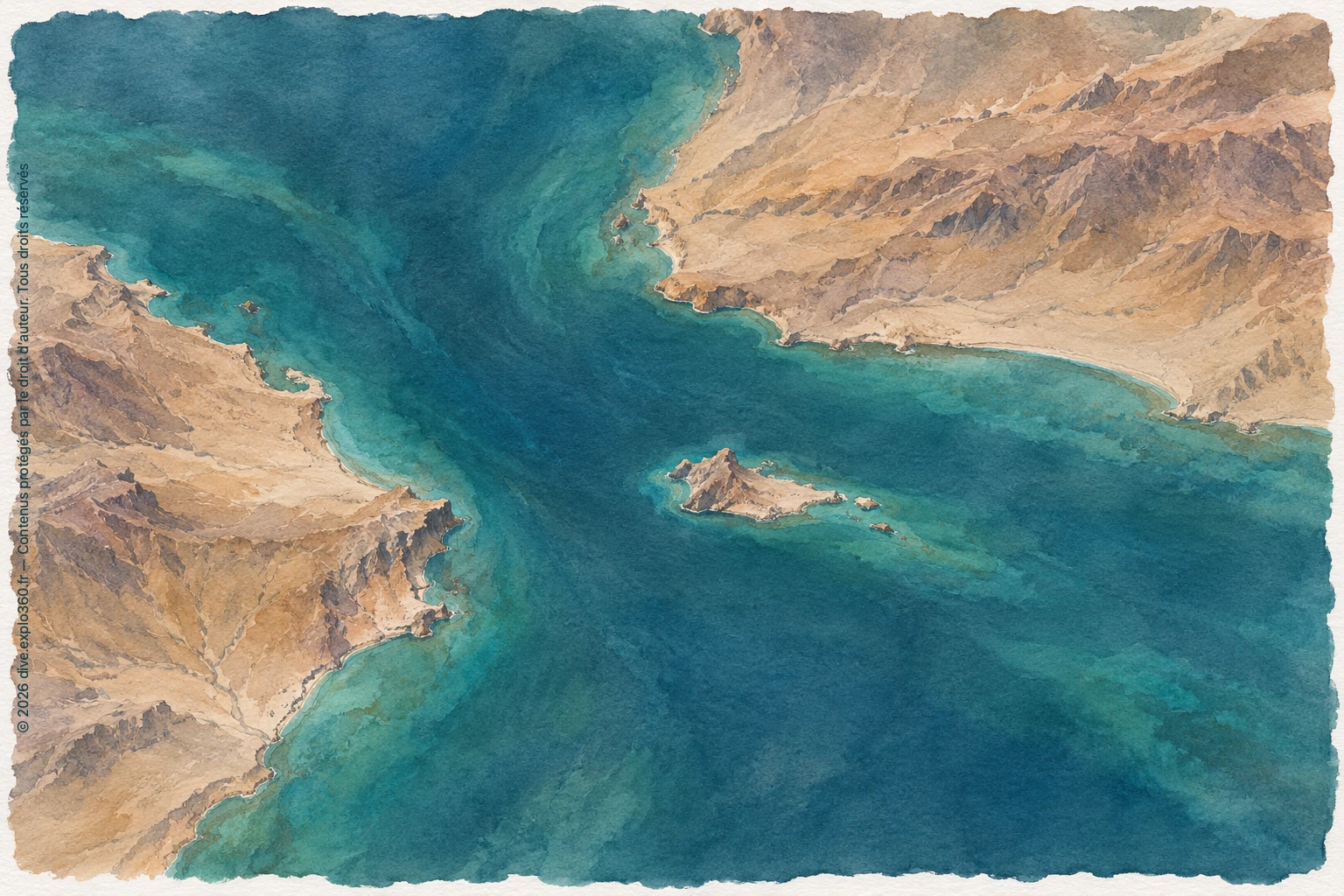
The Red Sea stretches between Africa and the Arabian Peninsula. To the south, the Bab el-Mandeb Strait connects it to the Gulf of Aden and the Indian Ocean. To the north, it is divided into two arms: the Gulf of Suez and the Gulf of Aqaba.
Surface temperatures differ sharply between the northern and southern ends of the Red Sea.
In the Gulf of Aqaba, surface temperatures are around 20–22 °C in winter and generally peak near 27 °C in summer, with variations depending on the year and location.
In the southern Red Sea, the surface can reach 33 to 34 °C at the hottest times of year.
These figures give an approximate range for seasonal surface temperatures. In the central Red Sea, temperatures generally fall between those of the north and south and vary from site to site.
Temperature is not the only difference. Salinity, water clarity, nutrient availability and ocean circulation also change from north to south.
To the north, the waters are generally saltier and nutrient-poor. To the south, water exchange with the Gulf of Aden and local circulation often make the waters more productive, with effects that vary by season.
These differences give corals a different starting point in each region.
These local conditions can shape how corals respond to a heatwave.
The Gulf of Aqaba paradox
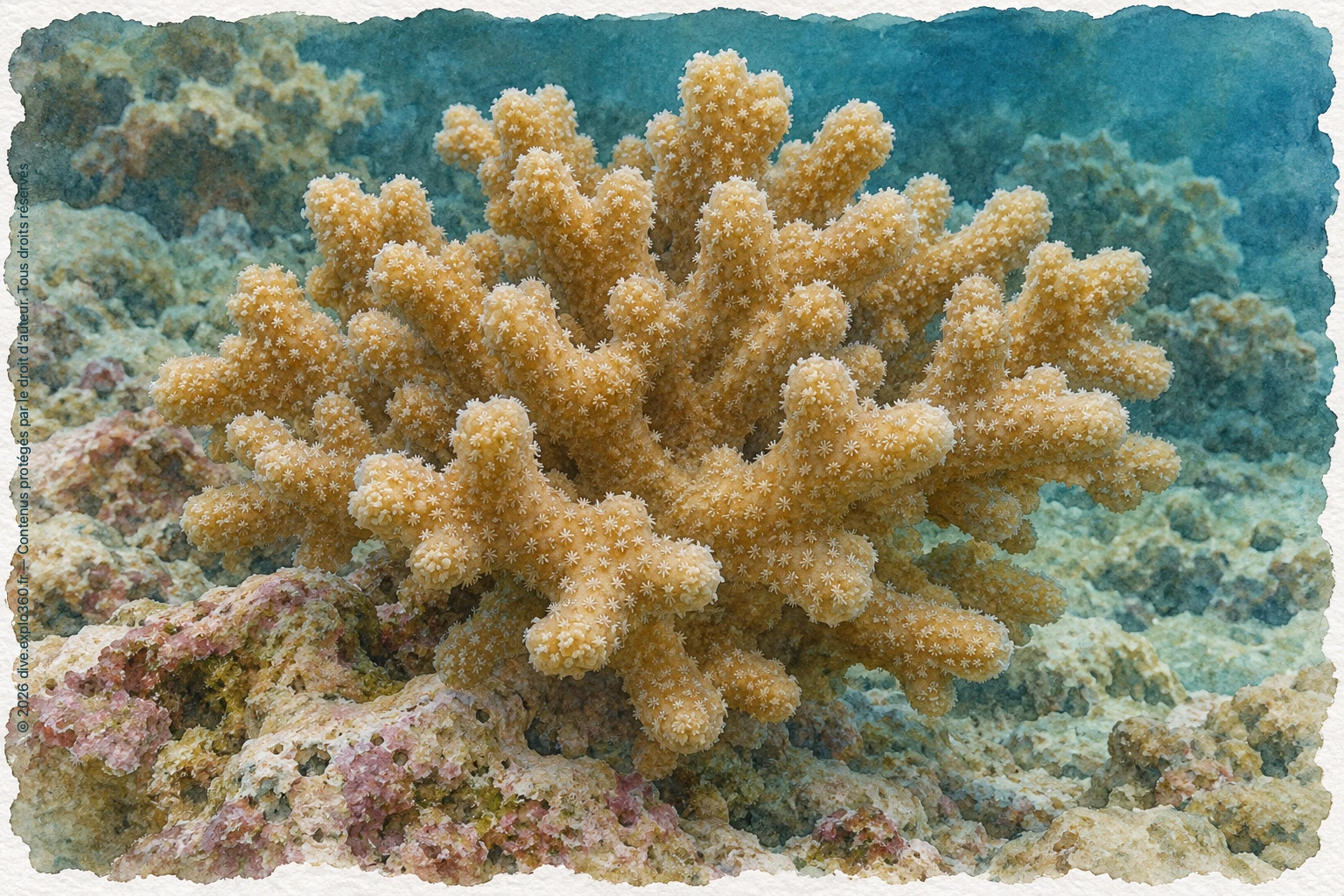
In Eilat, on the northern shore of the Gulf of Aqaba, corals were subjected experimentally to temperatures much higher than those usually encountered in summer. Some withstood temperatures about 5 to 6 °C above their usual summer highs for several weeks without showing the bleaching seen in many corals elsewhere. The controlled experiments included Stylophora pistillata, Pocillopora damicornis and Favia favus.
With enough heat for long enough, these corals can still bleach. But their margin of tolerance is exceptional. The size of that margin depends on two temperatures. One is the temperature the coral normally experiences. The other is the threshold beyond which its physiological functions begin to deteriorate sharply.
In many corals, these two values are relatively close. A prolonged increase of 1 to 2 °C above the usual summer maxima may be sufficient to cause bleaching. In the Gulf of Aqaba, some populations live several degrees below their experimental thermal limit. That gap gives the corals a margin before heat begins to impair their normal functions.
A coral can therefore live in cooler water than corals in the central Red Sea and still tolerate a substantial rise above its usual temperatures.
Looking south to understand the north
This heat tolerance may date back to the end of the last glacial period. When the sea level was much lower than today, water exchange between the Red Sea and the Indian Ocean was severely restricted. Environmental conditions changed profoundly in the basin. As the sea level rose, water exchange through Bab el-Mandeb resumed, allowing marine organisms from southern populations to recolonise the north.
On this account, the ancestors of some present-day Aqaba corals would have passed through the warmer waters of the southern Red Sea. The heat along that route may have acted as an evolutionary filter. During this expansion, lineages that could withstand the warmer waters would have been more likely to contribute to the recolonisation of the north.
Their descendants would then have reached the Gulf of Aqaba, where summer temperatures are much lower than those of the south. Those descendants may have retained some of the heat tolerance acquired or favoured by selection in warmer waters. This explanation is known as the thermal filter hypothesis. Several comparisons of the physiology of northern and southern populations are consistent with the hypothesis. The full sequence of recolonisation events remains uncertain.
The exact evolutionary history of populations varies by species, and their current adaptations may also result from more recent processes. The heat tolerance seen in Aqaba today may reflect both that ancient history and the adaptations and acclimatisation of the populations now living there.
One species, different limits
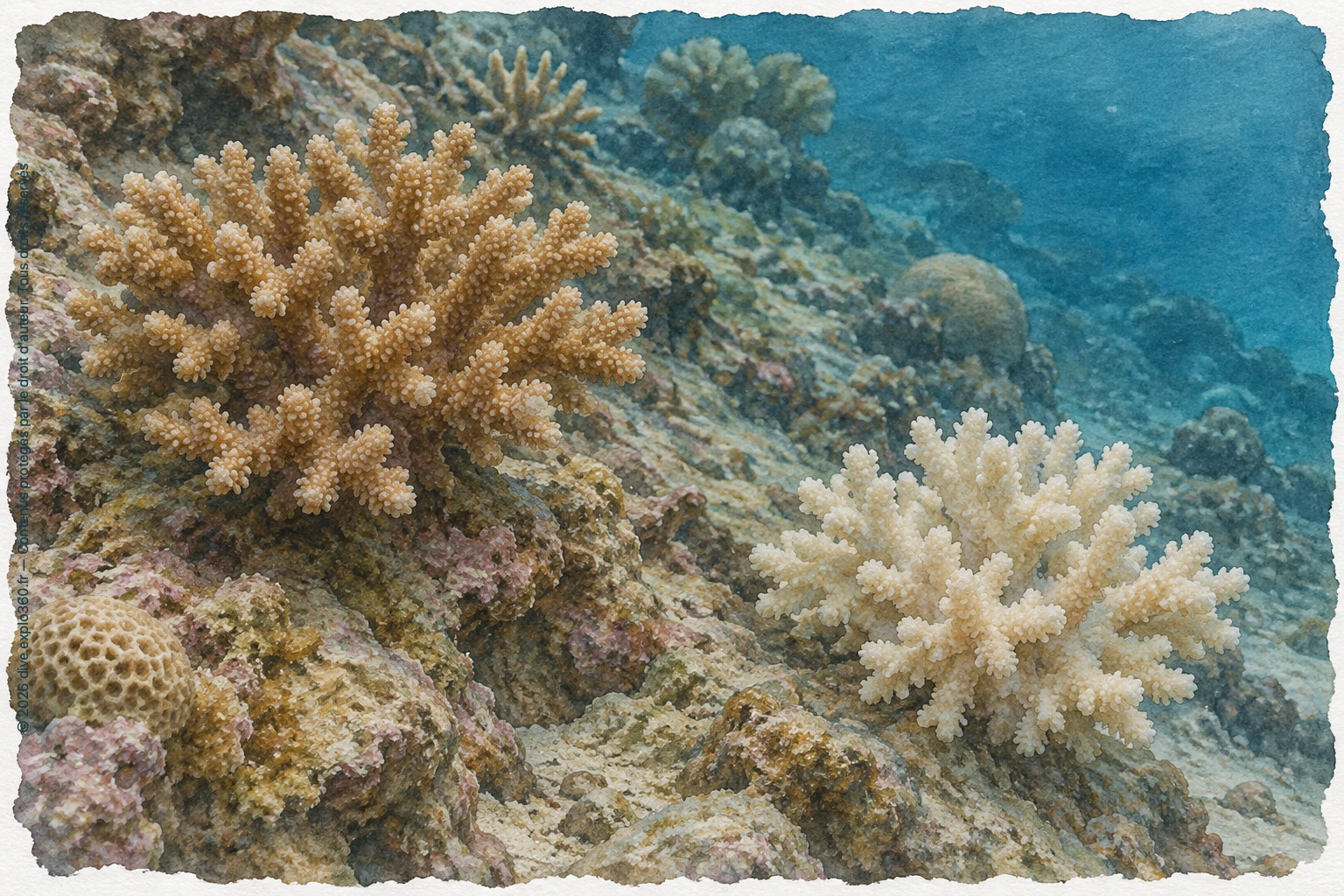
Comparing populations of the same species across regions helps show how heat tolerance varies. Stylophora pistillata is a branching coral widely studied in the Red Sea. Researchers used comparable protocols to expose colonies from the Gulf of Aqaba and the central Red Sea to acute heat stress. The two populations reached different thresholds in the same kind of test.
The threshold was about 34 °C for colonies from Aqaba and averaged about 37.5 °C for those from the central Red Sea. On the thermometer, the central Red Sea corals had the higher threshold. Measured against local conditions, the margins were similar. Both thresholds were about 7 °C above their local maximum monthly mean temperatures.
The comparison depends on where you start. Corals in the central Red Sea live in warmer water and have higher absolute thresholds. Aqaba corals live in cooler water, but they also retain a significant margin above their normal conditions. These thresholds describe the response measured in the experiment. They depend on the protocol, the length of exposure and the physiological indicator researchers use.
A colony that withstands a high temperature for a few hours or days will not necessarily survive several weeks of exposure. The populations also differed in how their gene expression and microbial communities changed under heat stress. Similar margins above local summer temperatures can therefore involve different biological responses.
GO FURTHER WITH AMIGANSEAU
Continue reading
Discover full species guides, in-depth content and interactive tools available with your licence.
Dive.Explo360 is an independent, self-funded nonprofit. Every licence helps us create new content, improve our teaching tools and keep some of our resources free and ad-free.
Choose a licence that suits your needs for personal, educational or professional use.
Open-access resources remain available without a subscription.