
The moray: gripping without letting go
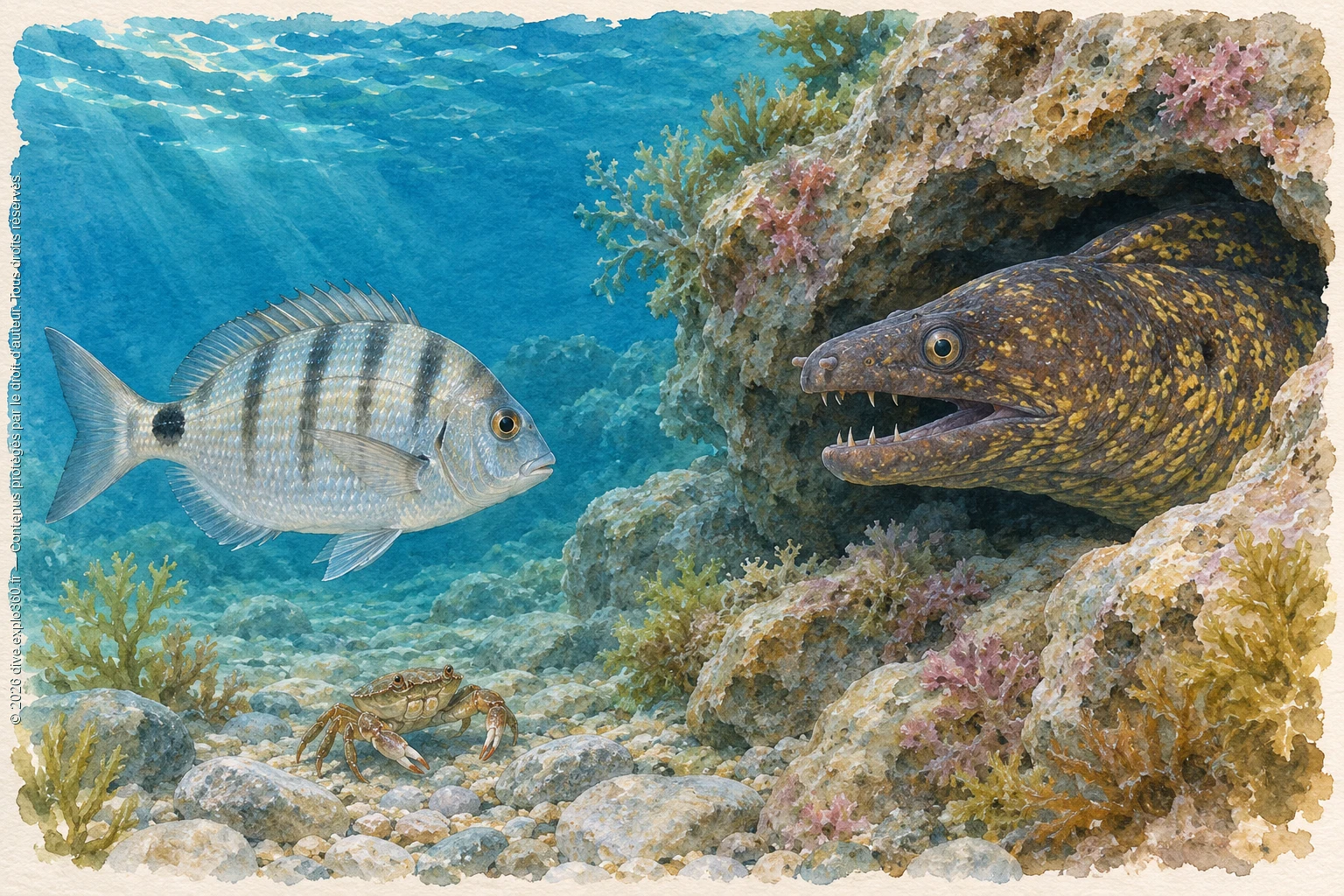
The Mediterranean moray, Muraena helena, offers an unmistakable view of its teeth when it opens its mouth at the entrance to a shelter. They are slender, with some curving backwards: a useful arrangement for holding struggling prey.
Its meals include fish, cephalopods and crustaceans. A mucus-coated fish is slippery, and an octopus can squeeze and twist. Pointed teeth pierce the tissues; backward curves make escape harder.
A moray does not chew as we do. Small enough prey can go down whole. Larger meals may have to be torn into pieces.
Getting food further back presents another challenge. Many fish suck prey in by rapidly opening their mouths, then use water movements to help carry it towards the throat. Morays, with their elongated bodies and habit of hunting in narrow crevices, rely less effectively on suction.
A second set of jaws hidden in the throat
In 2007, researchers studying the reticulated moray, Muraena retifera, described an extraordinary answer.
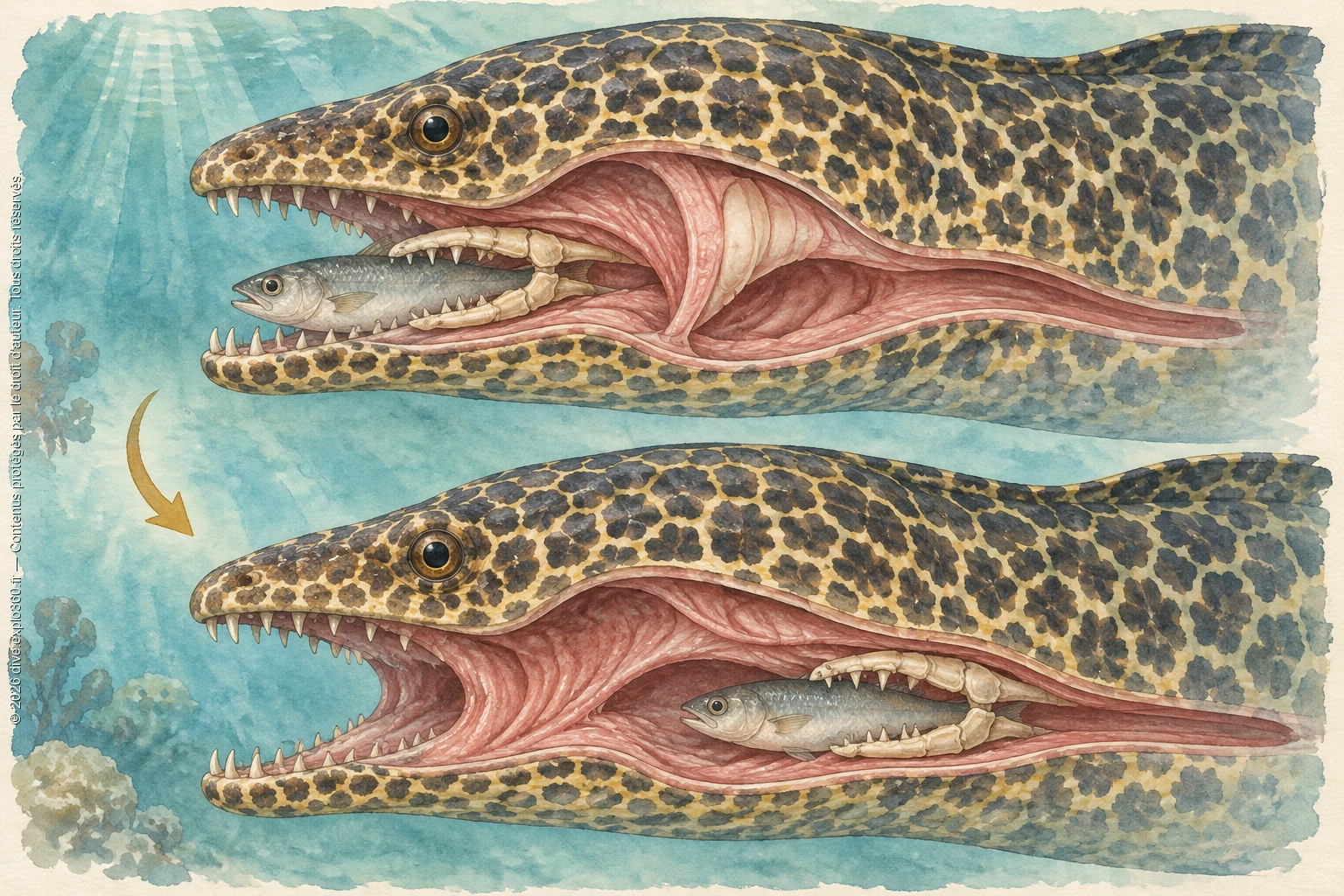
Behind the jaws we can see sits another pair: the pharyngeal jaws, in the throat. Many fish have teeth there, but morays can move these jaws an exceptional distance.
After the mouth jaws seize a meal, the throat jaws reach forwards into the mouth, grip the food and pull back, drawing it towards the oesophagus.
One pair catches; the other helps carry.
The system works even in a rocky cavity where there is little room for sweeping head movements.
Nor do all morays have the same toolkit. The Indo-Pacific snowflake moray, Echidna nebulosa, has shorter, more rounded teeth suited to crushing the armour of crustaceans.
Even among close relatives, teeth offer clues to very different meals.
The white seabream: teeth that look like ours
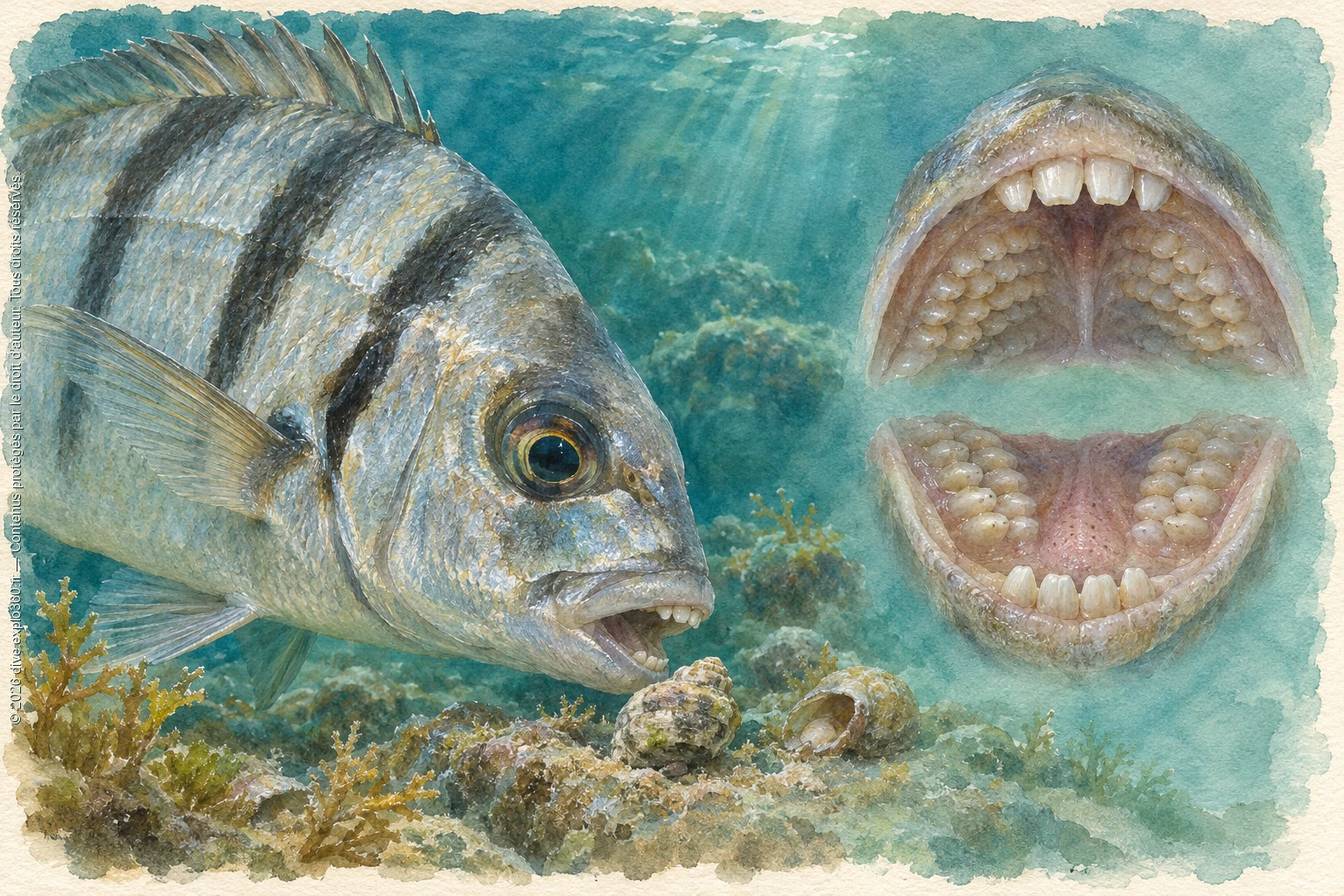
Look into the mouth of a white seabream, Diplodus sargus, and you may see something oddly familiar. Its front teeth resemble our incisors.
Further back, several rows of rounded teeth look like little molars.
Each set has a different job. The front teeth grip, pull food free or cut it; the broader teeth behind crush hard coverings.
That gives the fish several ways to tackle a meal, whether it finds a crab between stones, a shelled mollusc or something firmly attached to rock.
A crab can be shifted back towards the crushing teeth, where pressure breaks its armour. A sea snail’s shell may be cracked, some fragments spat out and the soft parts swallowed.
Strong jaw muscles supply the force. A tooth’s shape matters, but so does the power behind it.
Feeding on animals with hard coverings has a name: durophagy.
White seabream are far from dedicated shellfish eaters, however. Worms, small fish and algae also feature in their diet. Their teeth open up a varied menu.
The parrotfish: a beak that bites into rock
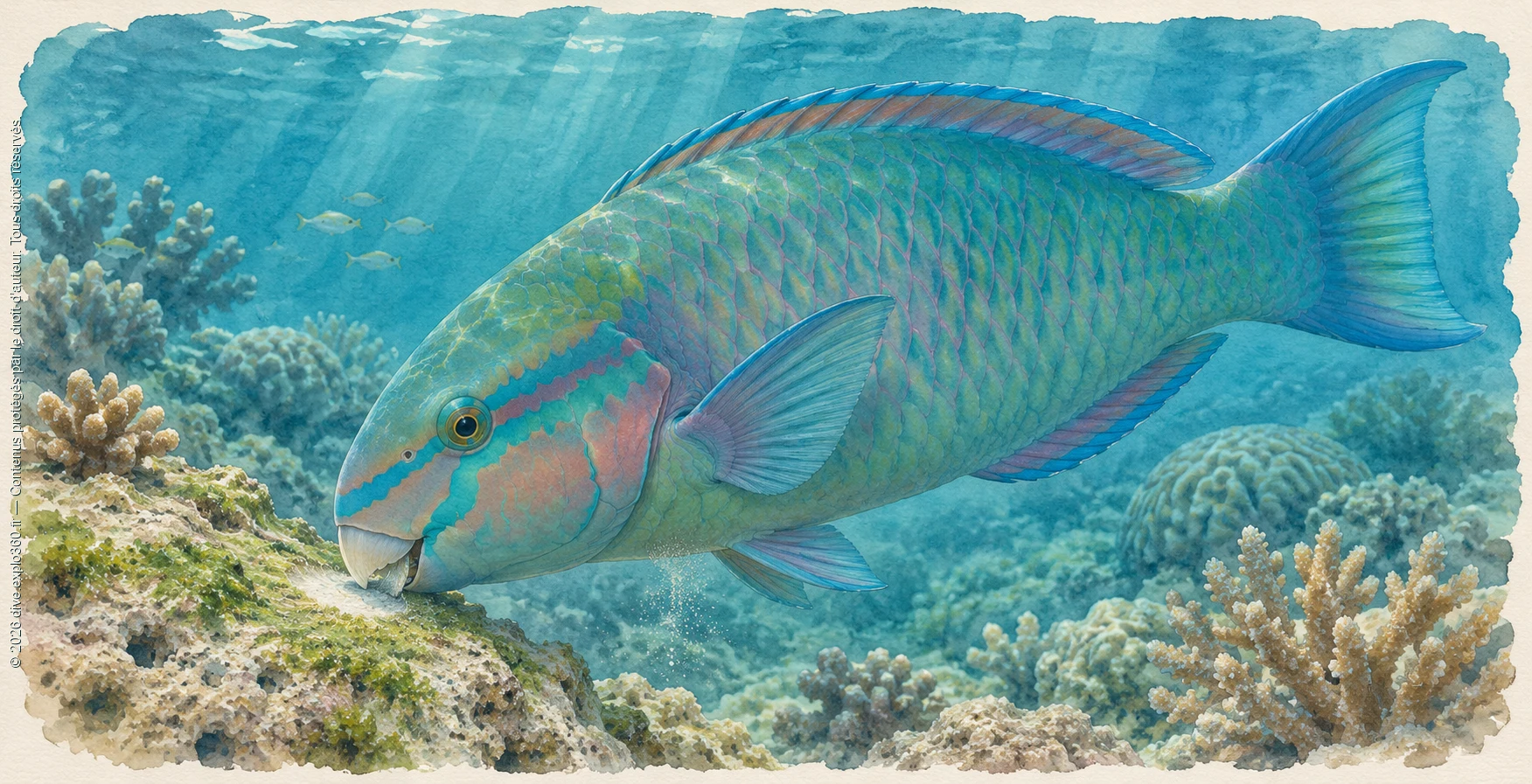
On a tropical reef, a repeated scraping sound may draw your attention to a parrotfish at work on a limestone surface.
Its mouth looks more like a bird’s beak than a typical fish jaw. In many reef species, tightly packed teeth are cemented together into two sturdy plates.
The plates concentrate force on a small area. Some species scrape the surface; others bite out chunks.
What is there to eat in a mouthful of rock?
Microscopic algae, cyanobacteria and other microbes live on reef surfaces and within their outer layers. A parrotfish can reach food that many other fish cannot get at.
The bite brings mineral material with it, sometimes in considerable quantities.
Another set of teeth works in the throat. Here the pharyngeal jaws grind like a mill, rather than pulling food backwards as they do in a moray.
The fish digests accessible organic matter, while much of the carbonate material eventually passes out as sediment.
On some tropical reefs, that sediment makes an important contribution to carbonate sand.
Bite by bite, these teeth also reshape the reef. Removing its material through feeding is a form of biological erosion, or bioerosion.
GO FURTHER WITH AMIGANSEAU
Continue reading
Discover full species guides, in-depth content and interactive tools available with your licence.
Dive.Explo360 is an independent, self-funded nonprofit. Every licence helps us create new content, improve our teaching tools and keep some of our resources free and ad-free.
Choose a licence that suits your needs for personal, educational or professional use.
Open-access resources remain available without a subscription.