Letting the meal come to them
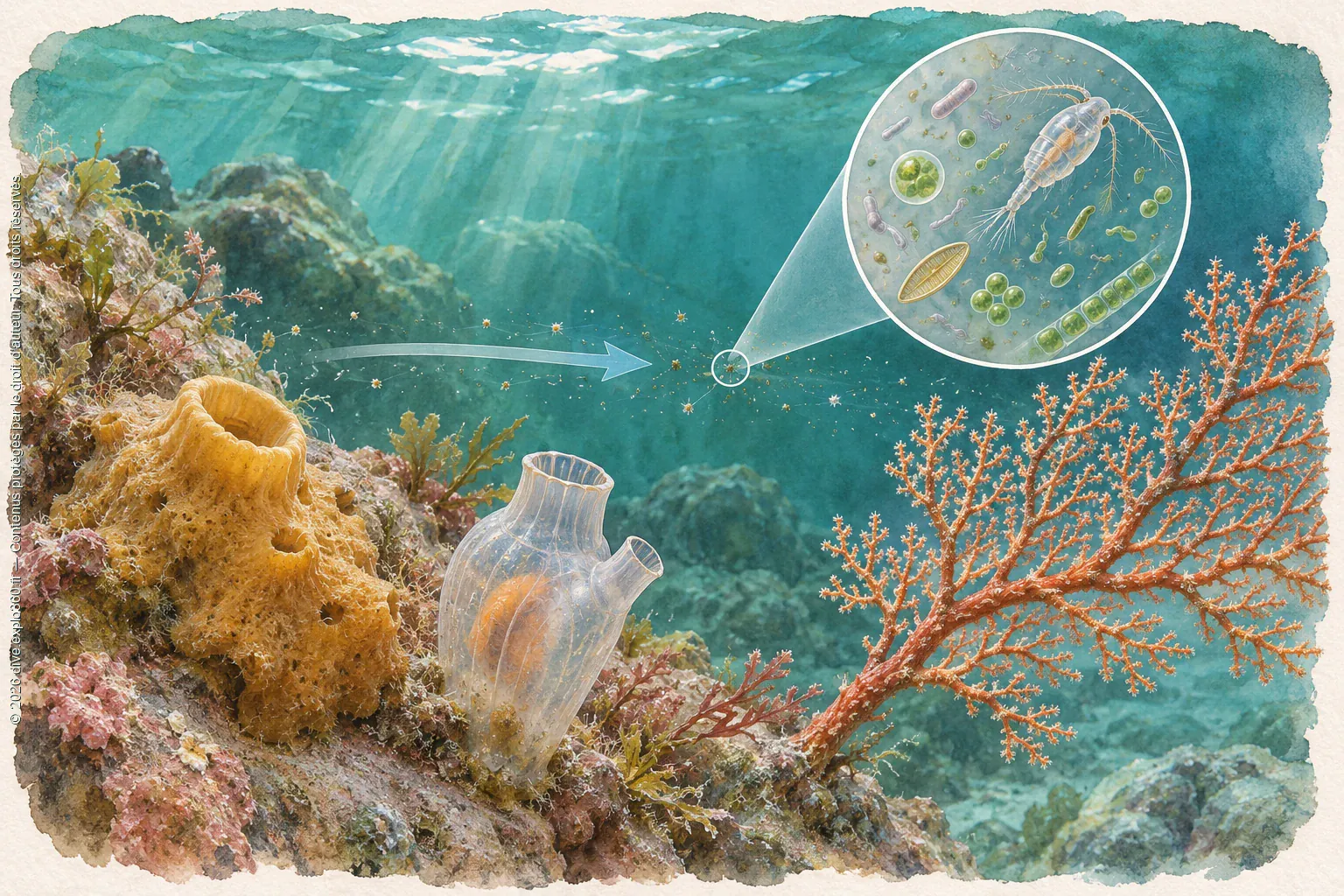
Look at what a current carries and an apparently still animal’s life begins to make sense.
Even clear seawater holds bacteria, microscopic algae, tiny crustaceans, larvae and scraps of organic matter, as well as dissolved substances.
Moving water continually brings fresh supplies within reach.
Some animals filter particles from water passing through their bodies. Others intercept them with tentacles, or catch living prey.
Location matters. An exposed wall may receive more food than a poorly flushed hollow, but a flow that is too strong can hinder feeding or cause damage.
The sponge’s hidden pumps
A sponge has no mouth, stomach or intestine. It has neither gills nor a heart.
Somehow, it still feeds, breathes and removes waste.
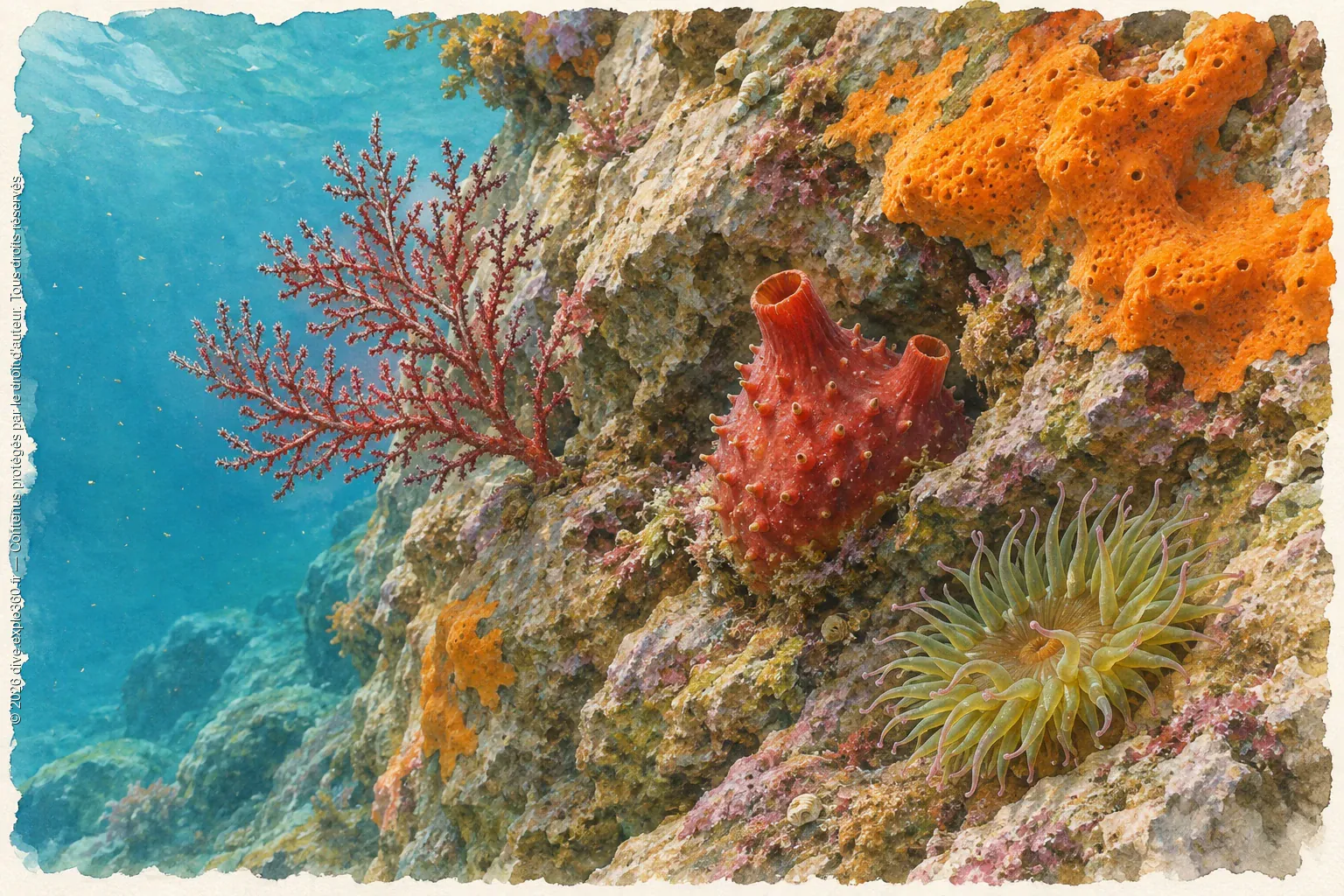
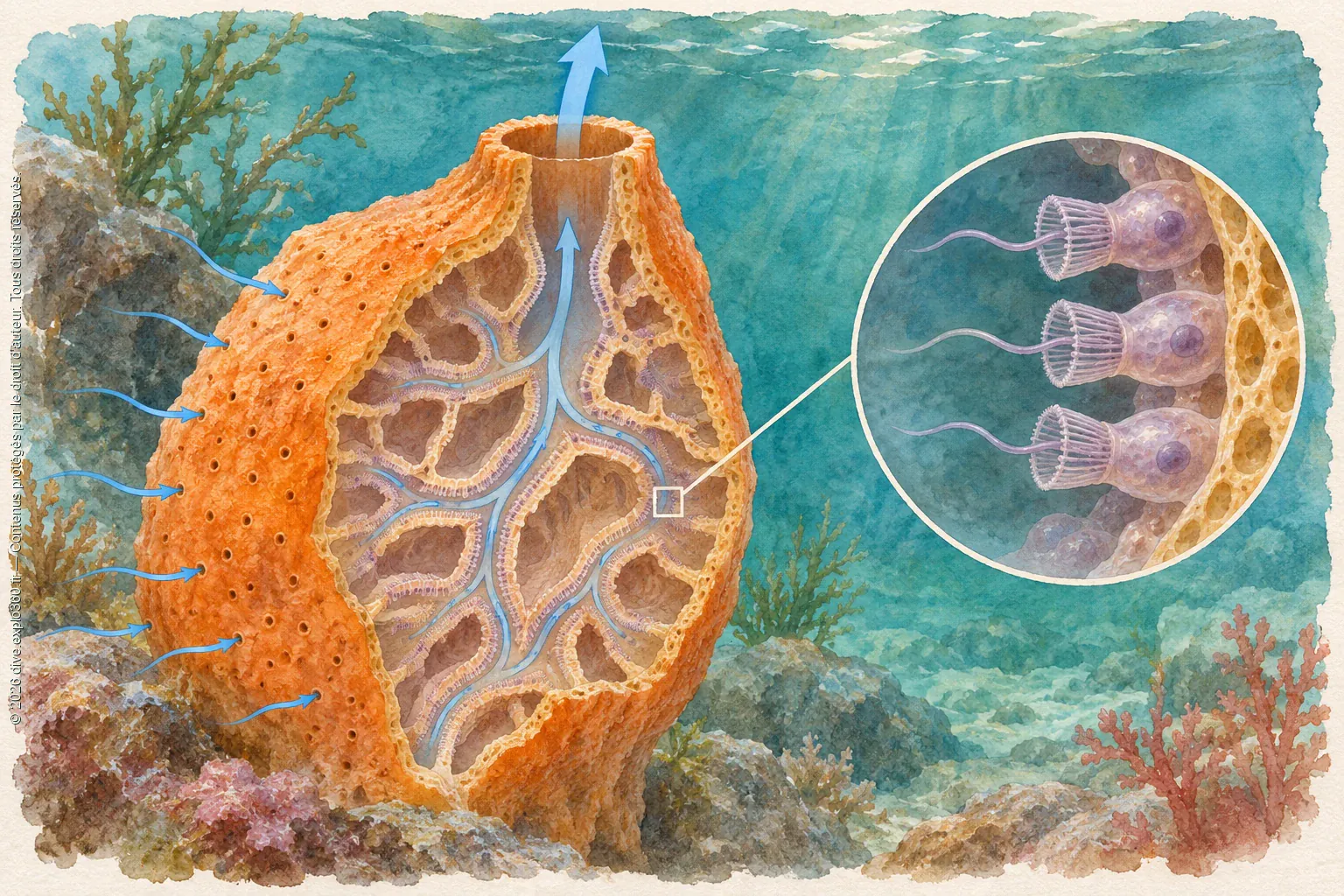
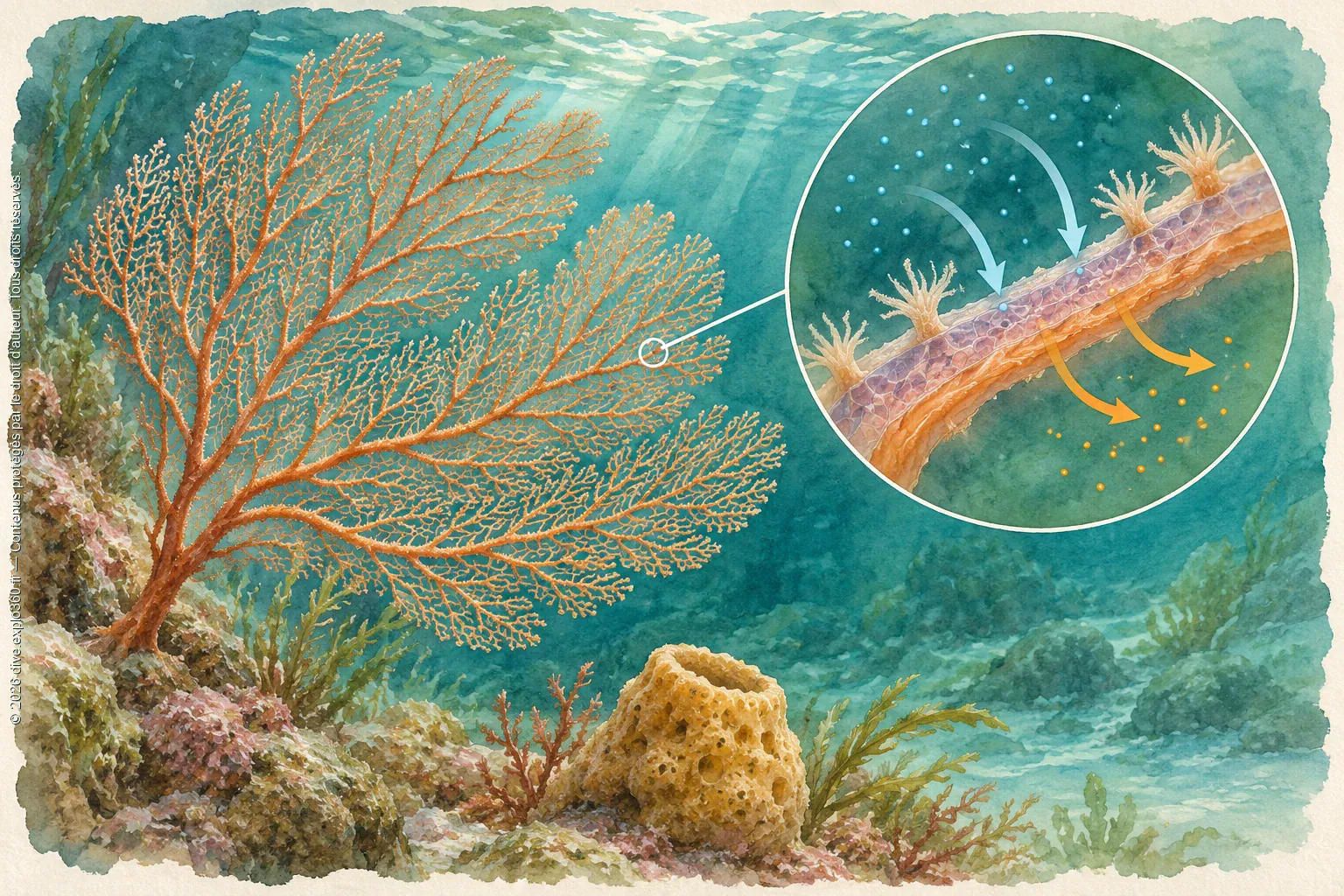
Water enters through tiny pores and travels along channels. Inside, cells called choanocytes each carry a beating flagellum surrounded by a microscopic collar.
The flagella drive the flow. The collars help catch food particles, which cells absorb.
Water leaves through larger openings called oscula.
Some sponges also obtain a substantial part of their food from dissolved organic matter, sometimes with help from microbes in their tissues.
The body itself acts as a system for circulating and processing water.
Divers can often see the outlets. On large tropical tube sponges, they may be several centimetres wide.
The sponge looks motionless, while its pumps can be busy within.
Two siphons and a meal
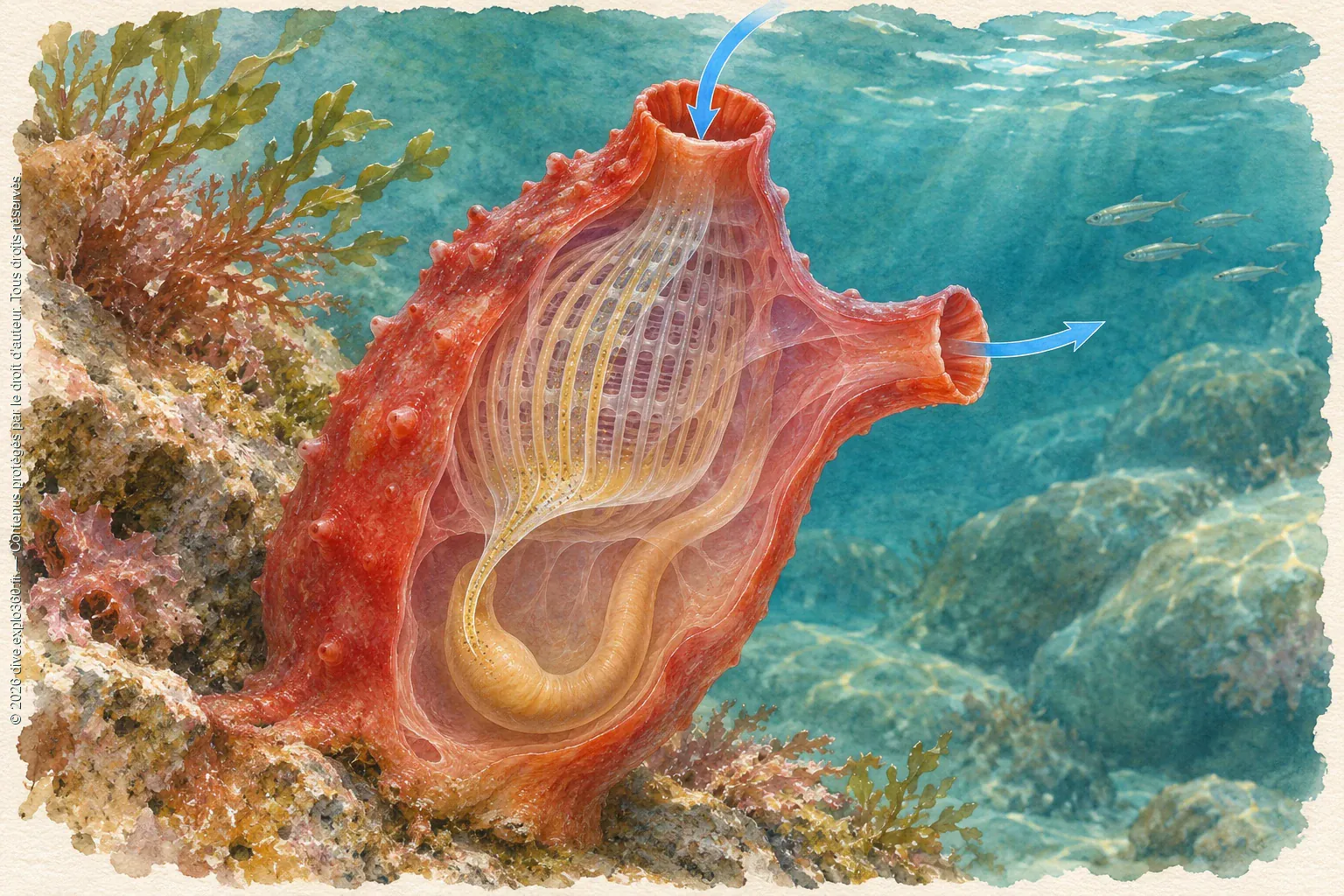
The Mediterranean red sea squirt, Halocynthia papillosa, looks like a small bag fixed to rock. Its two openings give a clue to what is happening inside.
Water enters one siphon and leaves the other.
On the way, it crosses a large perforated pharynx. Mucus made by the endostyle traps particles, and tiny beating hairs called cilia carry the food-laden mucus towards the gut.
Unlike a sponge, a sea squirt has a true digestive system.
If disturbed, it can contract, close its siphons and sometimes squeeze water out.
Some sea squirts live alone; others form colonies. In the star sea squirt, Botryllus schlosseri, individuals form flower-like groups around shared outlets.
Each individual keeps its own feeding apparatus, while sharing some structures with its neighbours.
An anemone: a predator that waits
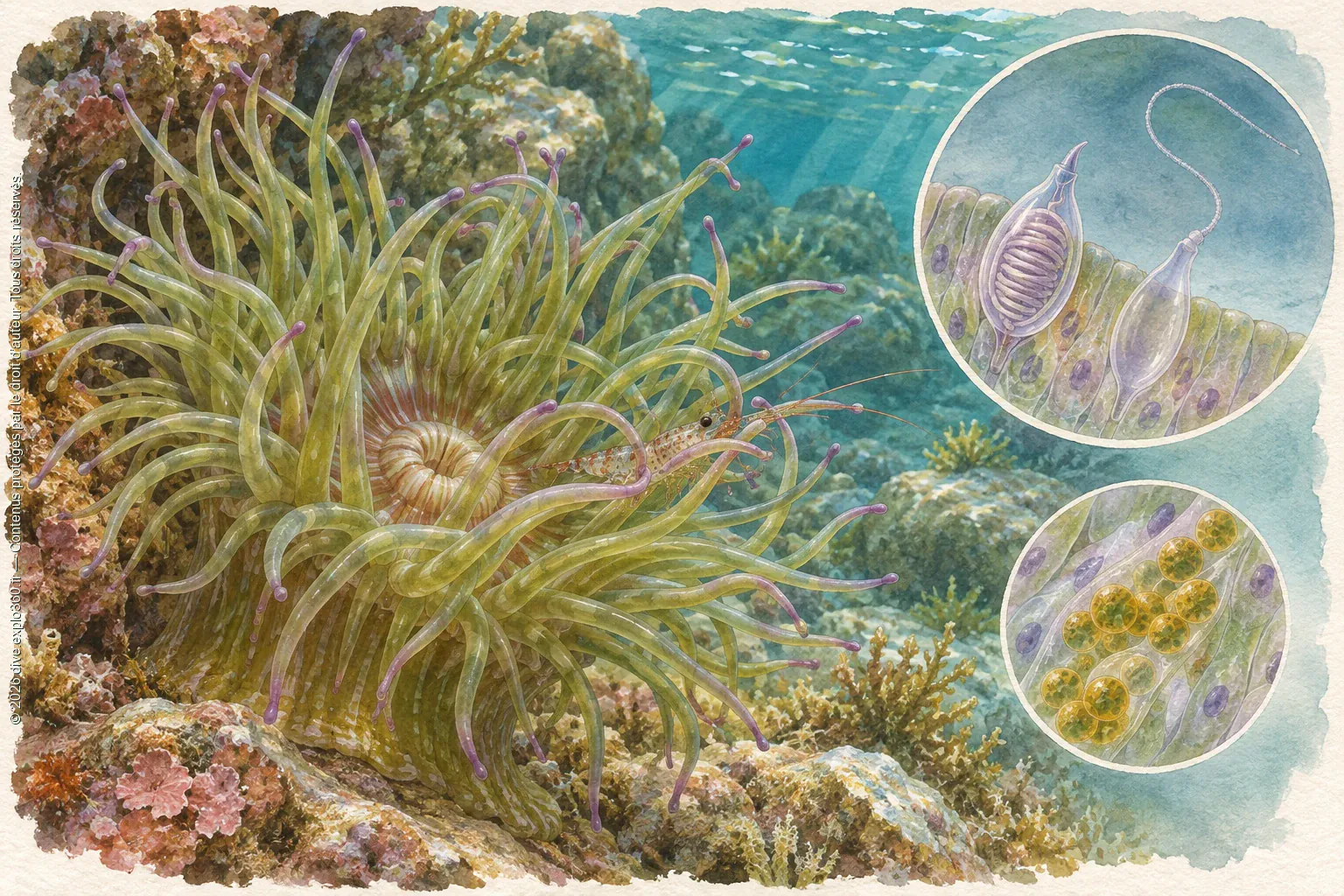
The long tentacles of a snakelocks anemone, Anemonia viridis, reach above the rock. This animal does not filter water through its body like a sponge or sea squirt.
It catches a meal directly.
Its tentacles bear stinging cells called cnidocytes. Inside are tiny capsules that fire a thread; some pierce prey and deliver substances that help immobilise it.
A small crustacean brushing the tentacles may be caught and drawn towards the mouth at the centre of the oral disc.
Food is digested in an internal cavity with one main opening.
Some anemones have another source of nourishment. Microscopic algae in their tissues supply some of the organic substances they make using sunlight.
Snakelocks anemones in the Mediterranean share this partnership, as do many tropical anemones.
Their meals therefore combine captured prey with food supplied by photosynthetic partners.
Other anemones lack these partners and depend entirely on food they catch.
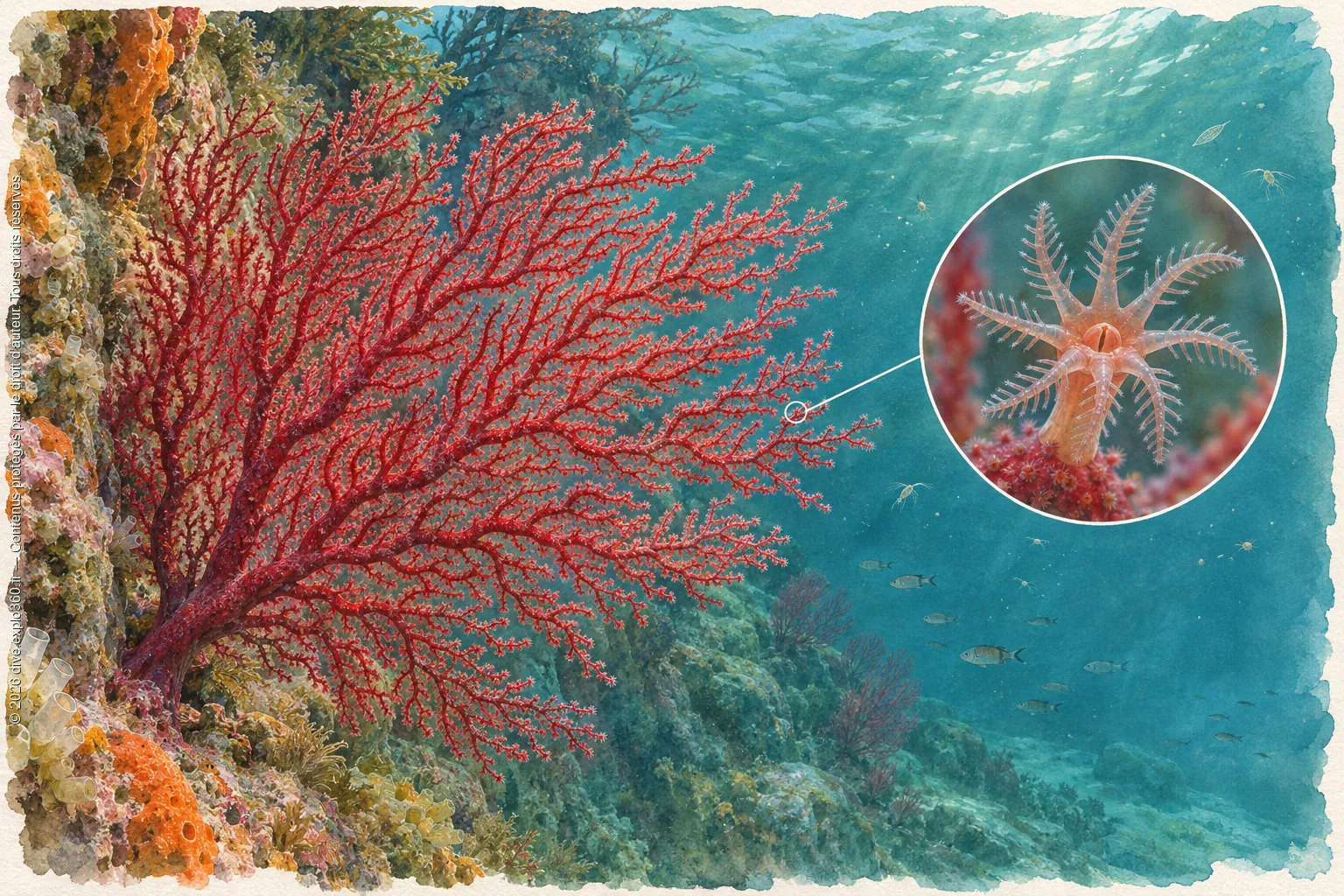
Sea fans: hundreds of little mouths in the current
A red sea fan, Paramuricea clavata, can stand several tens of centimetres high. Unlike an anemone, it is a colony: many small polyps living together.
Each polyp has a mouth and eight finely branched tentacles.
Extended polyps give the branches a soft, fluffy look as they catch small planktonic prey and organic particles.
Connecting tissues contain channels through which nutrients, among other things, can move around the colony.
Height and branching put more mouths in the current without covering the same area of rock.
Large fans often spread in a plane that intercepts the prevailing flow.
The same shape can become a liability in a storm, when branches may break or the whole colony be torn away.
A crown above a safe retreat
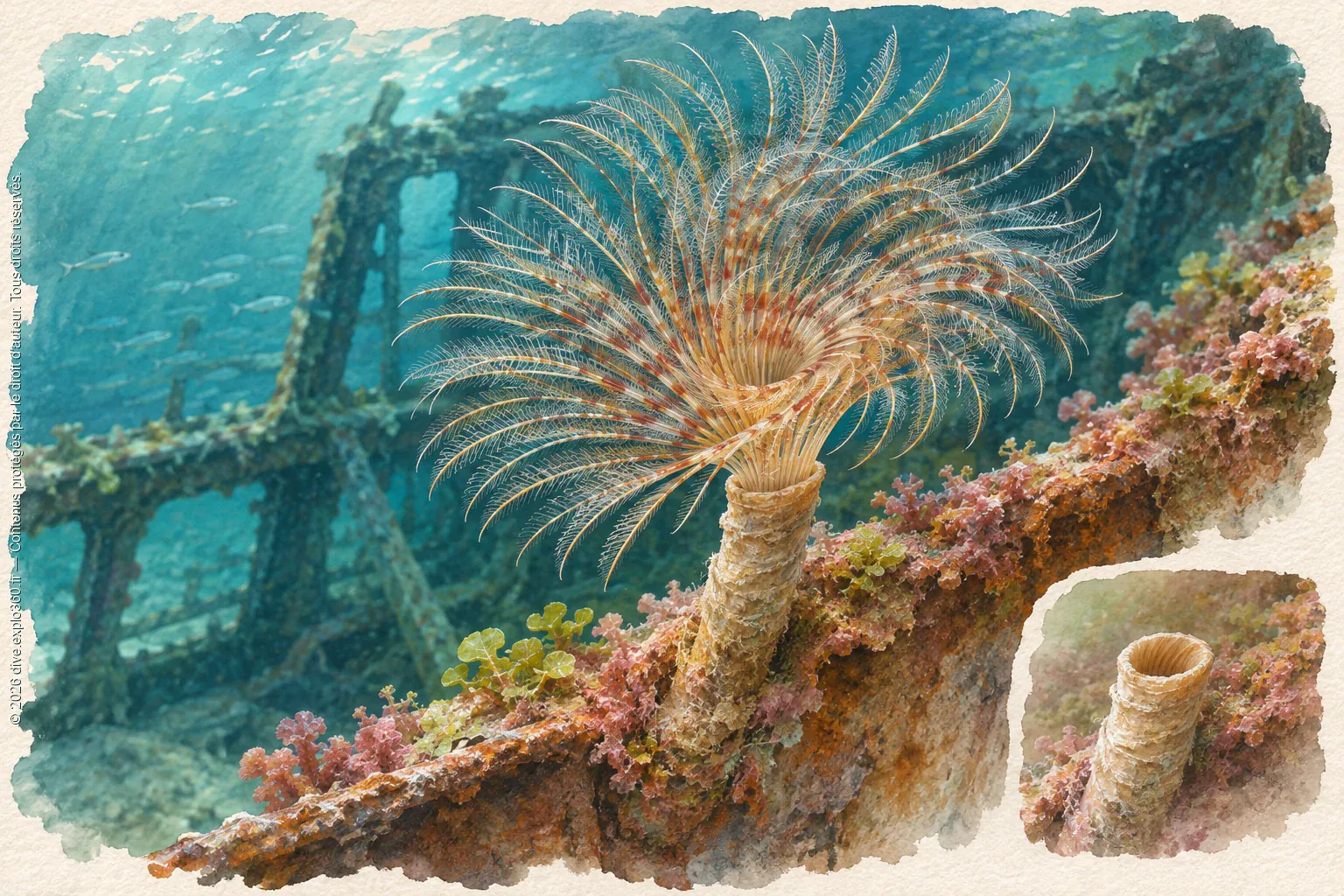
A Mediterranean fan worm, Sabella spallanzanii, opens a magnificent spiral crown above a wreck or rocky seabed. Most of the animal remains hidden.
Its body stays inside a protective tube.
The crown’s branching filaments and beating cilia help catch particles and carry them towards the mouth.
The crown also helps with gas exchange.
At a disturbance, it vanishes into the tube. Once the threat passes, it gradually opens again.
The worm keeps its body sheltered while exposing its feeding equipment to passing water.
Serpulid worms, with limestone tubes and colourful crowns, use similar methods.
Barnacles: crustaceans fishing with their legs
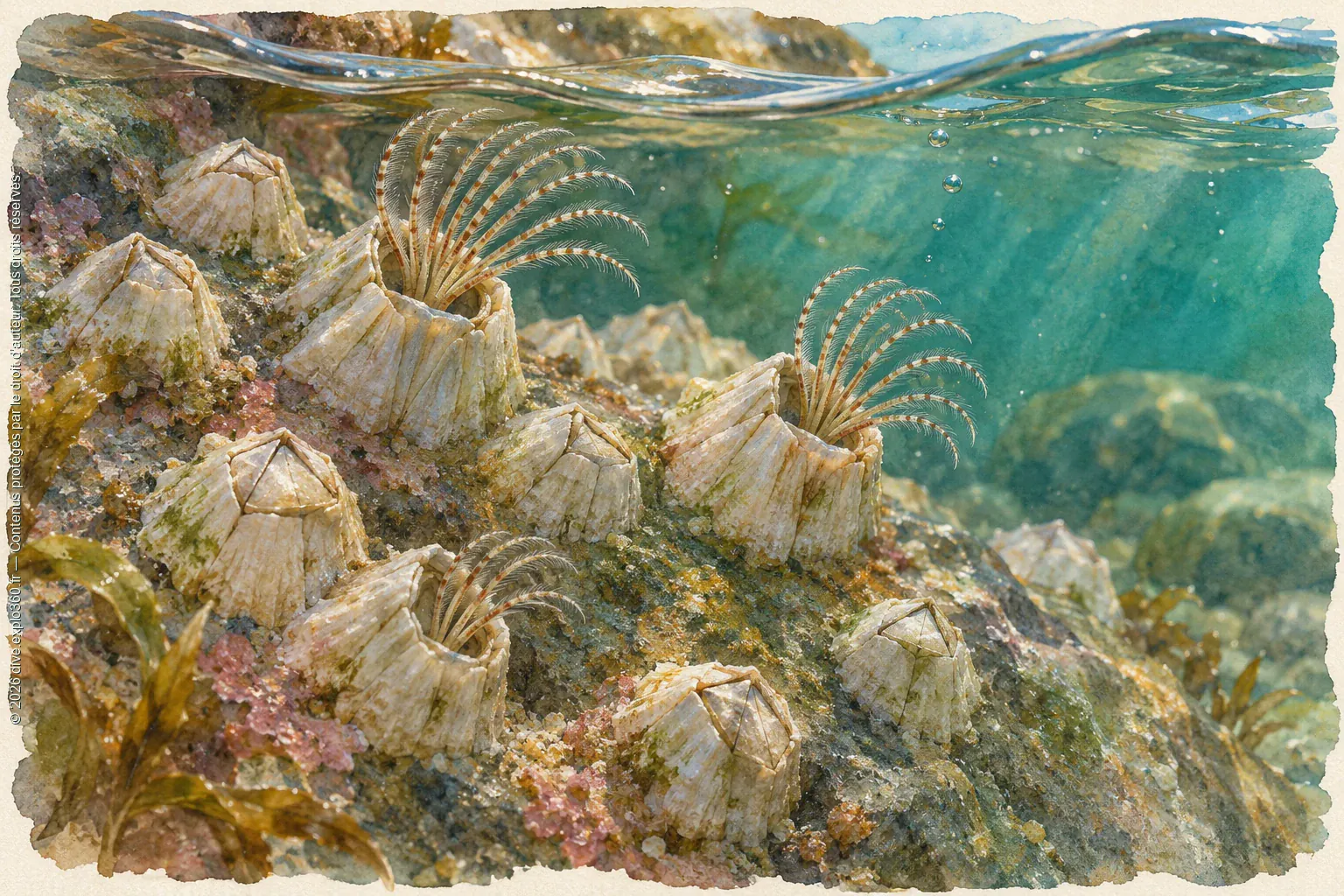
Barnacles on a shallow rock look like tiny limestone volcanoes. Their appearance gives little away about their relatives: crabs, shrimps and spiny lobsters.
Barnacles are crustaceans too.
As adults, they stay protected inside hard plates fixed to the surface.
Underwater, they open their closing plates and extend feathery limbs called cirri.
These modified thoracic legs catch particles and small organisms, then bring them to the mouth.
When conditions worsen, shore-dwelling species can shut their opening at low tide and retain some water inside.
Their anatomy shows how greatly an animal’s form can change over evolution when its way of life changes.
Fresh water for breathing
An attached animal cannot simply swim towards better-oxygenated water. It relies on water being renewed around its body.
In sponges and sea squirts, the flow used for feeding also supports respiration.
Anemones and sea fans exchange much of their respiratory gases across their tissues.
Thin surfaces, branches and internal channels increase contact between body and water.
If flow slows, the thin layer beside an animal can lose oxygen and accumulate waste. Moving water refreshes it.
That dependence can make attached species sensitive to low oxygen, sediment deposits and lasting changes in circulation.
GO FURTHER WITH AMIGANSEAU
Continue reading
Discover full species guides, in-depth content and interactive tools available with your licence.
Dive.Explo360 is an independent, self-funded nonprofit. Every licence helps us create new content, improve our teaching tools and keep some of our resources free and ad-free.
Choose a licence that suits your needs for personal, educational or professional use.
Open-access resources remain available without a subscription.