A gathering in the deep
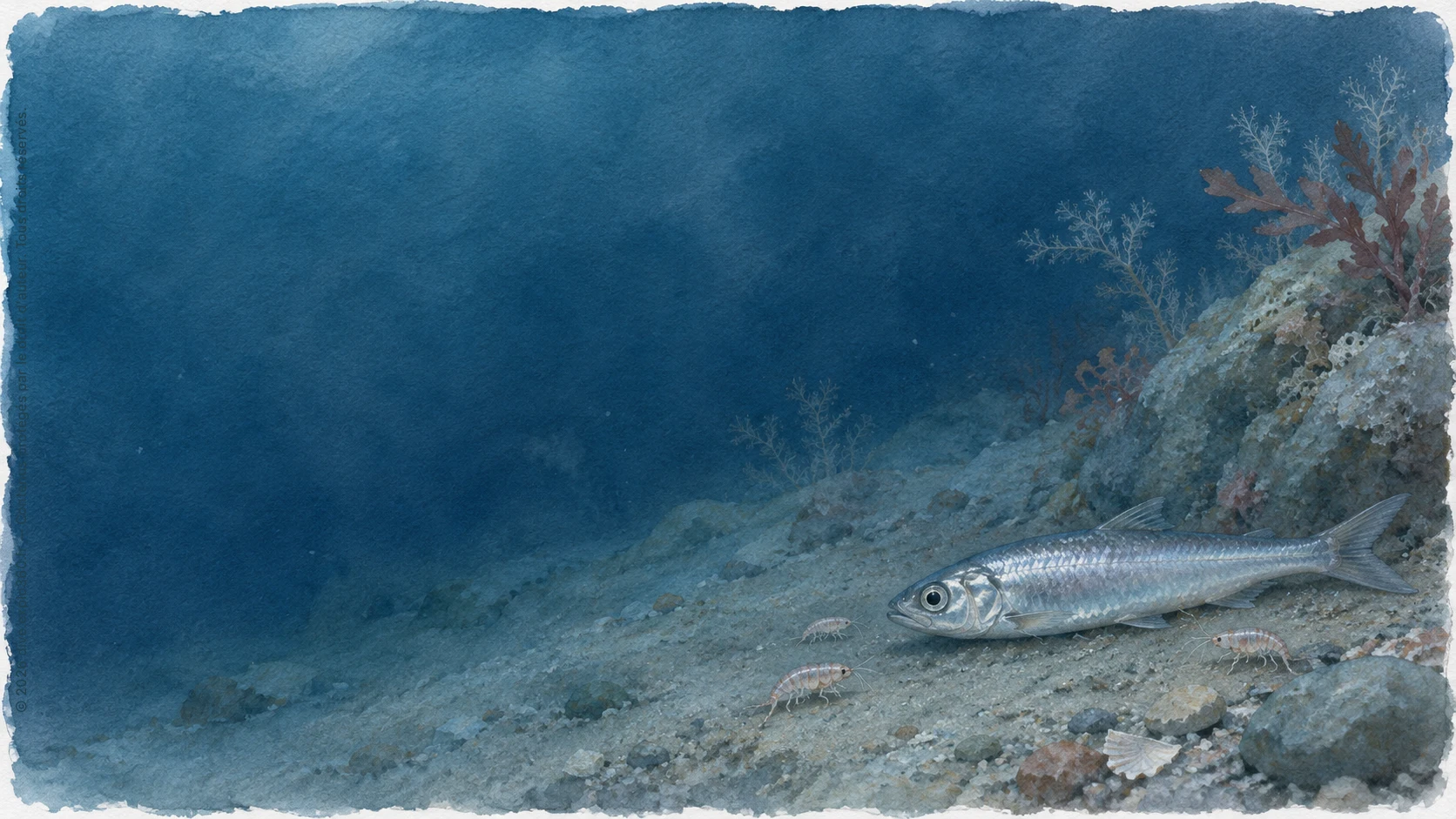
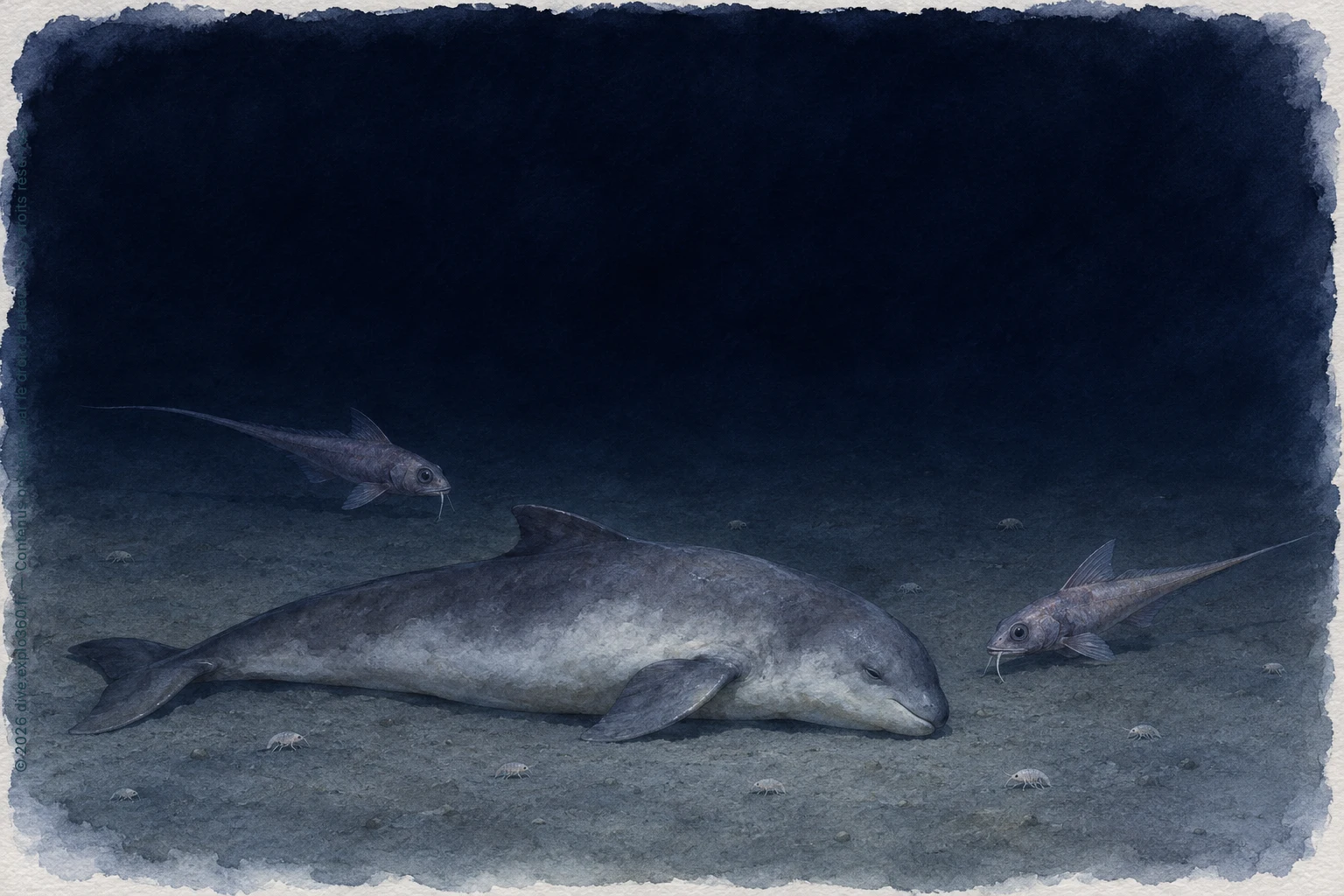
When researchers placed a cetacean carcass on the deep Atlantic seabed, small crustaceans called amphipods gathered around it. Fish caught the amphipods, so even hunters that left the flesh alone could find a meal there.
When the flesh disappears
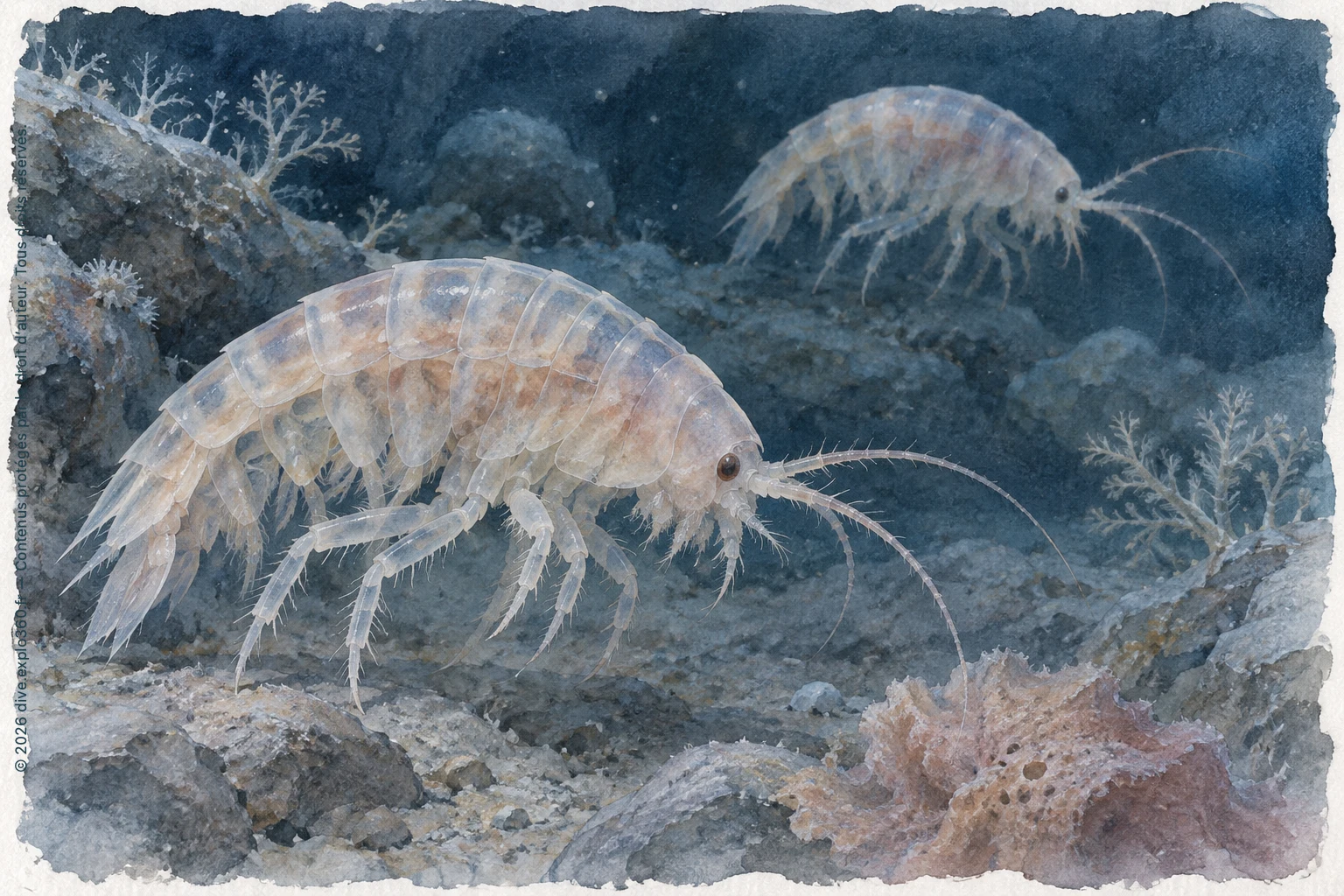
Researchers in the Strait of Georgia filmed experimental carcasses in spring and autumn. In spring, small crustaceans started feeding soon after the bodies reached the seabed. In autumn, crabs did much of the early feeding and the flesh took longer to disappear.
Changes too small to see
Some of the first changes take place inside the cells. Enzymes already there help break them down. Microbes use the material at the same time as scavengers are feeding.
GO FURTHER WITH AMIGANSEAU
Continue reading
Discover full species guides, in-depth content and interactive tools available with your licence.
Dive.Explo360 is an independent, self-funded nonprofit. Every licence helps us create new content, improve our teaching tools and keep some of our resources free and ad-free.
Choose a licence that suits your needs for personal, educational or professional use.
Open-access resources remain available without a subscription.