Seeing how the roles fit together
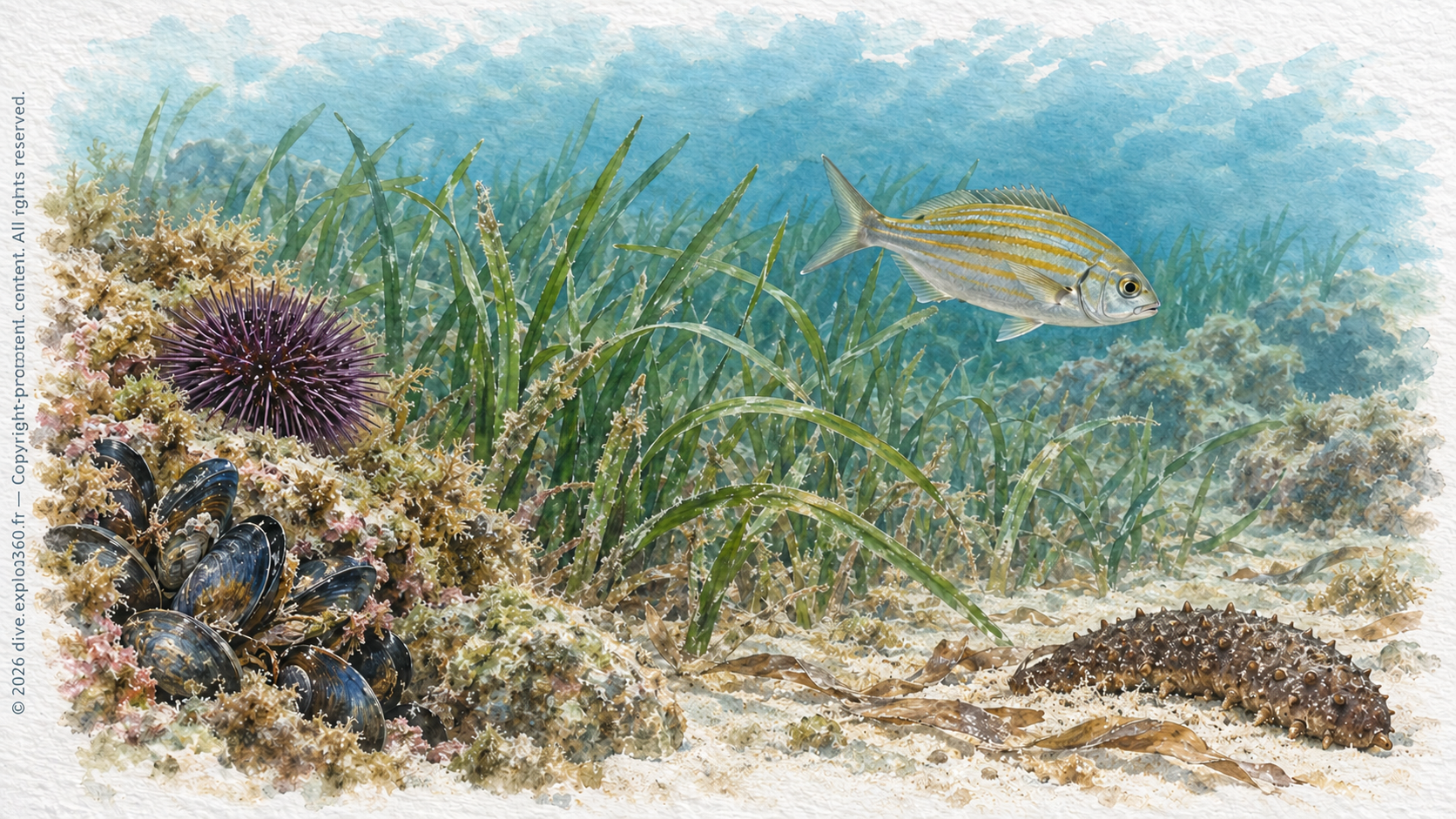
Picture a seagrass meadow during a dive. Its leaves grow using sunlight; fish find food there, while others take shelter. On the seabed, animals and microorganisms use the remains. What each organism does influences the resources or living spaces available to others. Ecological roles help us understand those connections.
To keep the whole picture in view, follow two threads: the journey of food, from its production to the processing of remains, and the habitats where organisms live. They constantly overlap. One species can contribute to both.
To keep the whole picture in view, follow two threads: the journey of food, from its production to the processing of remains, and the habitats where organisms live. They constantly overlap. One species can contribute to both.
Primary producers: the source of organic matter
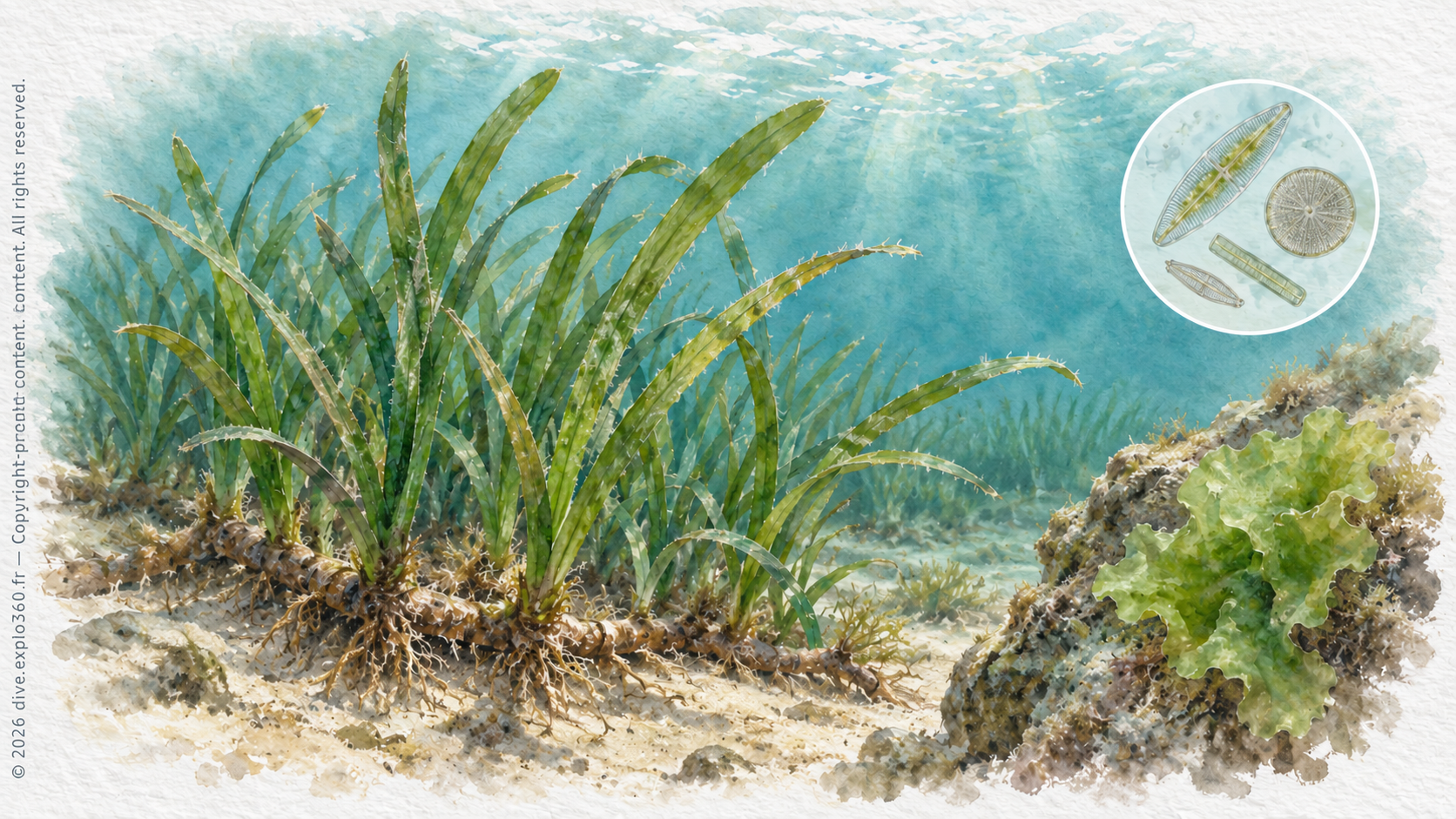
In a sunlit meadow, the leaves of Neptune grass (Posidonia oceanica) do more than provide shelter. They use sunlight to make sugars from water and carbon dioxide. This process is called photosynthesis. The plant uses those sugars, together with nutrients taken from its surroundings, to grow.
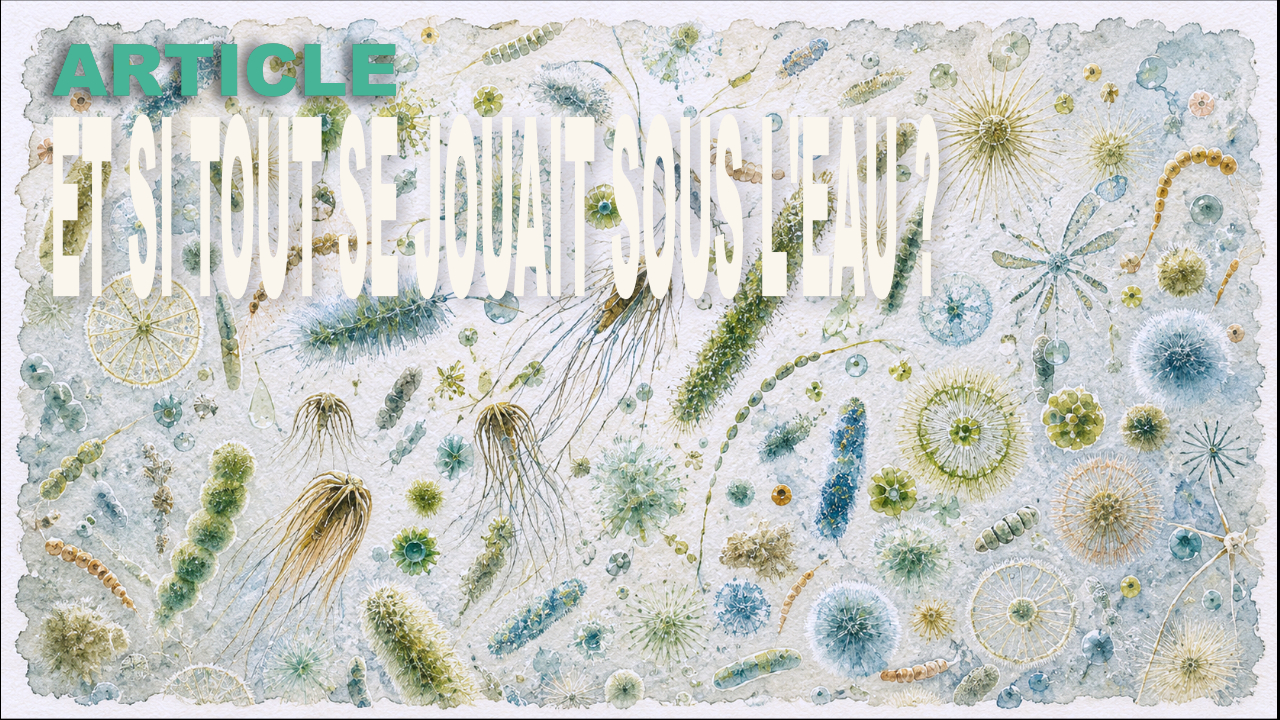
Seaweeds do the same, as does phytoplankton: microscopic organisms that carry out photosynthesis while suspended in the water. They are called primary producers because they make material that other living things will feed on. Some supplement photosynthesis by consuming other organisms or organic matter. This mixed nutrition is called mixotrophy.
That food can follow several routes. An animal may eat a leaf or some seaweed. Elsewhere, fragments break off and are eaten later. Material that is not grazed can therefore still enter the food web. In some deep environments without sunlight, other producers use energy from chemical reactions.
Marine ecosystem engineers
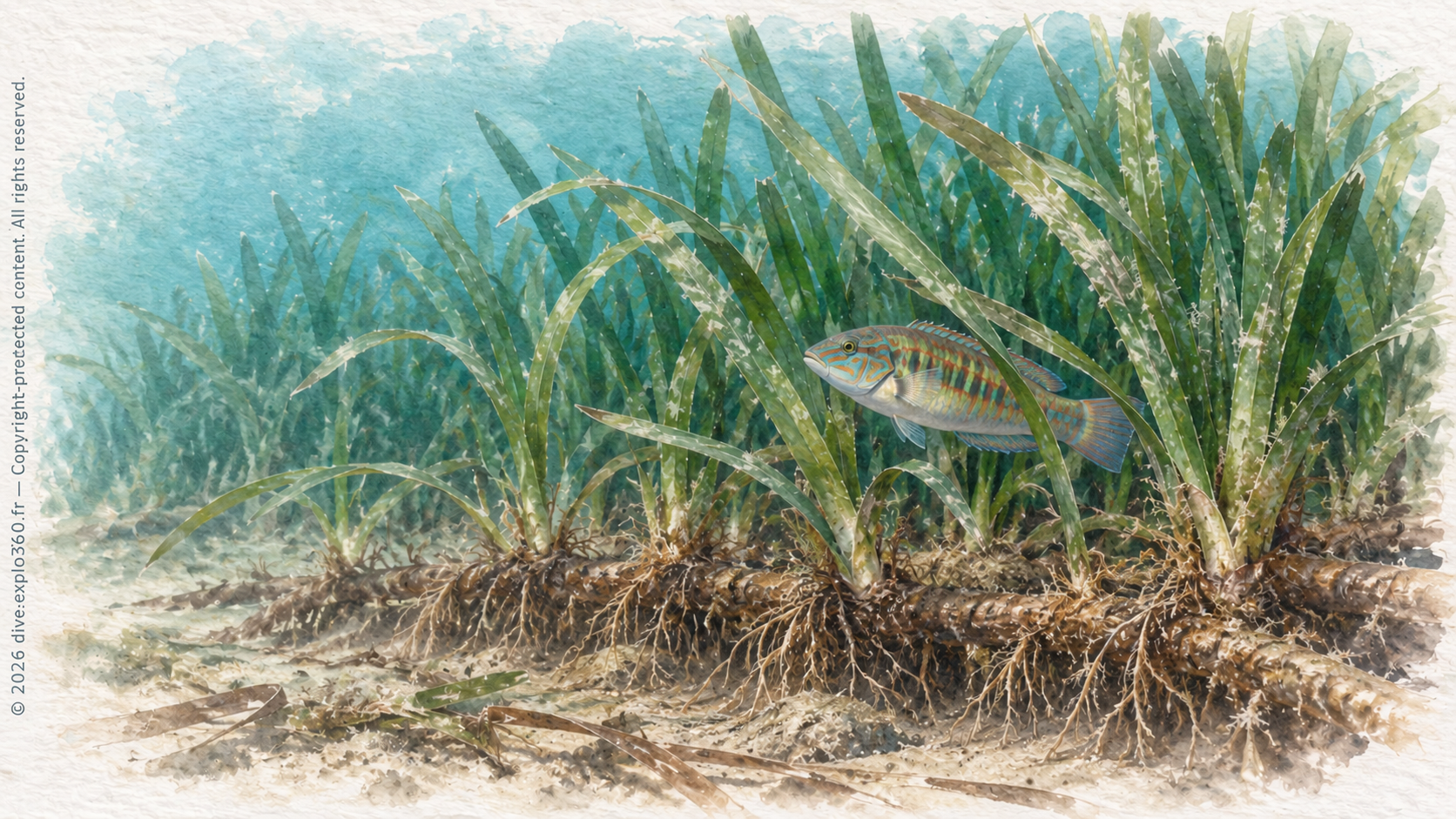
Swim through a meadow of Neptune grass (Posidonia oceanica) and fish may disappear among its leaves. Small organisms also grow attached to their surfaces. The plant therefore provides more than food: its structure creates shelter and places to settle.
Below the sand, roots and rhizomes, stems that grow through the seabed, help hold sediment in place. The meadow changes living conditions around it. This is what the term “ecosystem engineer” describes; it does not mean that the plant deliberately builds for others.
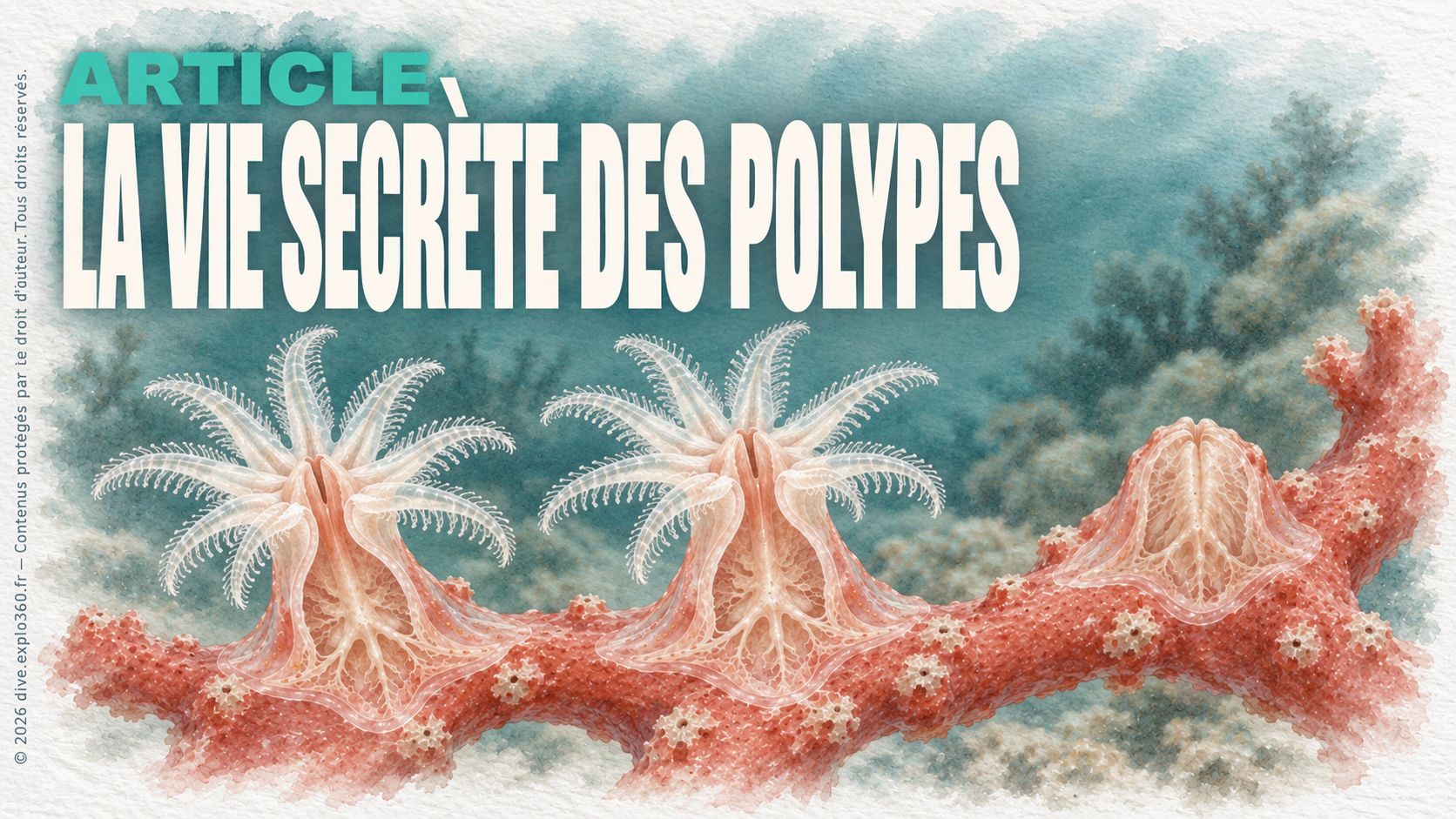
Other species perform a similar function elsewhere. Certain corals build tropical reefs. In some temperate seas, large brown seaweeds form underwater forests. These habitats differ, but their structures provide places where other organisms can live.
Marine herbivores and their influence on vegetation
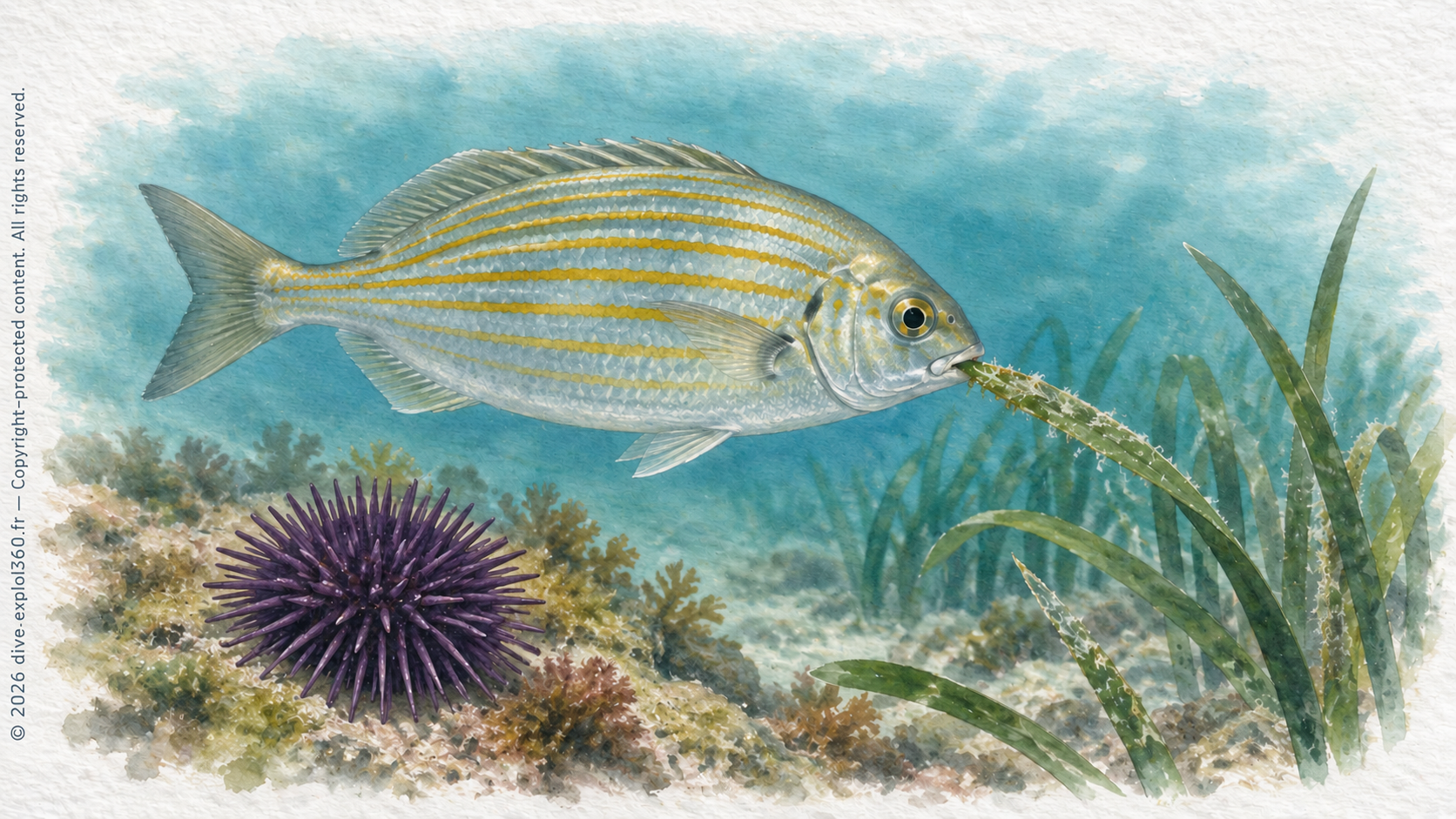
An adult salema (Sarpa salpa) bites off a piece of leaf or seaweed. Nearby, a purple sea urchin (Paracentrotus lividus) also grazes on algae. By eating, these animals transfer some plant or algal material into their own bodies. This feeding activity is called herbivory.
Their feeding also changes the vegetation left behind. If grazing is limited and algae regrow, vegetation may persist. Very intense grazing can greatly reduce its cover. The outcome depends on both the consumers and the growth of what they eat.
Bite marks can reveal this activity during a dive. They do not, by themselves, show its effect across an entire meadow or rocky seabed.
Filter-feeding organisms
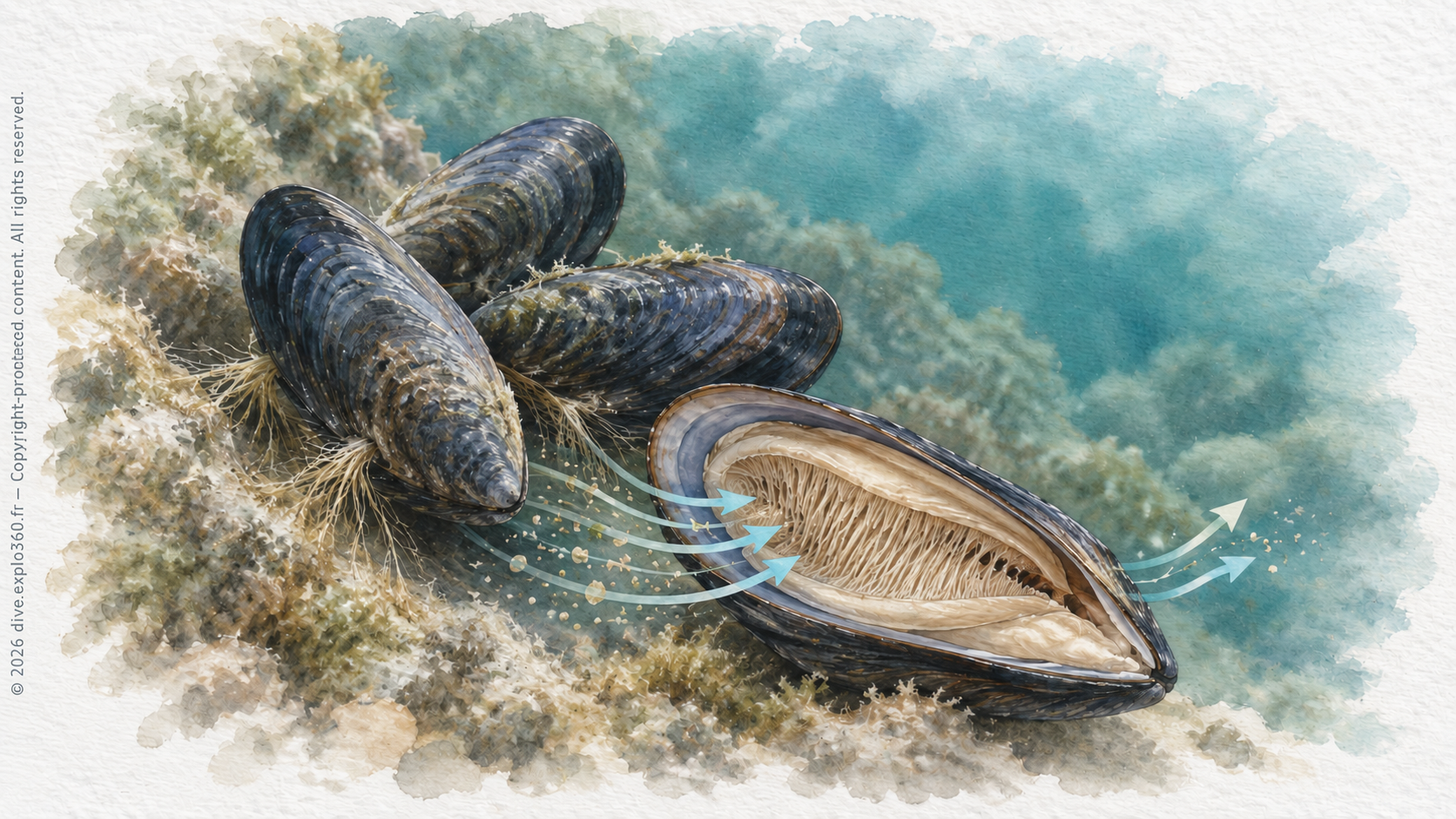
A Mediterranean mussel (Mytilus galloprovincialis) stays attached to a rock, but water brings food to it. The mussel moves water through its body and retains food particles. Its gills, which also take up dissolved oxygen, help collect them.
Some particles are swallowed and used to live and grow. Other material is rejected and may reach the seabed. If a predator later eats the mussel, food that once floated in the water continues its journey through another animal.
Filter feeding therefore connects the water and the seabed. It does not make water “pure”. Sponges and other filter feeders also obtain resources from the water, using different structures and mechanisms.
Predators and their prey
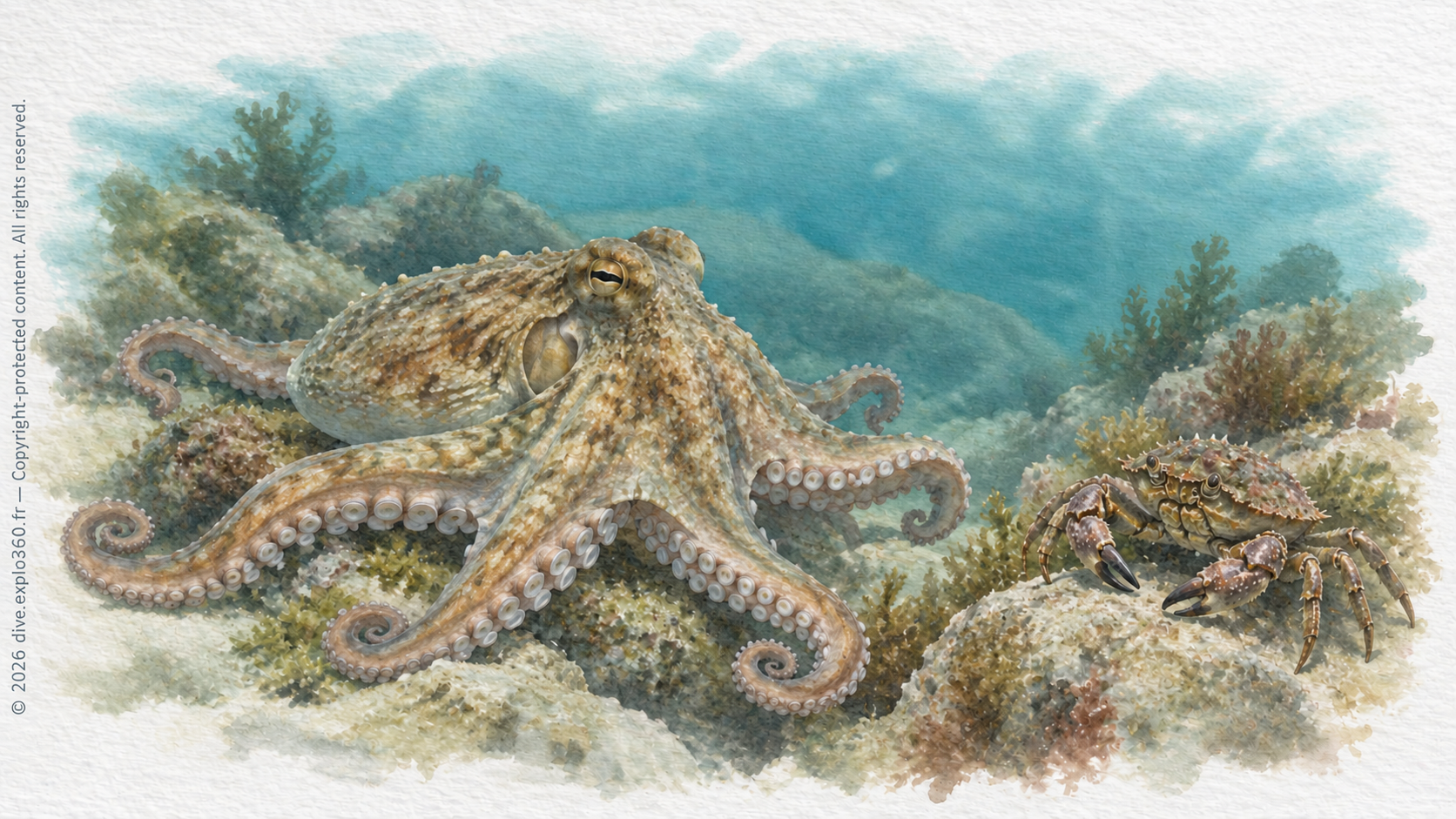
A common octopus (Octopus vulgaris) catches and eats a crab. This is predation: one animal captures another for food. Some of the crab’s material then supports the octopus’s activities and growth.
Predators can also influence prey behaviour. Prey may spend more time in shelter or change where they move. To find out whether captures reduce prey numbers across a site, however, researchers must also consider reproduction and other causes of death.
The octopus can itself be eaten. Predator and prey are therefore not permanent categories separating species: the words describe the relationship being observed.
Top predators and trophic levels
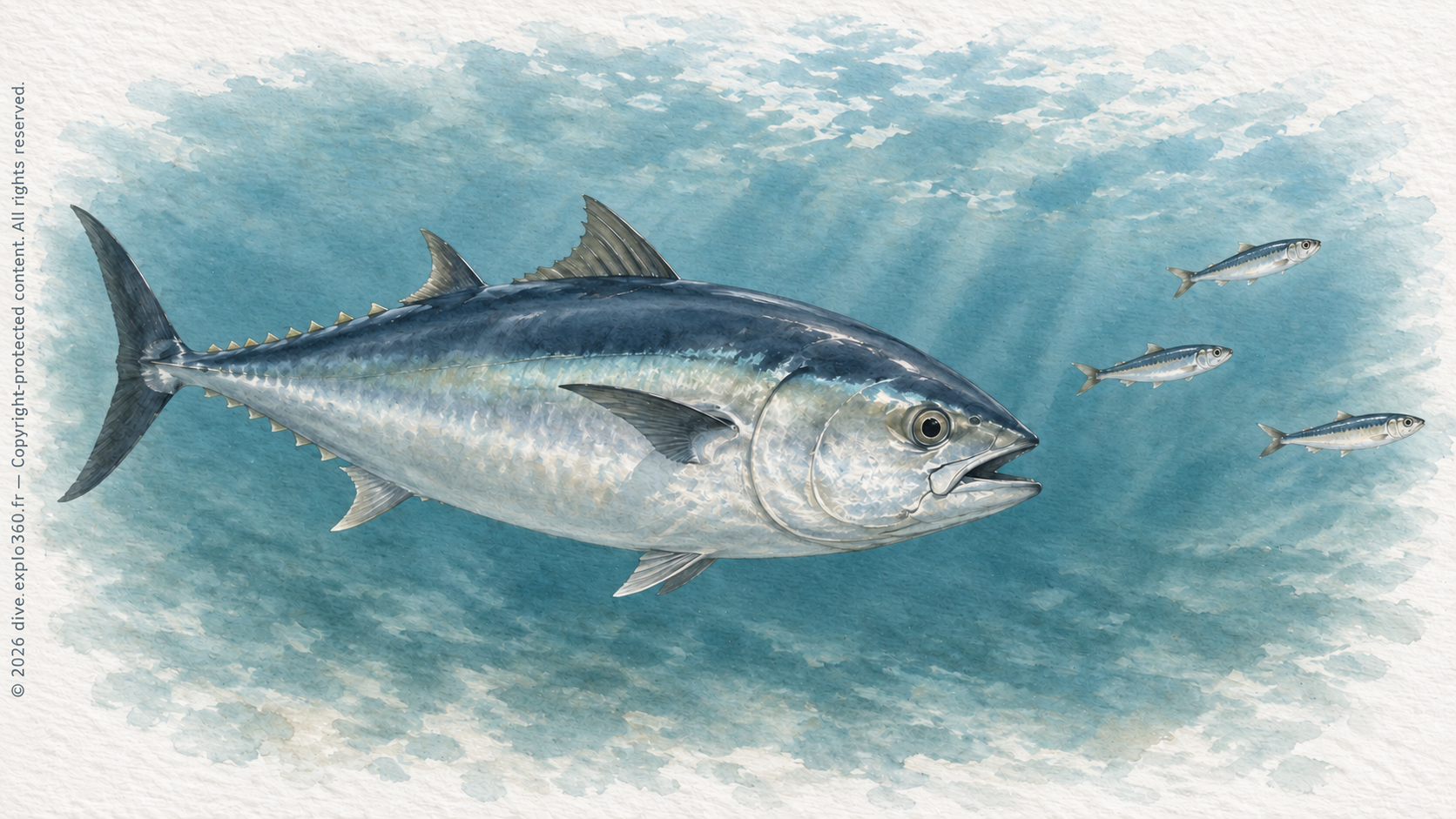
A small fish eats tiny planktonic animals, then becomes the prey of a larger fish. That fish may also be eaten. Such links help explain where large predators fit into a food web.
Atlantic bluefin tuna (Thunnus thynnus), for example, eat fish and other animals. Their diet varies with their size and the resources they encounter. An animal’s trophic level, its position in feeding relationships, depends on what it eats and on what its prey have eaten.
Size alone therefore cannot give a species a fixed position. Young and adult animals may have different diets and predators. Changes in predation can also affect the organisms eaten by prey, but these effects need to be studied in the environment concerned.
Detritivores and decomposers
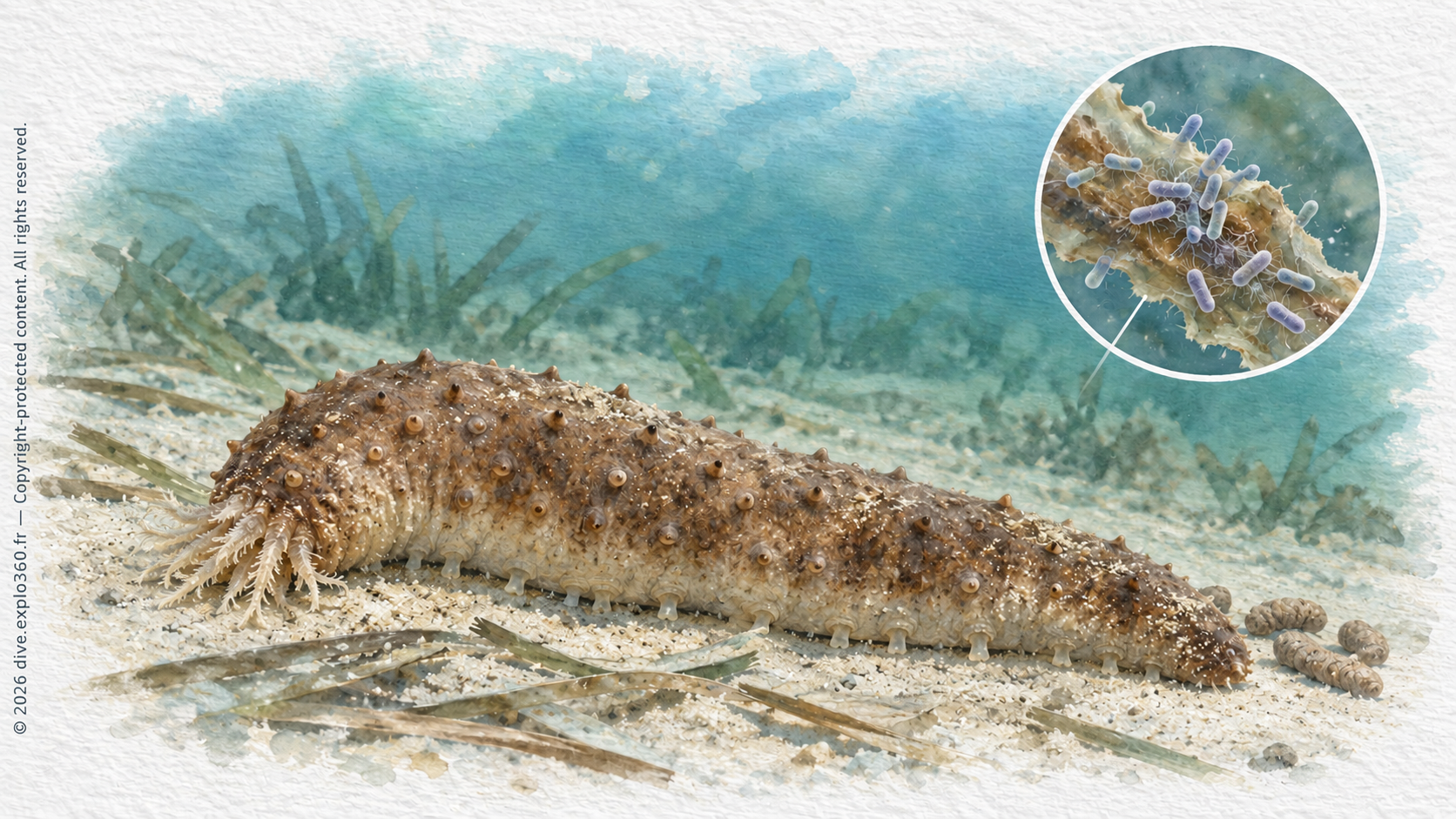
A dead leaf or the remains of an animal still contain usable material. On the seabed, the sea cucumber (Holothuria tubulosa) swallows sediment and obtains food including particles from remains and associated organisms. It is a detritivore: an animal that feeds on organic debris.
Other changes happen on a scale too small to see unaided. Bacteria and other microorganisms break down substances in those remains. Some elements are released into the water in mineral forms that producers can use. This conversion into mineral forms is called mineralisation; it does not describe all degradation. Not all organic matter is therefore mineralised immediately.
The sea cucumber and the bacteria therefore do not do exactly the same thing. Their activities contribute to the processing of remains, some of which also supports their own growth and can feed other organisms.
How are ecological roles connected?
Return to the meadow. Neptune grass makes living material, provides shelter and supplies remains. A salema finds food there; an octopus may encounter prey. In the water and on the seabed, other organisms capture particles or process debris. Their activities overlap in the same place.
Ecological roles help us understand these connections. They are not jobs assigned permanently to each species: one species can perform several functions. Nor does their complementarity mean that all organisms help one another. Some eat each other or compete for a resource.
One final distinction helps make sense of the whole. Material can be transformed and reused. Energy is partly dissipated as heat as organisms live, so fresh energy must keep entering the system. In a sunlit meadow, that input comes first from the sun.
Interactive quiz
Connect the roles
Five questions about functions and their connections. Choose one answer per question.
Interactive quiz
Connect the roles
Question 1 out of 5Score: 0
1
How does the idea of ecological roles help a naturalist diver?
The idea describes mechanisms and relationships whose effects depend on conditions.
2
Which complementary functions does a seagrass meadow illustrate?
The same plant supplies production and changes the physical structure of the habitat.
3
Does one observed capture prove that a predator alone controls a population?
Prey reproduction and other causes of mortality also contribute to numbers.
4
How may a detritivore and decomposers be connected?
Particle consumption and chemical breakdown contribute to pathways of matter.
5
What does complementarity of roles mean in this article?
Functions connect without a shared intention or an identical outcome in every habitat.
Final result
Quiz completed
correct answers
Understanding the relationships we observe
To observe a role, ask what an organism uses and what its activity changes around it. A grazed leaf, a fish hiding in seagrass or remains on the seabed become clues to wider connections. Following them helps us understand an environment without assigning each species a single function.
Sources
Natural history accounts and references used to check the mechanisms and examples.
NOAA Fisherieswww.fisheries.noaa.gov↗Carlson et al. (2007). Microbes and the Dissipation of Energy and Respiration: From Cells to Ecosystems. Oceanography.doi.org↗Knapp et al. (2026). Stoichiometric, Isotopic, and Modeling Tracers of Marine Autotrophic Dissolved Organic Nutrient Production and Consumption. Annual Review of Marine Science.doi.org↗NOAA · Coral reef habitatscoralreef.noaa.gov↗NOAA · Kelp forest habitatsoceanservice.noaa.gov↗