A landscape built by life
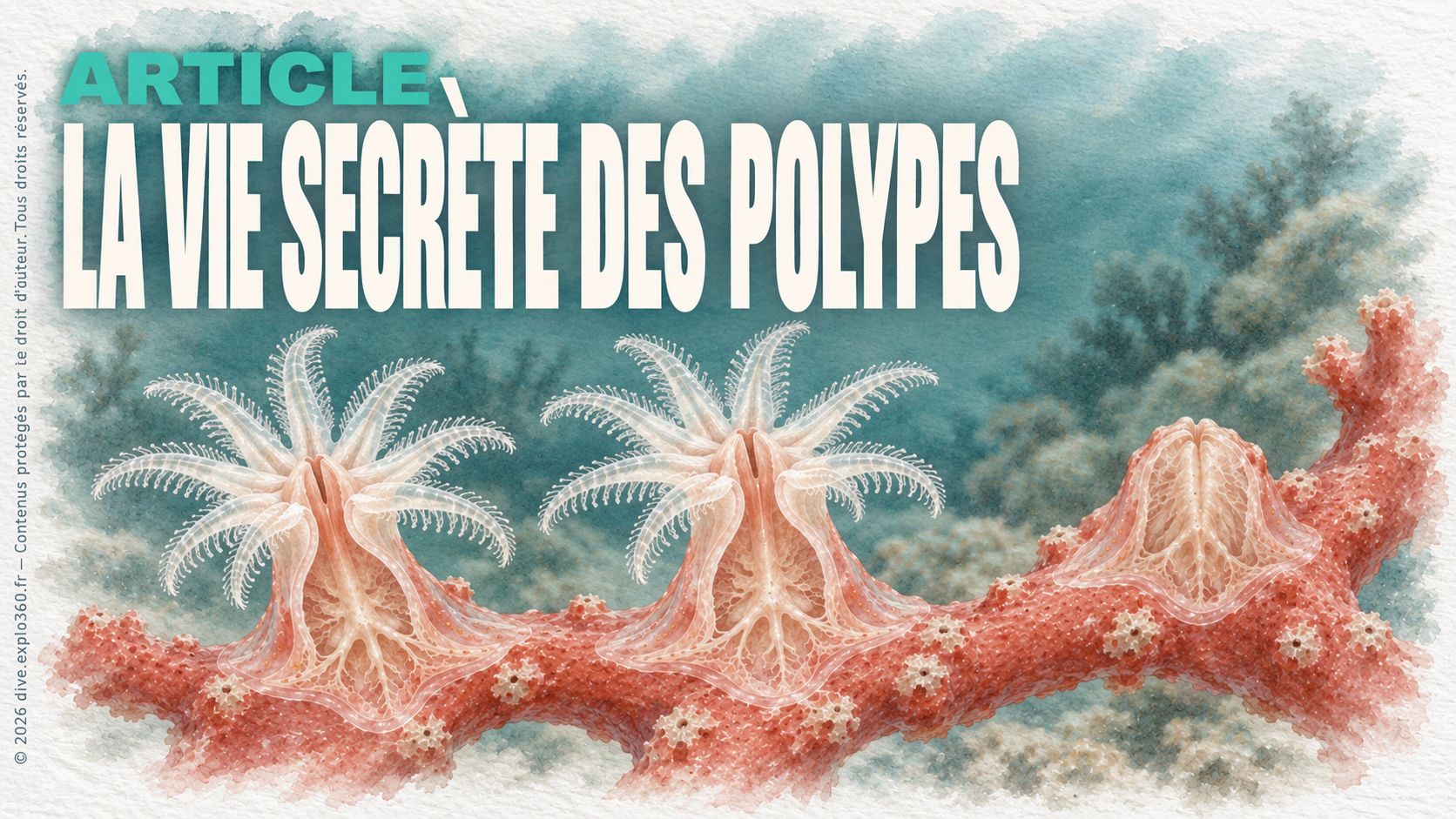
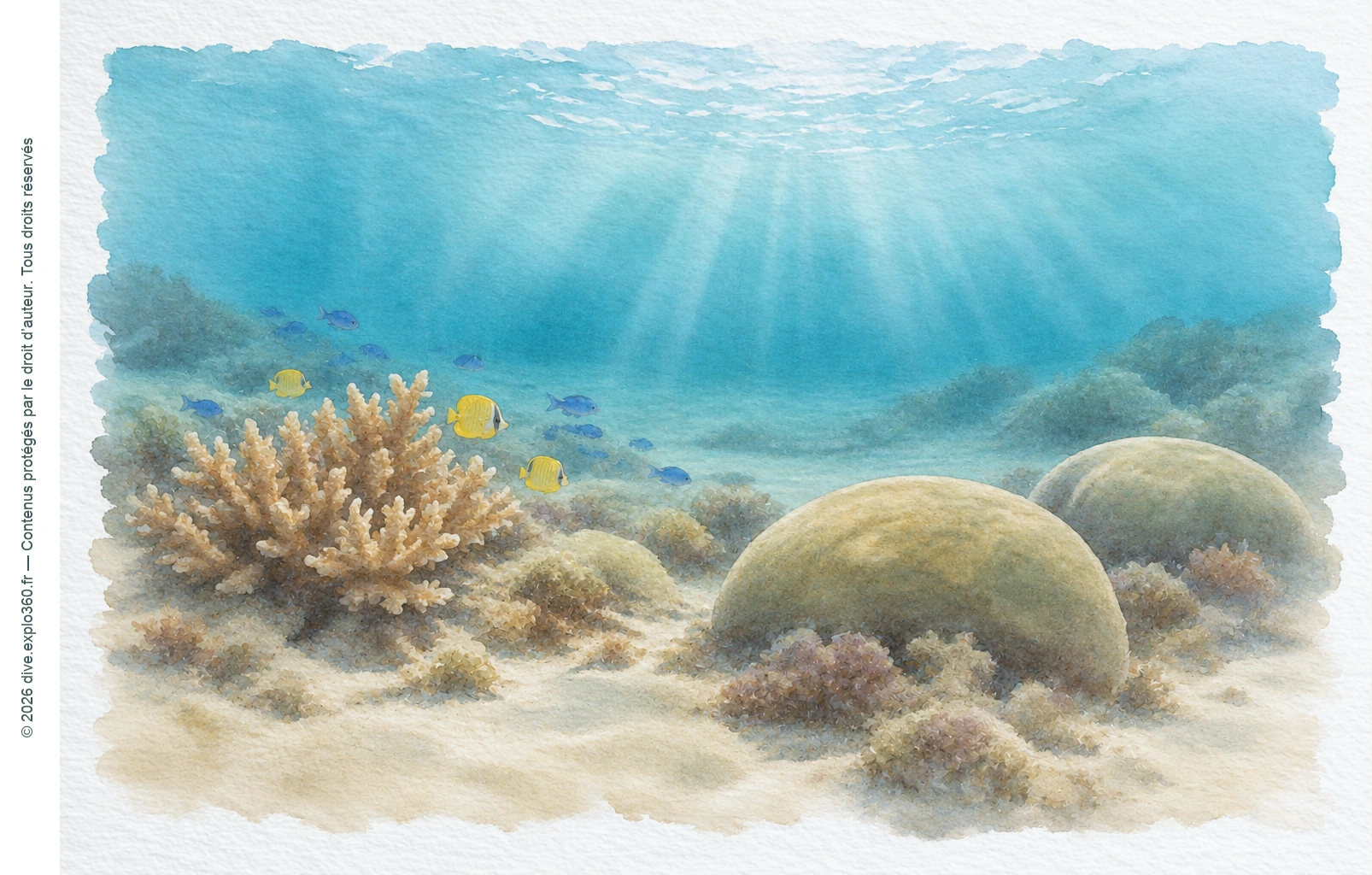
From a distance, a coral reef appears as a landscape of varied shapes and colours. A closer look reveals the coral colonies covering part of its surface. Each consists of tiny animals called polyps, which produce a limestone skeleton. Over generations, the accumulation of these skeletons, consolidated in particular by calcareous algae, helps form the reef. This structure develops slowly and provides a multitude of shelters for other marine organisms. A reef thus combines living colonies, old skeletons and cavities shaped throughout its history.
The secret of the tiny builders
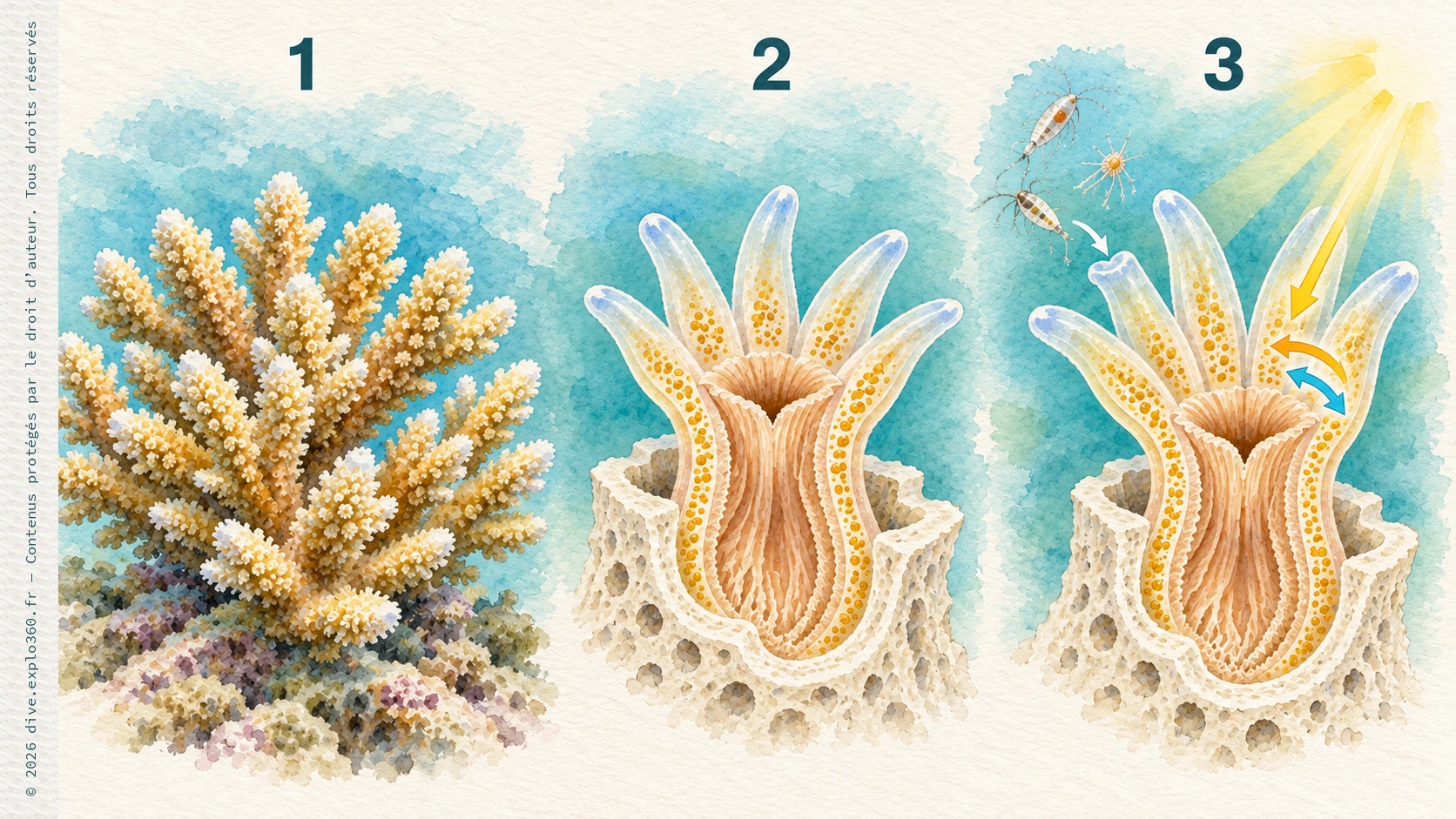
To understand how a coral reef is built, we need to look at polyps: tiny animals with a mouth surrounded by tentacles. In reef-building stony corals, polyps live in colonies and secrete a calcium carbonate skeleton. Depending on the species, colonies may be branching, massive or flattened into broad plates. Their gradual growth helps build the reef structure. Soft corals and gorgonians also belong to this environment, but their organisation is different. They have flexible supporting structures or skeletal elements that generally do not contribute to building the reef’s limestone framework.
A partnership with light
In most tropical reef-building corals, tiny symbiotic algae live inside the polyps’ cells. Using light, they carry out photosynthesis and produce organic compounds, some of which are transferred to the coral. In return, the coral provides a protected environment as well as the carbon dioxide and nutrients the algae need. This association, called symbiosis, contributes to colony growth and the formation of the limestone skeleton. Corals do not rely solely on this energy source, however: their tentacles also allow them to capture zooplankton and other food particles in the water.
Three destinations, one way of looking
In the Red Sea, the Maldives and Raja Ampat, coral reefs display a great diversity of shapes, colours and species. Some corals form massive colonies, while others develop branches or broad plates. This diversity creates structures, cavities and shelters used by many animals. Fish, crustaceans, molluscs and other organisms find food resources, refuges or breeding sites there. Observing a reef means discovering how this multitude of species occupies the available space and interacts with its environment.
Shelters at every scale
The diversity of a coral reef’s inhabitants depends in part on the complexity of its structure. Small cracks shelter crustaceans and young fish, while overhangs and larger cavities accommodate species seeking shade or refuge. Some animals live directly on corals or among their branches; others move above the reef or use neighbouring sandy seabeds. These different spaces offer conditions of light, current and protection that vary with their location. Damage to coral structures can therefore lead to the loss of many habitats, even when some living colonies remain.