


 Habitat
 Depth
 Group
 Role
 Average size
 Good to know
WHAT DOES IT LOOK LIKE?
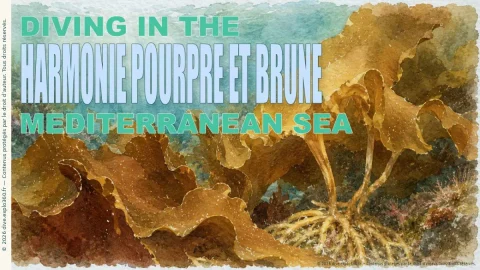
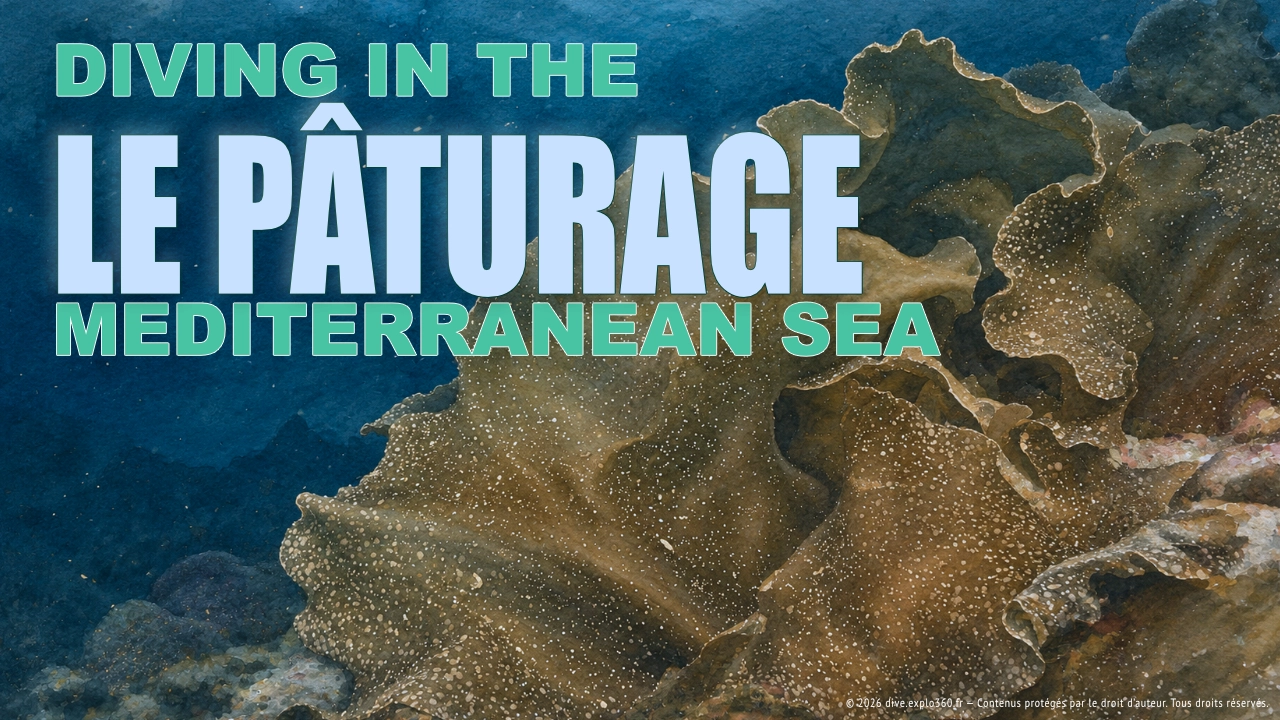
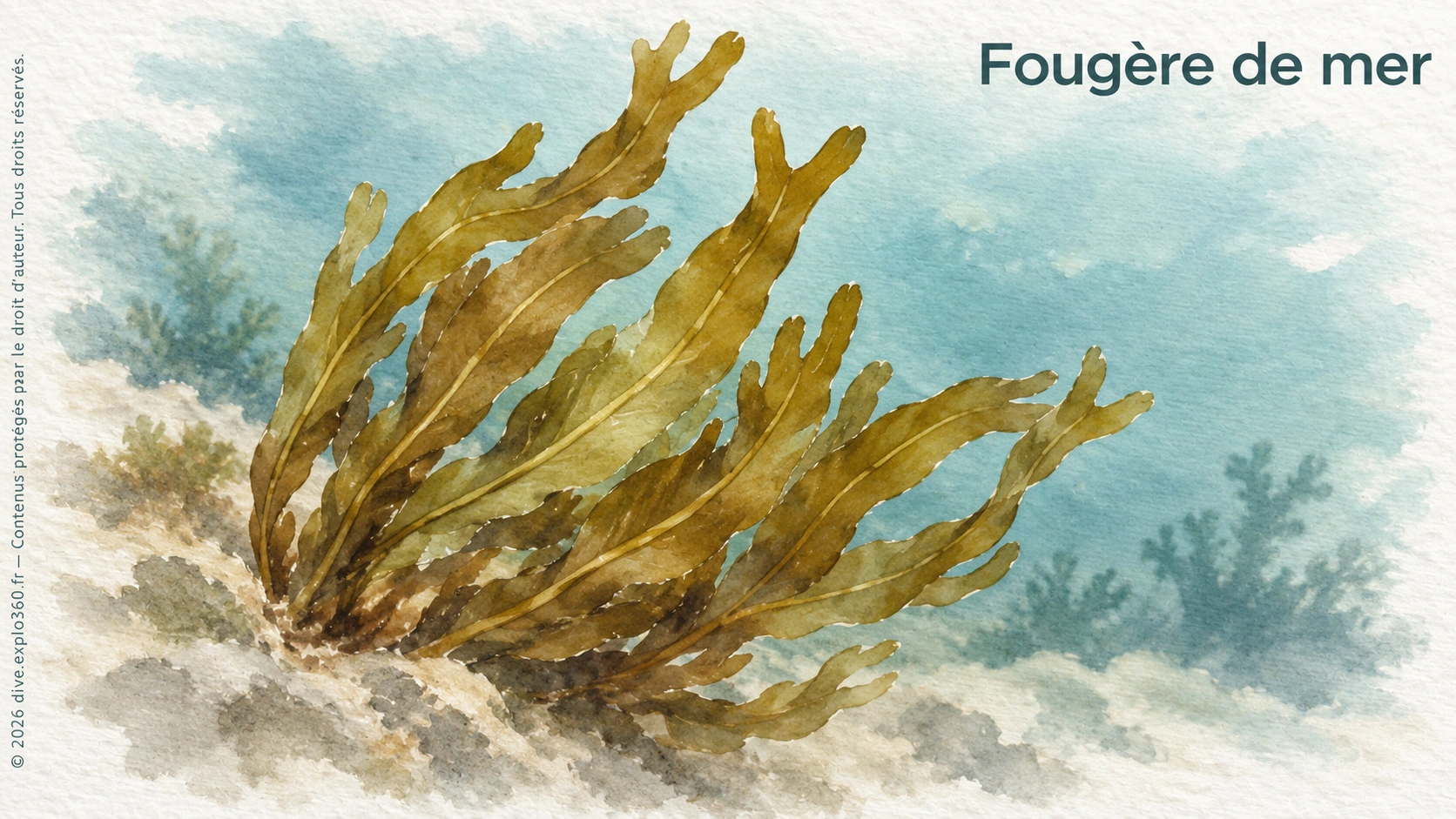
Its broad, brown to olive-green blades are flat, with gently wavy edges. A narrow band may separate a newer section from an older one, sometimes covered with small attached organisms. A short cylindrical stalk joins each blade to stolons, creeping runners anchored to the seabed by numerous holdfasts.
WHERE DOES IT LIVE?
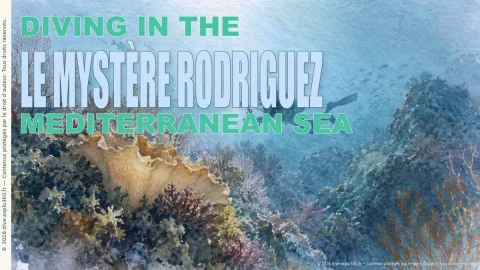
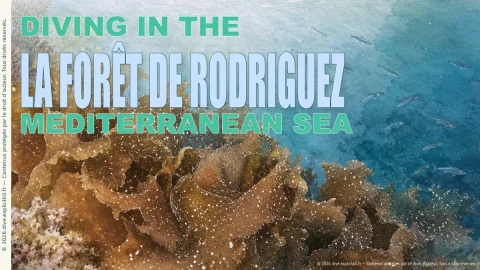
Found only in the Mediterranean, this kelp grows on deep rocky bottoms, coralligenous formations and hard calcareous deposits, where the water is clear and currents flow along the seabed. Most stands lie well below ordinary recreational diving depths, although records from around 30 m exist in some areas. Its blades spread close to the bottom rather than forming a vertical forest.
WHAT DOES IT EAT?
Even in deep water, the kelp uses the faint light that reaches its blades. Pigments capture this energy for photosynthesis, allowing it to produce organic matter from dissolved carbon. It also absorbs mineral nutrients from seawater. It neither hunts nor eats prey.
GO FURTHER WITH AMIGANSEAU
Unlock the full profile
Deepen your knowledge with the exclusive chapters and interactive resources included in an AMIGANSEAU licence.
- HOW DOES IT REPRODUCE?
- OUR OBSERVATIONS
- ARTICLE
Also included in the full profile
- Advanced navigation between description, ecological context, observations and behaviour
- Interactive food chain to explore the species’ feeding relationships
- Infographic and illustrated summary profile

 Understand the species