

SEE THE BIGGER PICTURE · Adults (18+)
Brown algae
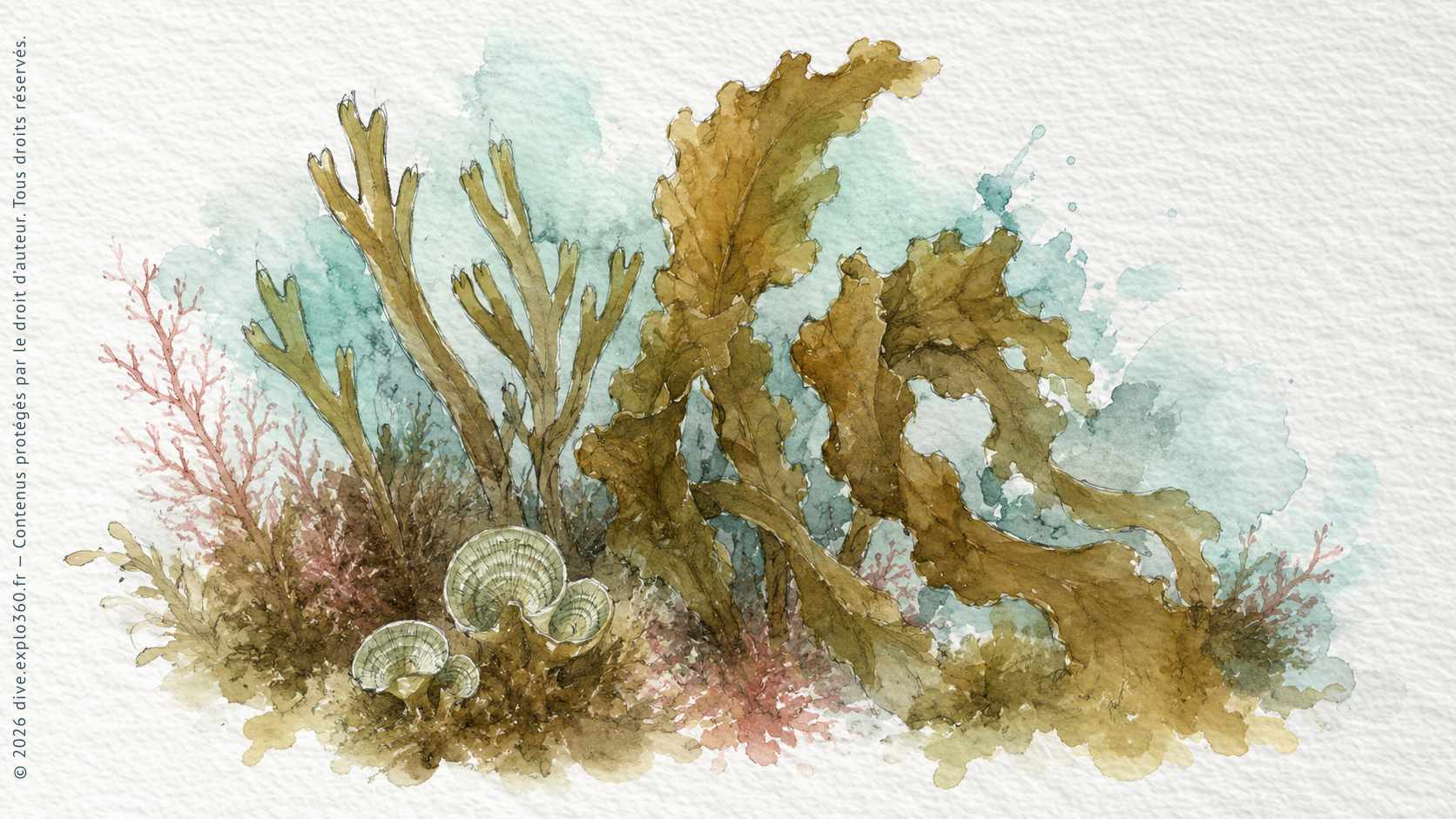
Brown algae use light to produce their living matter. Their forms range from small tufts to large blades. Some species form underwater forests; not all grow into giants.
Recognising their organisation
Their body, called a thallus, lacks the true roots, stems and leaves of flowering plants. In many species, a holdfast anchors them to the substrate. Pigments, including fucoxanthin, contribute to their brown colour without preventing photosynthesis.
A place in the living environment
Attached stands provide surfaces and refuges. Some of their production is grazed; some becomes debris that is consumed or decomposed. Light, temperature, nutrients, water movement and herbivores influence their development.
Exploring further
Brown algae belong to the stramenopiles: their resemblance to plants does not mean they are closely related to flowering plants. Primary production and their physical architecture are two distinct functions. Some Sargassum species float, so an attached way of life is not universal.
Key points
Attached stands provide surfaces and refuges. Some of their production is grazed; some becomes debris that is consumed or decomposed. Light, temperature, nutrients, water movement and herbivores influence their development.