

SEE THE BIGGER PICTURE · Adults (18+)
Surface: life at the very top of the water
Observing the surface means looking at a living boundary between the air and the sea. Some organisms float there; others stay just below, carried by currents or able to swim.
What the category means
Here, Surface indicates a usual association with the top of the water or its immediate surroundings. It is not a depth band that is identical everywhere, nor does it include all sunlit waters.
Drifting is not limited to the surface
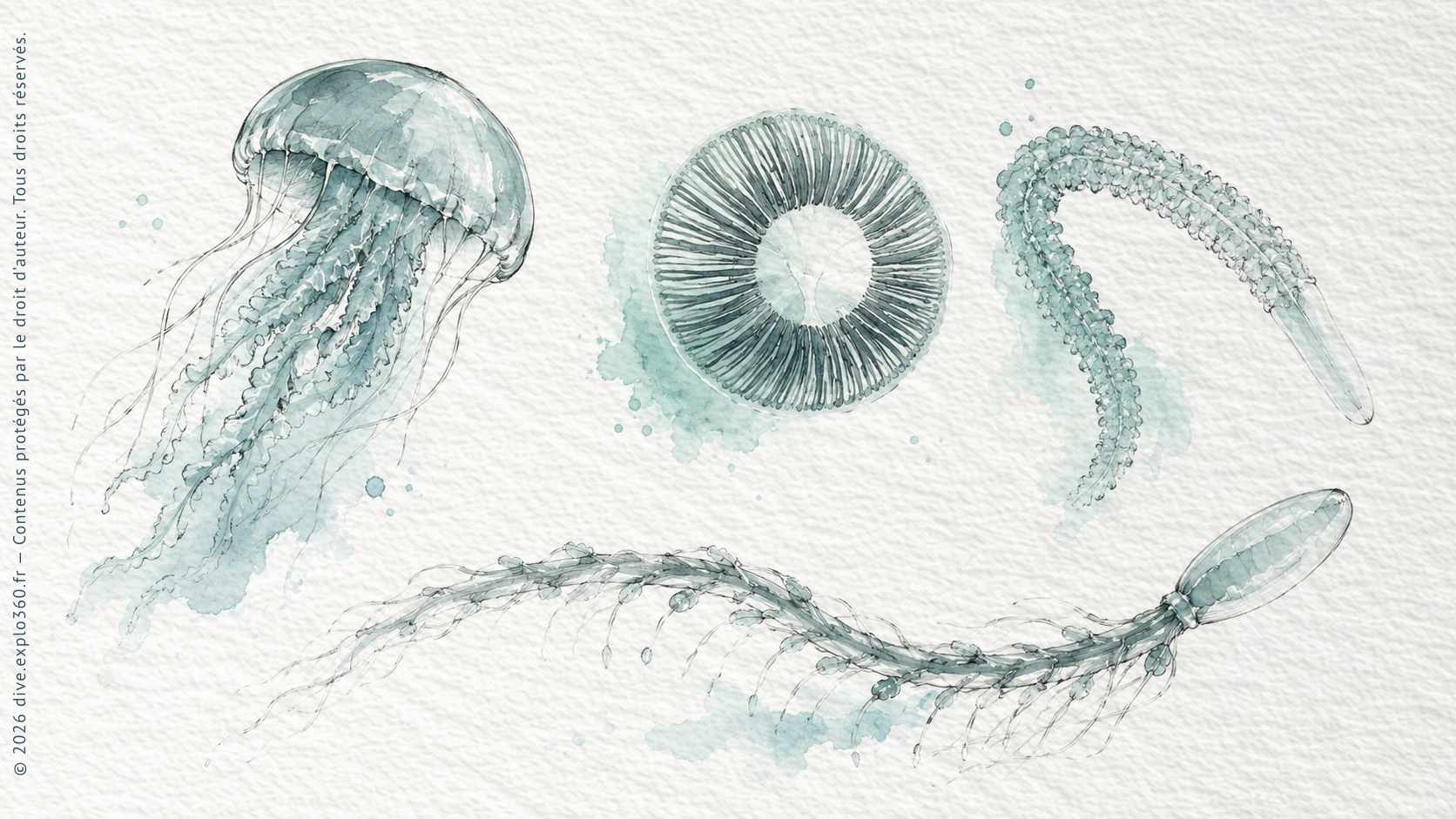
Earlier examples of jellyfish and other gelatinous organisms illustrate drifting well. Yet these organisms can also live in deep water. Plankton is defined by its relationship with currents; its size and position vary.
Light, currents and food
Light helps microscopic organisms produce living matter when nutrients are available. Currents and waves move food and animals. Gatherings can therefore form and then disperse.
A guide for observation
Look at whether the organism floats, stays just below the water's surface or merely passes through this zone. Its habits may change with age, season or time of day. A single observation cannot reveal its entire way of life.
Key points
Surface is a positional reference shared by all seas. The species present and local conditions may be very different.