

SEE THE BIGGER PICTURE · Adults (18+)
Green algae
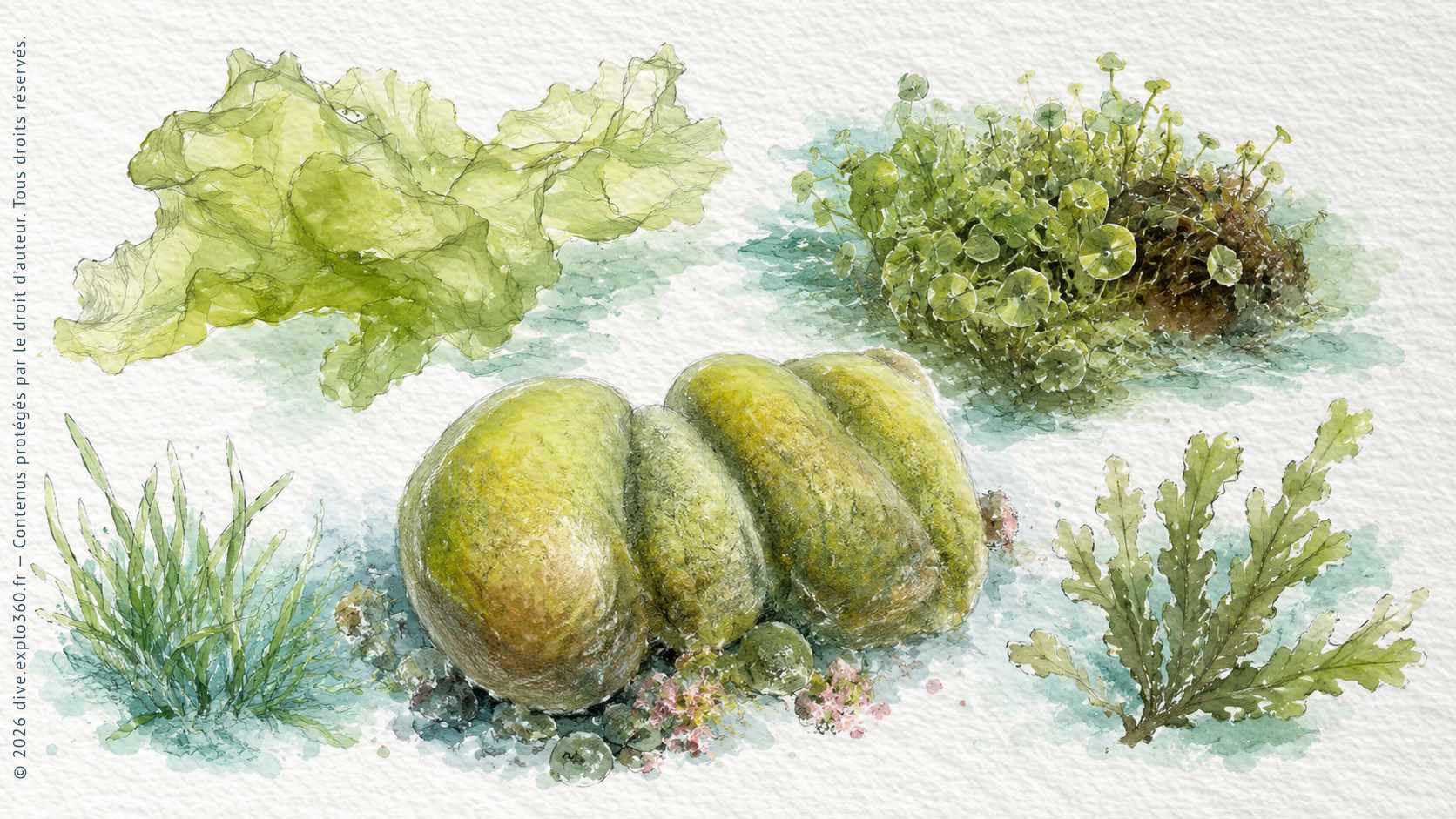
Marine green algae can form blades, filaments or more branched structures. They produce their own matter using light and contribute to life in sunlit areas, on the bottom or sometimes detached in the water.
Recognising their organisation
Their bodies lack the root, stem and leaf organisation of flowering plants. Some species have many cells; others form large structures containing several nuclei within a single cell. A simple appearance may conceal very distinctive organisation.
A place in the living environment
They feed herbivores, support small organisms and provide shelter. Their growth varies with light, temperature and nutrients. Blooms may occur when conditions favour them; they are not a feature of all green algae.
Exploring further
Chlorophylls a and b help capture light energy. Photosynthesis fixes inorganic carbon into organic matter; nutrients supply other necessary elements. Energy source, carbon source and mineral nutrition must be distinguished. Some marine green algae are siphonous.
Key points
They feed herbivores, support small organisms and provide shelter. Their growth varies with light, temperature and nutrients. Blooms may occur when conditions favour them; they are not a feature of all green algae.