

SEE THE BIGGER PICTURE · Adults (18+)
Sponges
Sponges are animals, despite their attached lifestyle and sometimes plant-like shapes. Crusts, masses, tubes and branches: their outlines vary greatly. Most feed by moving water through their bodies.
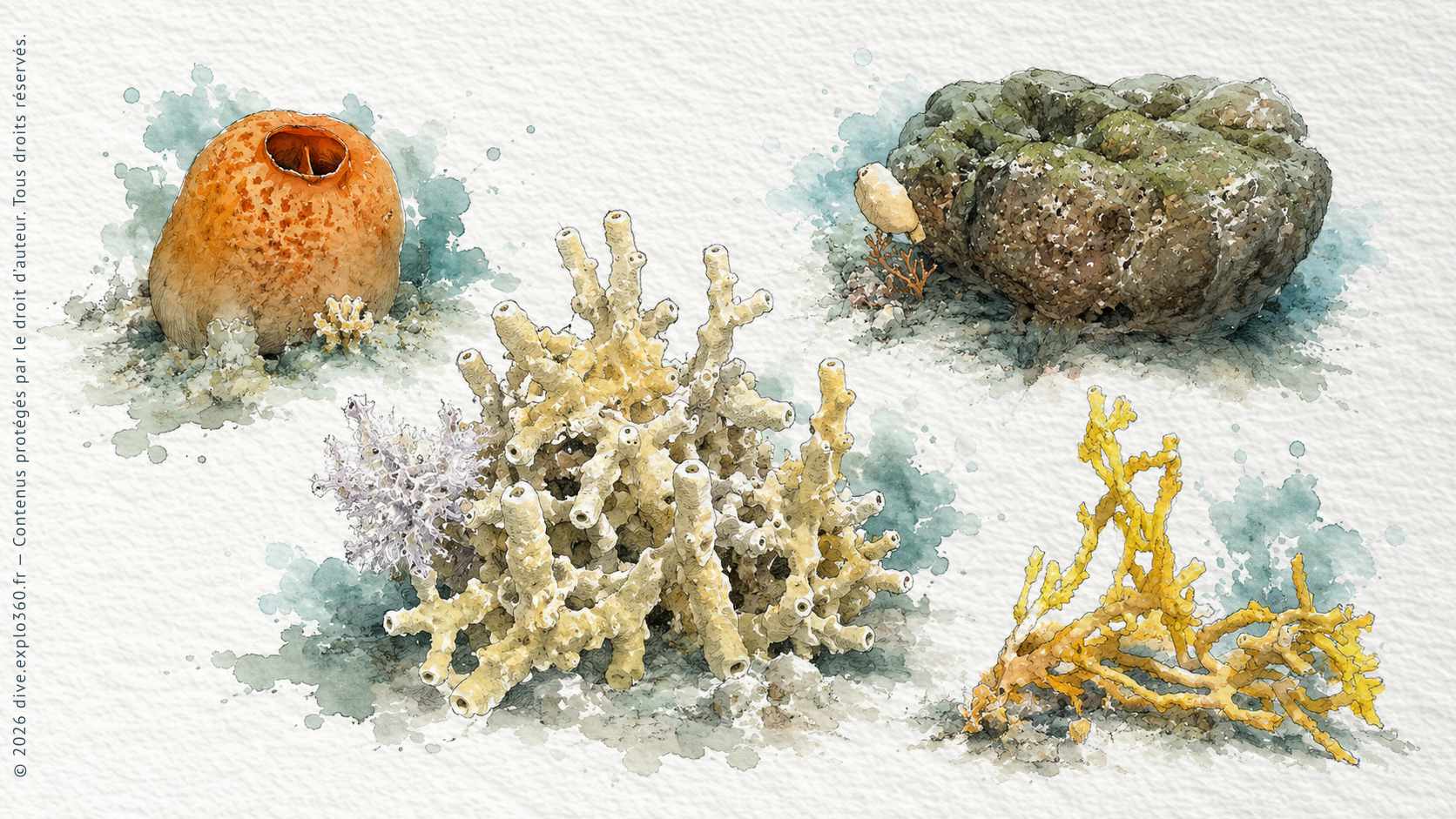
Recognising their organisation
Water enters through small pores, passes through a network of canals and leaves through larger openings. Specialised cells create the current and capture tiny food items. A skeleton of fibres or small mineral elements supports the body, depending on the group.
A place in the living environment
Filtration connects resources in the water with bottom-dwelling organisms. Sponges can also host microbes and small animals. They are not universal cleaning devices: their diet and environmental effects vary between species.
Exploring further
Poriferans have a water canal system and flagellated cells called choanocytes. In some species, microbial associations contribute to transformations of matter. Filtration predominates, but carnivorous sponges are an exception: a single feeding role does not describe the entire phylum.
Key points
Filtration connects resources in the water with bottom-dwelling organisms. Sponges can also host microbes and small animals. They are not universal cleaning devices: their diet and environmental effects vary between species.