

SEE THE BIGGER PICTURE · Adults (18+)
Molluscs
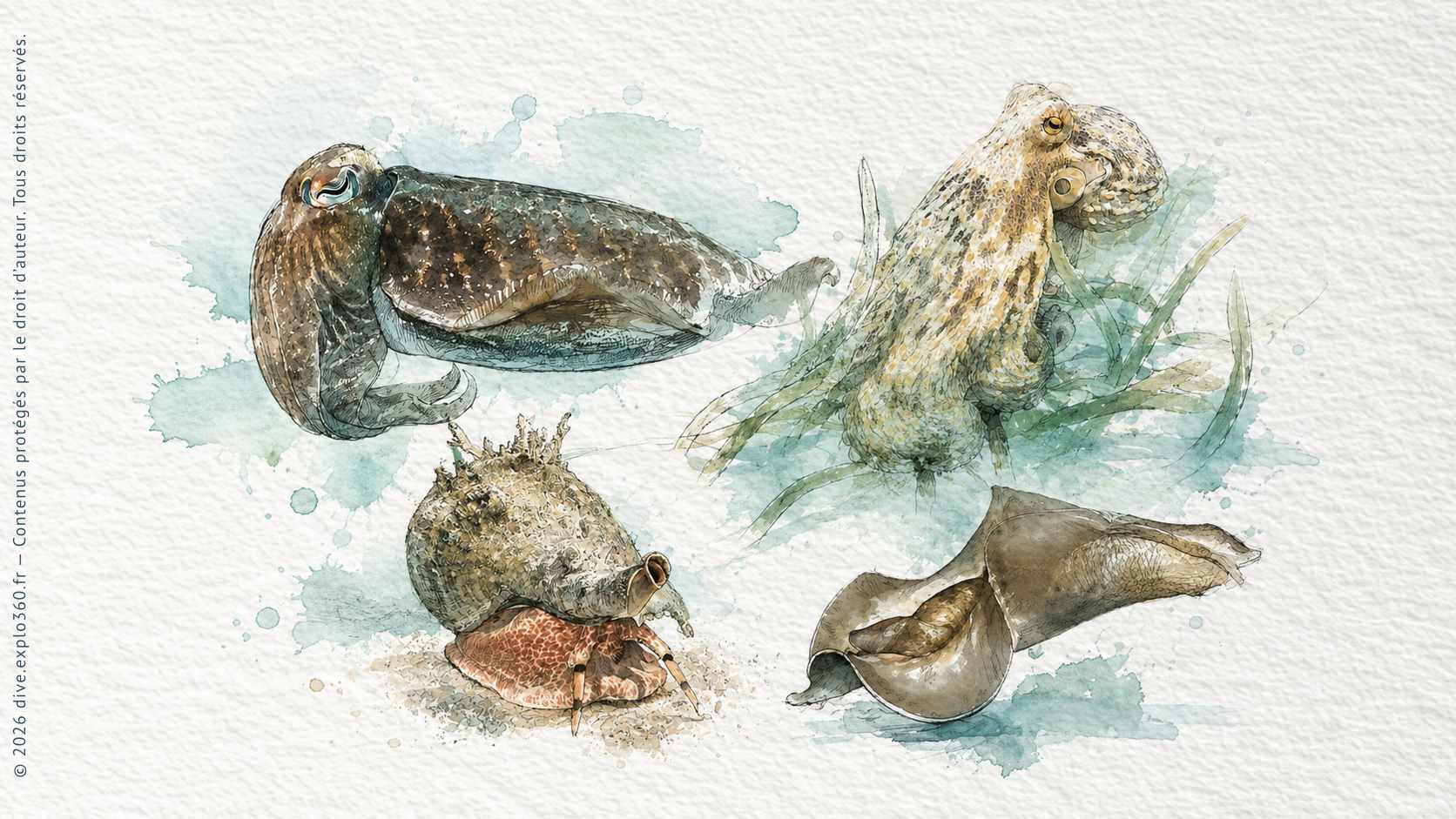
Molluscs include animals as different as mussels, marine snails, sea slugs and octopuses. They have soft bodies with a shared organisation that is extensively modified according to their way of life.
Recognising their organisation
The mantle covers part of the body and may produce a shell. The shell may be external, internal, reduced or absent. The muscular foot enables movement or takes specialised forms; in cephalopods, arms and a siphon are derived from it.
A place in the living environment
Bivalves often filter particles, many gastropods graze or hunt, and cephalopods capture prey. These examples show that one phylum can include several ecological roles. Molluscs also serve as prey for many animals.
Exploring further
Their body plan includes a mantle, visceral mass and foot. The radula, an apparatus bearing small teeth, occurs in many groups but is absent in bivalves. Modifications of this plan illustrate the diversification of movement, protection and feeding strategies.
Key points
Bivalves often filter particles, many gastropods graze or hunt, and cephalopods capture prey. These examples show that one phylum can include several ecological roles. Molluscs also serve as prey for many animals.