

SEE THE BIGGER PICTURE · Adults (18+)
Red algae
Red algae display a wide variety of forms: filaments, flexible blades, bushes and hard crusts. Their colour may appear pink, red, dark or brownish. Colour alone is not enough to recognise a species.
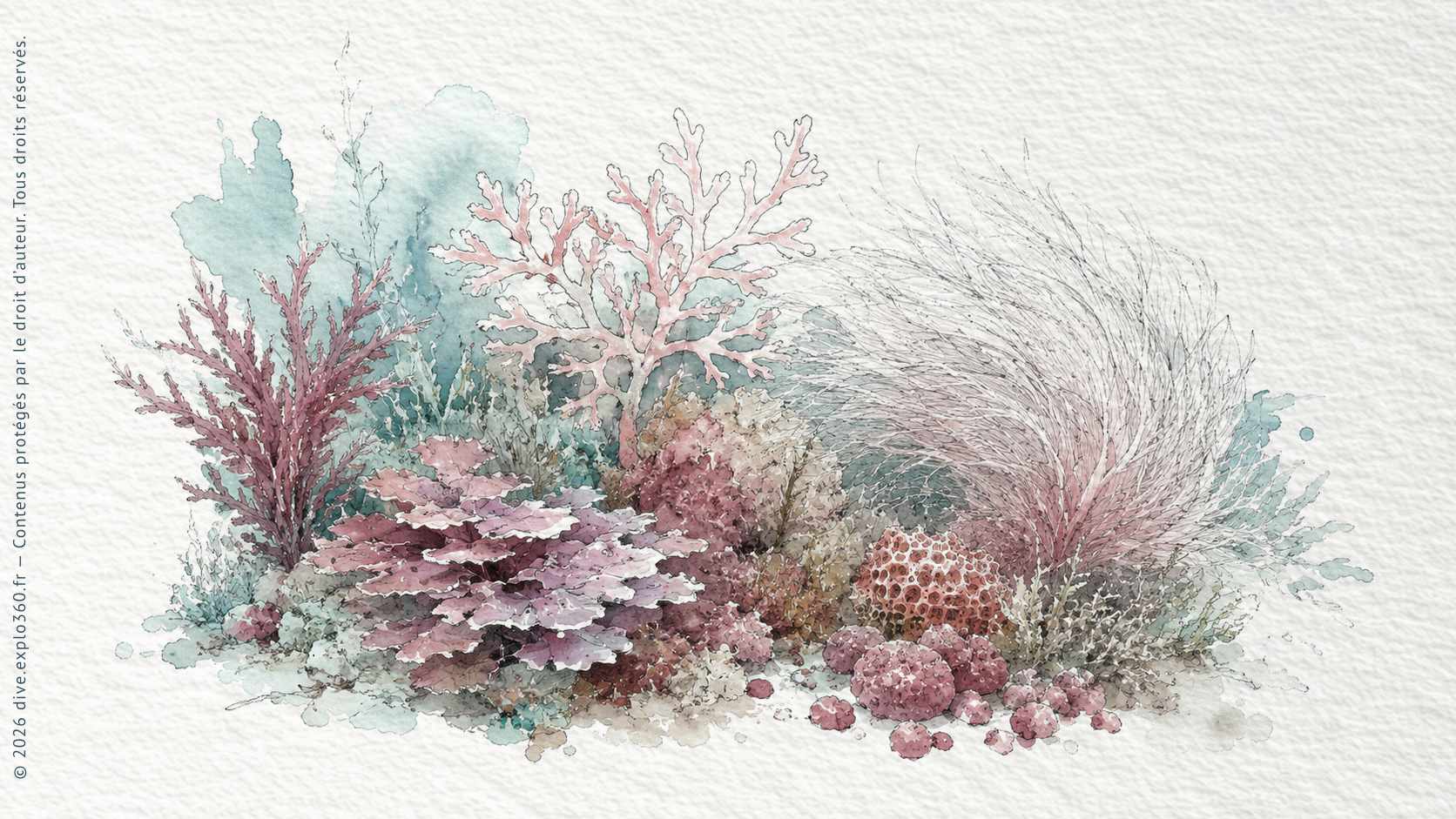
Recognising their organisation
Their pigments capture some of the light available in the water. Some species tolerate low light, but all need light for photosynthesis. They are therefore not restricted to deep water.
A place in the living environment
Some red algae deposit calcium carbonate. Attached or lying freely on the bottom, they can contribute to complex habitats and provide shelter. Others are flexible. Their matter feeds consumers and then enters recycling pathways when it detaches or dies.
Exploring further
Rhodophytes have accessory pigments, particularly phycobiliproteins. Some calcifying lineages contribute to bioconstructions or rhodolith beds. Pigmentation, calcification and light tolerance are distinct traits: no single depth defines the group.
Key points
Some red algae deposit calcium carbonate. Attached or lying freely on the bottom, they can contribute to complex habitats and provide shelter. Others are flexible. Their matter feeds consumers and then enters recycling pathways when it detaches or dies.