

SEE THE BIGGER PICTURE · Adults (18+)
Bryozoans
Marine bryozoans usually form colonies of very small animals. A colony may resemble lace, a crust or a small bush. They are neither algae nor corals, even when their shapes look similar.
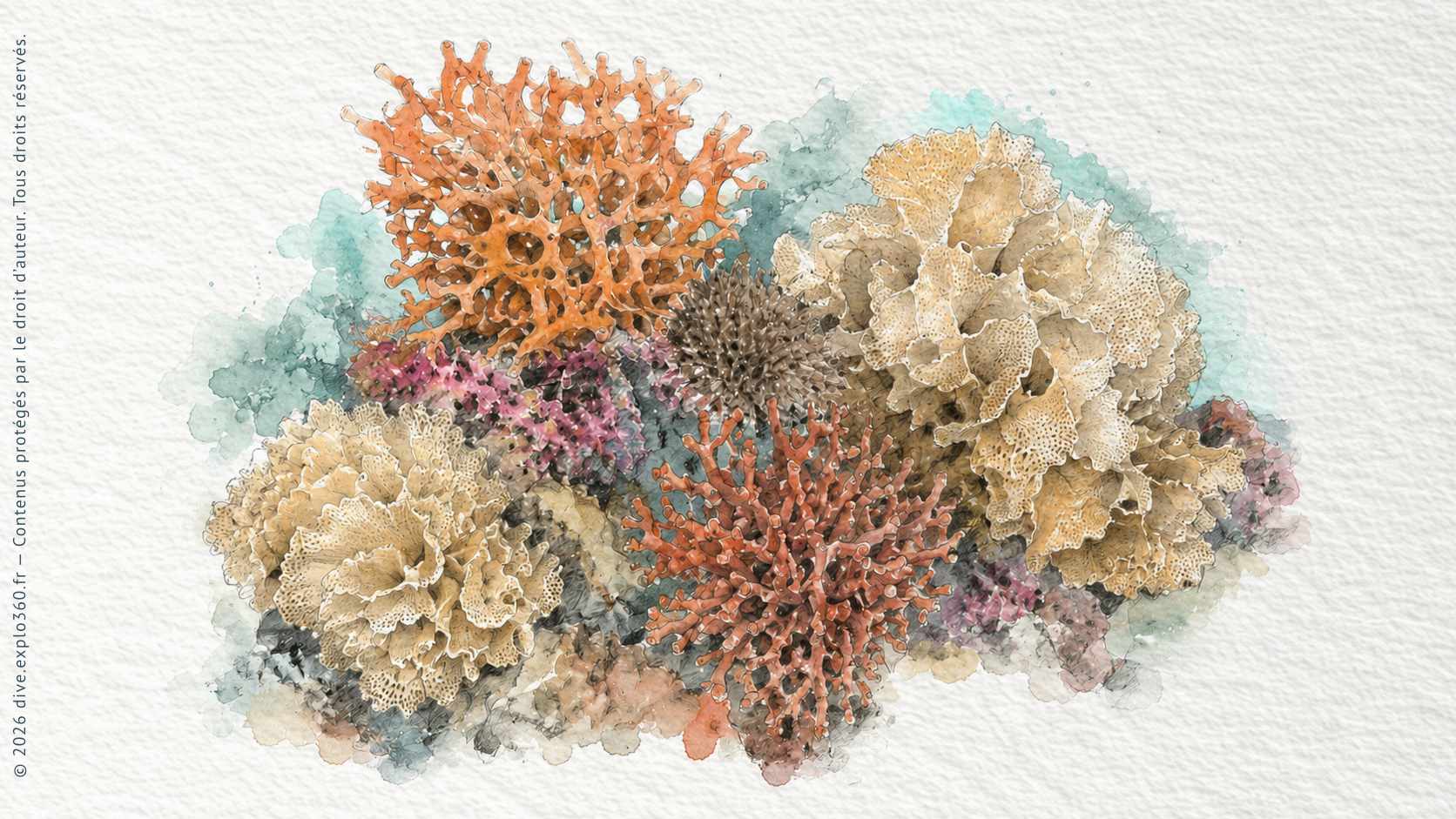
Recognising their organisation
Each small individual, called a zooid, has a crown of ciliated tentacles to capture food particles. Many can retract this crown. The colony grows by adding new individuals through budding.
A place in the living environment
Colonies attach to rocks, shells, algae or other substrates. They consume particles from the water and can provide microhabitats. Some are calcified and fragile: shape alone cannot identify the species.
Exploring further
The lophophore is the crown of ciliated tentacles used in feeding. Colonial growth by budding combines with sexual reproduction that enables dispersal. Zooids may specialise. Colonial organisation and the presence of calcium carbonate do not make bryozoans cnidarians.
Key points
Colonies attach to rocks, shells, algae or other substrates. They consume particles from the water and can provide microhabitats. Some are calcified and fragile: shape alone cannot identify the species.