

SEE THE BIGGER PICTURE · Adults (18+)
Benthic: understanding life associated with the seabed
Benthic describes organisms living directly with the seabed or a substrate: attached to it, resting on it, moving over its surface or buried in sediment.
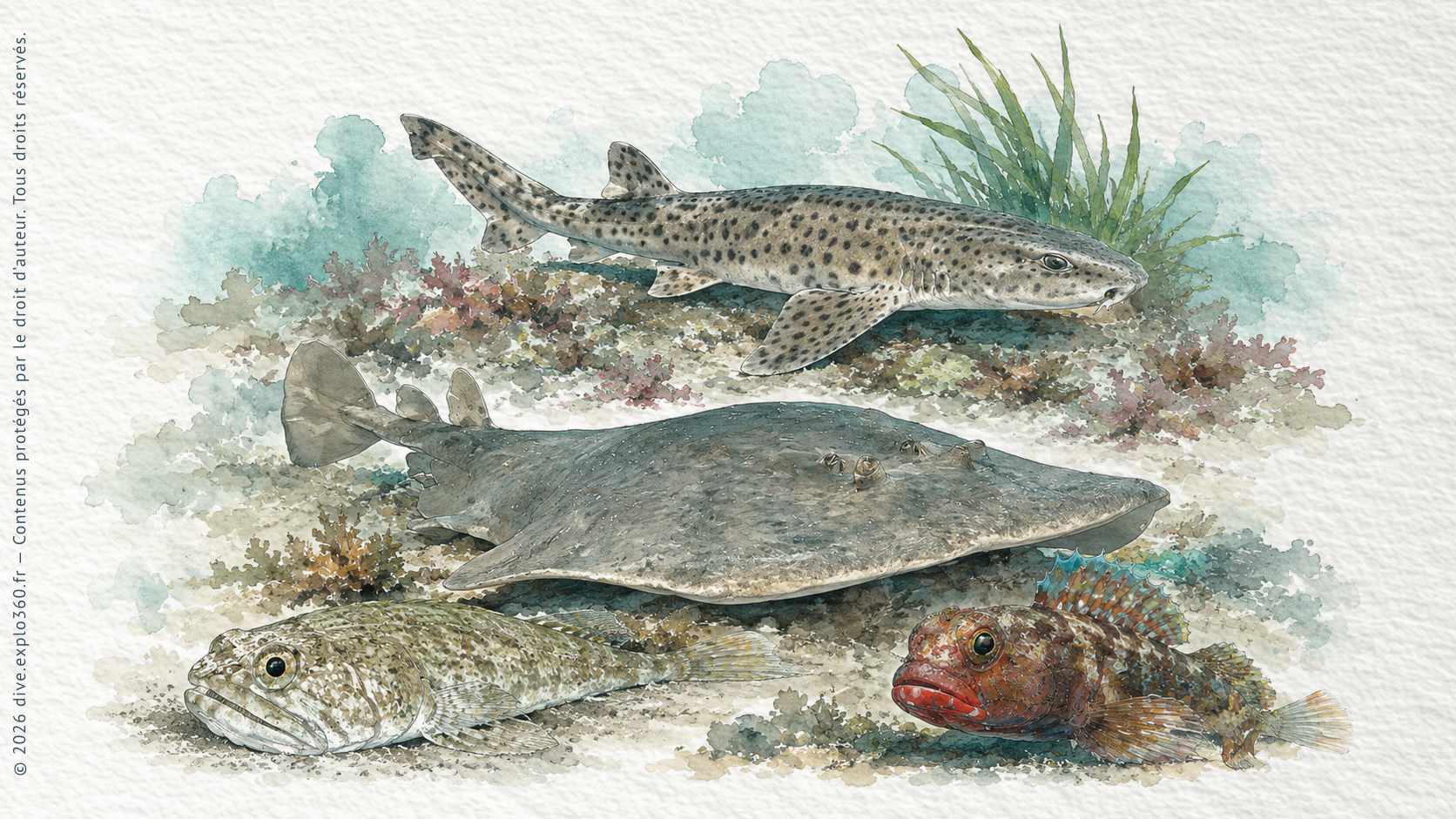
Much more than fish resting on the bottom
An attached sponge, an anchored alga, a crawling animal and a buried worm illustrate different ways of being benthic. Immobility, camouflage and a flattened body are not features shared by all of them.
One position, many habitats
Rocky seabeds, sand, seagrass meadows and colonised wrecks can host benthic organisms. The category does not replace habitat: it explains the organism's relationship with its substrate. It applies from the coast to the deep sea.
Feeding on resources from the bottom and the water
Some graze, hunt or consume remains. Others filter passing water. Bottom-dwelling organisms can therefore depend on matter produced elsewhere, especially where light is insufficient for photosynthesis.
Observing without rigid labels
An organism may live in open water when young and later settle on the bottom. Some fish leave the seabed to hunt. The usual relationship with the substrate tells us more than position at one moment; on its own, it does not prove the site's ecological quality.
Key points
Benthic means neither a particular bottom type nor a given depth. It is a way of relating to the substrate, applicable in all seas.