

SEE THE BIGGER PICTURE · Adults (18+)
Pelagic: understanding life in open water
Pelagic describes a way of life mainly in the water column, without a direct, permanent link to the seabed. This world exists offshore but also above coastal seabeds.
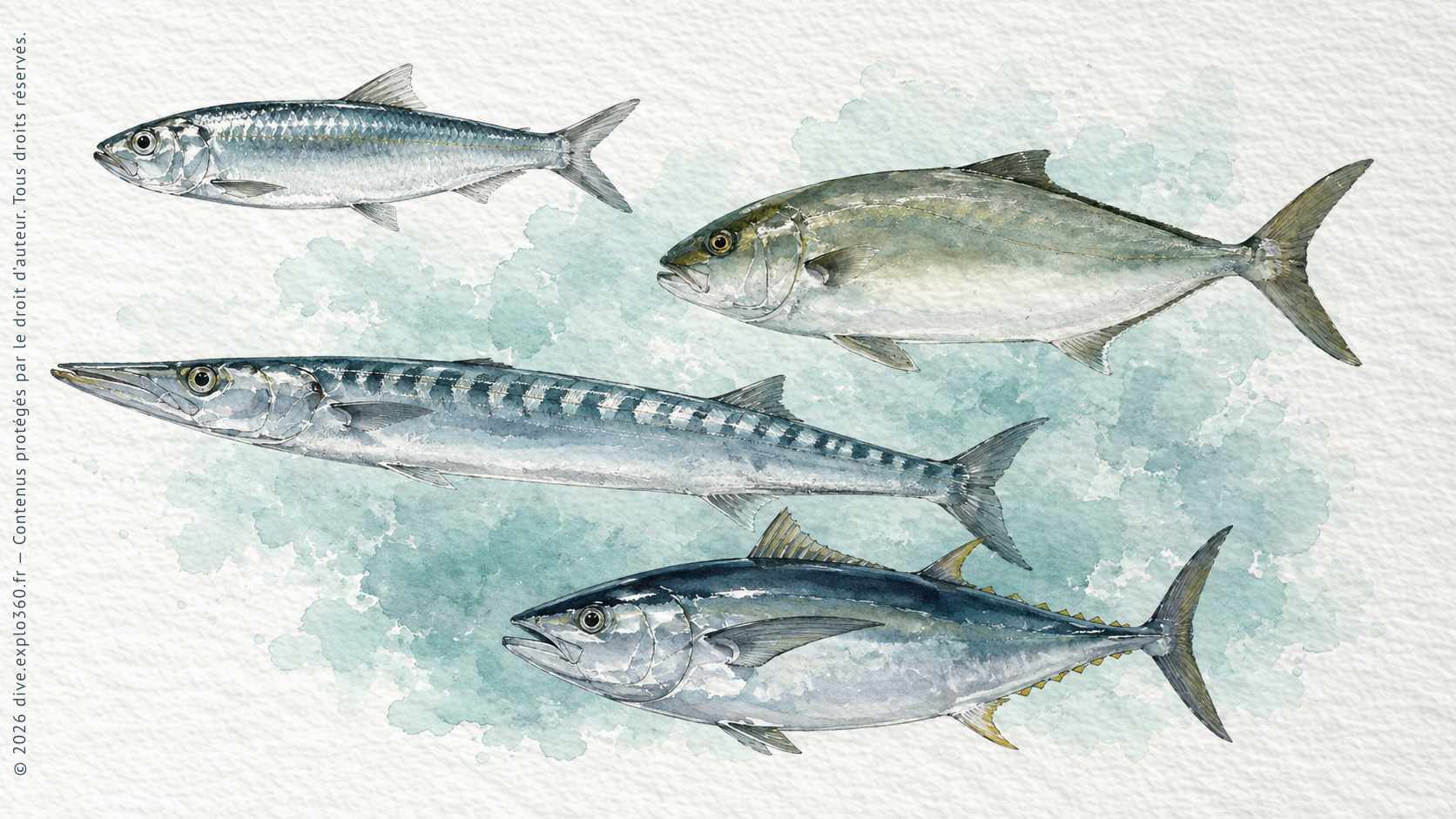
Open water is not empty
It is home to microscopic organisms, gelatinous animals and many swimmers. Some are largely carried by currents; others actively travel through their surroundings.
Beyond fast-swimming fish
Streamlined fish and shoals are familiar examples, not a universal definition. Not all pelagic organisms swim fast, migrate far or live in groups.
Unevenly distributed resources
Light, currents and nutrients influence the production and distribution of food. Farther down, remains from other water layers can feed the living network. Pelagic therefore does not necessarily mean sunlit.
Interpreting an observation
A fish crossing open water may still depend on the seabed for shelter or food. To interpret its category, consider its habits, age and activity rather than just its position when you encounter it.
Key points
Being pelagic depends on a way of life in open water, in any sea. It does not correspond to one particular habitat or a fixed depth.