

SEE THE BIGGER PICTURE · Adults (18+)
Marine flowering plants
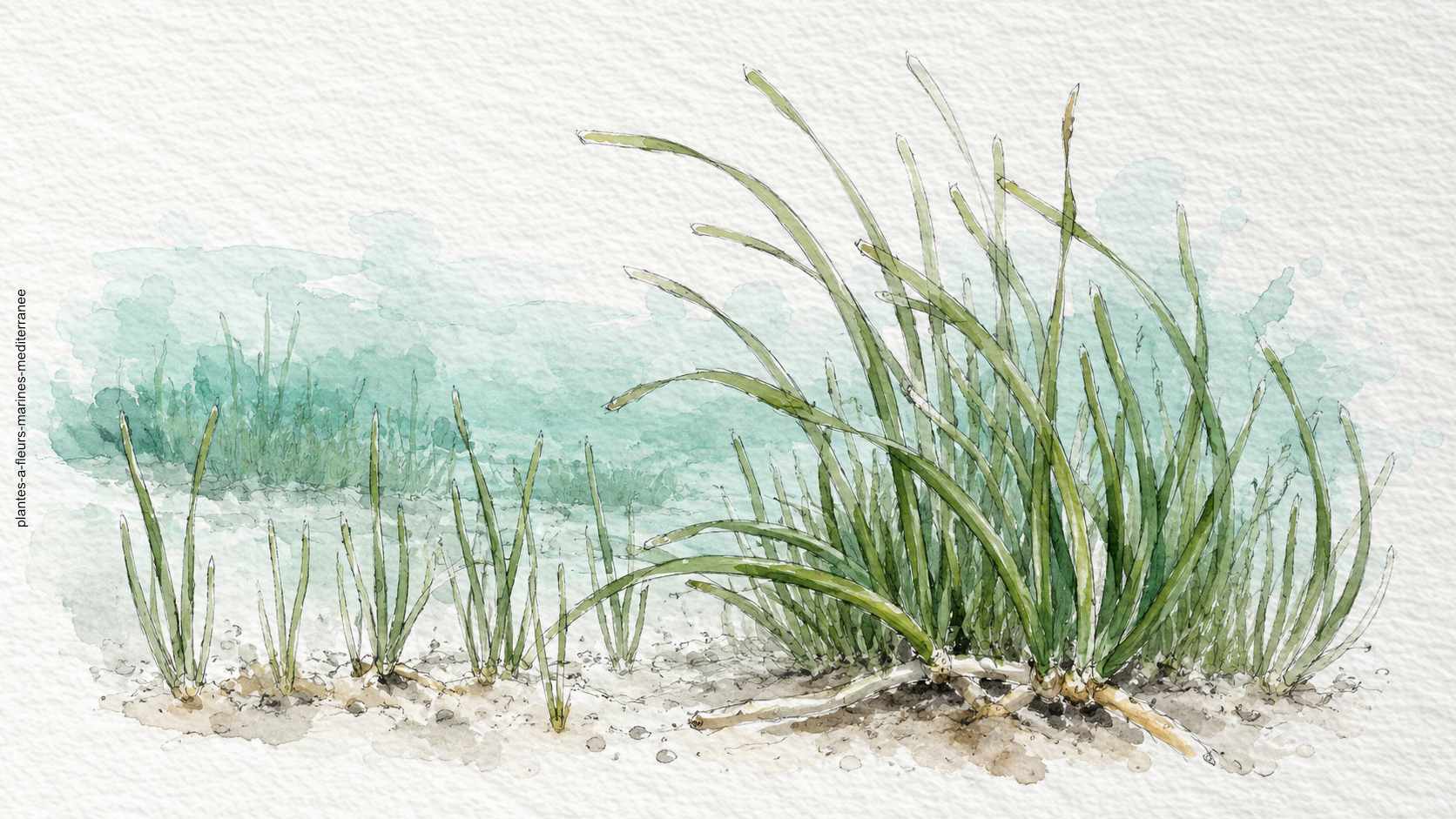
Marine flowering plants are true plants adapted to submerged life. They have leaves, stems and roots, and can reproduce through flowers and seeds. Their stands form seagrass meadows, distinct from algal beds.
Recognising their organisation
Their stems, often creeping through sediment, are rhizomes. They allow the meadow to spread, while roots help anchor it. Leaves use light and often carry small attached organisms.
A place in the living environment
Seagrass meadows produce matter, provide shelter and can serve as nursery areas for young animals. They locally slow water movement and trap sediment. Plant species differ between regions: not all seagrass meadows consist of Posidonia.
Exploring further
These marine angiosperms combine sexual reproduction and vegetative propagation. Primary production, three-dimensional structure and accumulation of matter in sediments are different functions. Their importance depends on the species, meadow condition and water movement.
Key points
Seagrass meadows produce matter, provide shelter and can serve as nursery areas for young animals. They locally slow water movement and trap sediment. Plant species differ between regions: not all seagrass meadows consist of Posidonia.