

SEE THE BIGGER PICTURE · Adults (18+)
Marine worms
The expression 'marine worms' groups together elongated animals from several lineages. Many of those seen while diving are annelids. Some move about; others live in burrows or tubes.
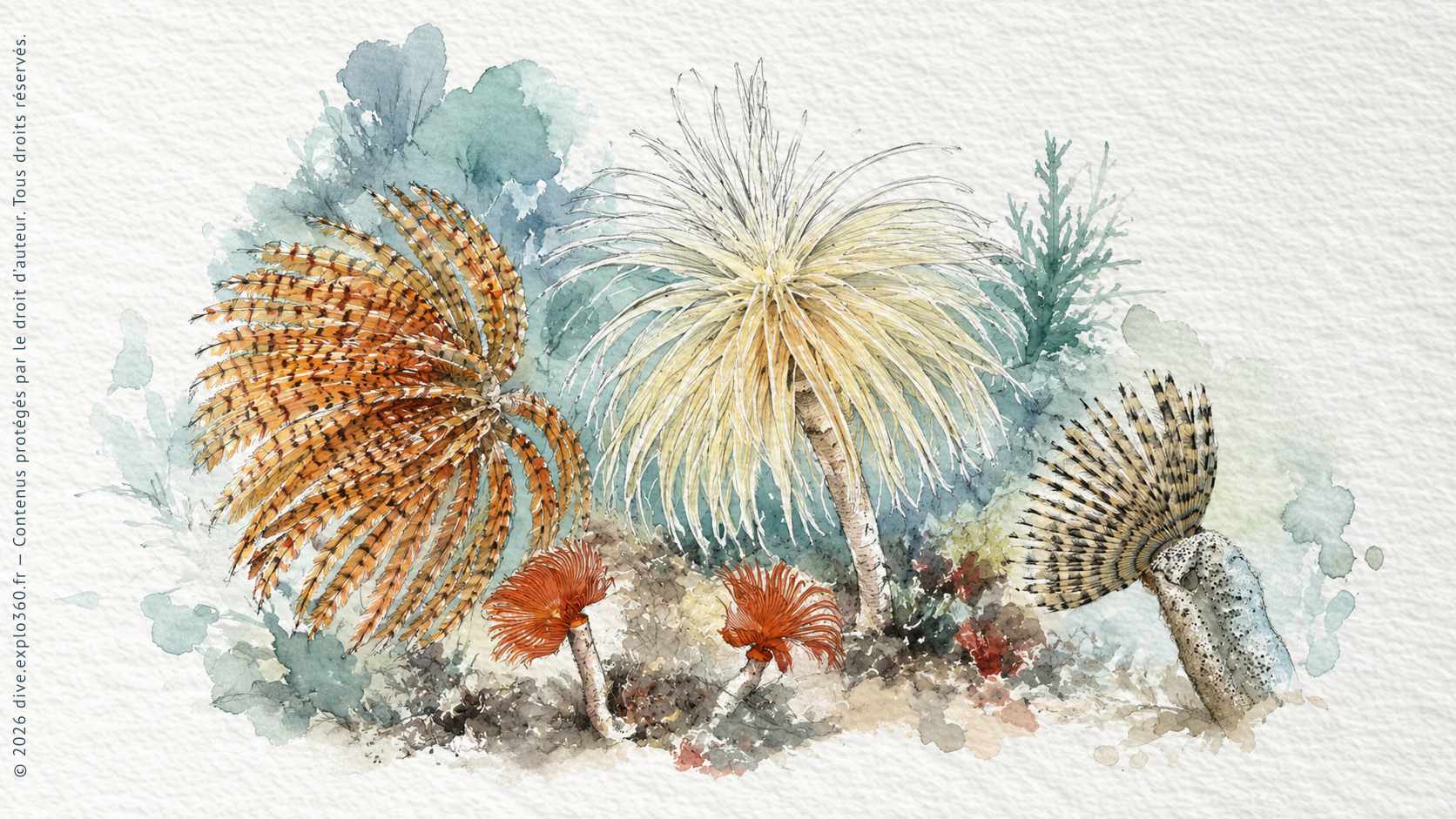
Recognising their organisation
In annelids, the body is organised into segments. Many species have bristles and appendages that help movement. Some tube-dwelling worms extend a crown to capture food or exchange substances with the water; not all worms have one.
A place in the living environment
Depending on the species, they hunt, graze, filter or ingest deposits. Burrowing and moving sediments change exchanges with the water. Worms therefore contribute to food webs and transformations of the seabed without all being decomposers.
Exploring further
'Worm' describes a shape rather than a single phylum. Annelids are distinguished notably by segmentation. Their bioturbation modifies sediment properties and can promote some exchanges of oxygen and nutrients. Distinguishing detritivory from microbial decomposition avoids confusing their functions.
Key points
Depending on the species, they hunt, graze, filter or ingest deposits. Burrowing and moving sediments change exchanges with the water. Worms therefore contribute to food webs and transformations of the seabed without all being decomposers.