

SEE THE BIGGER PICTURE · Adults (18+)
Demersal: a life closely connected to the seabed
A demersal organism lives or moves mainly near the seabed. It can swim through the water while depending on seabed features or resources close to the substrate.
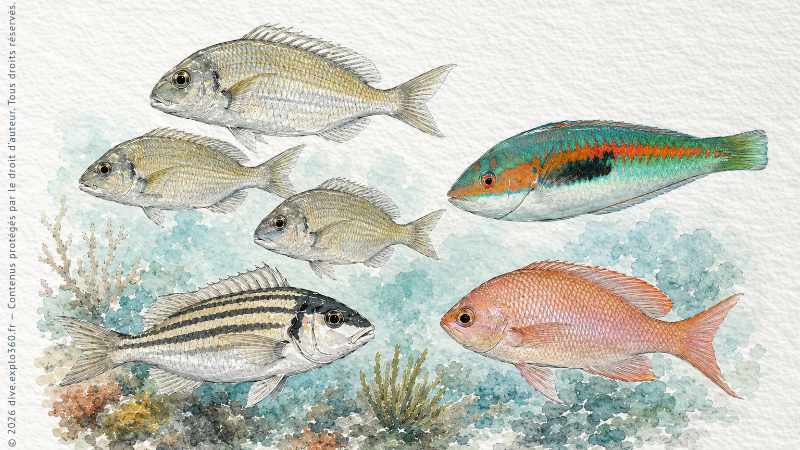
The seabed as an ecological anchor
A shelter, feeding area or breeding site may explain this proximity. Rocks, sediments and living structures offer different opportunities, but no sea has a monopoly on this way of life.
Neither attached nor necessarily sedentary
Some animals move short distances; others travel farther. The word demersal does not imply a body shape, distance travelled or territorial behaviour.
Food connections between water and seabed
An animal near the bottom may seek prey there or intercept plankton above it. This position contributes to exchanges between the seabed and the water in different ways depending on the species.
A flexible boundary with benthic life
The site emphasises proximity to the seabed for demersal and direct association with the substrate for benthic. In nature and across different classifications, the terms may overlap. Behaviour also changes over an organism's lifetime.
Key points
To recognise a demersal way of life, observe regular use of the seabed rather than just the animal's position in a picture.