

SEE THE BIGGER PICTURE · Adults (18+)
Cnidarians
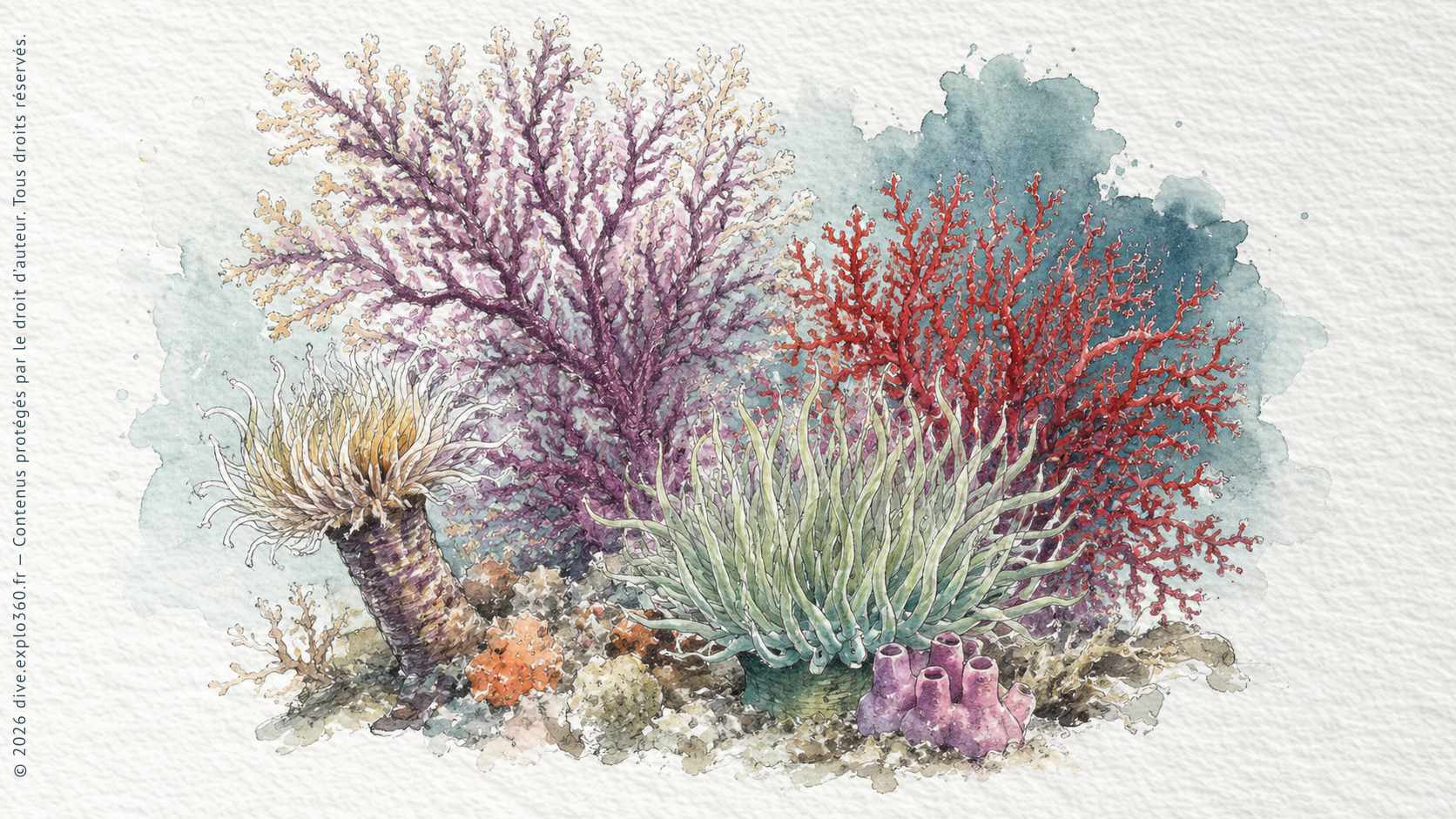
Jellyfish, anemones and corals belong to the cnidarians. These animals have specialised cells for capturing prey and defending themselves. Some live attached; others swim or drift in the water column.
Recognising their organisation
The body is organised around a mouth surrounded by tentacles. The polyp form is usually attached; the medusa form swims. Not every species alternates between these two forms. Corals and anemones do not pass through a medusa stage.
A place in the living environment
Many capture small animals. Some corals also associate with photosynthetic organisms that contribute to their nutrition. Some corals build calcium carbonate structures that shelter other species, but not all cnidarians build reefs.
Exploring further
Cnidocytes contain specialised capsules, often nematocysts. They enable capture and defence. Life cycles may combine sexual reproduction and asexual multiplication. Photosynthetic symbiosis, calcification and colonial life occur only in some lineages.
Key points
Many capture small animals. Some corals also associate with photosynthetic organisms that contribute to their nutrition. Some corals build calcium carbonate structures that shelter other species, but not all cnidarians build reefs.